

At a glance
- Bone is a living tissue that strengthens where it is used (Wolff's law).
- A supervised clinical trial showed gains in bone density among postmenopausal women.
- Grip strength is a recognized marker of health and longevity.
- On the plate: protein, calcium, vitamin D, magnesium, and collagen support bones and muscles.
- Start gradually and under supervision, especially in cases of osteoporosis.
Bone, a living tissue that adapts
In 1892, Berlin surgeon Julius Wolff noticed that the inside of bone is far from an inert block: it is a true framework, with reinforcement lines positioned precisely where the bone experiences the greatest stress. Much like the structure of a tower designed to stand with a minimum of material. This is the law of Wolff: healthy bone adapts to the load it receives. When used, it gets stronger; when neglected, it weakens.
We now know what happens at the cellular level: osteoblasts build new bone, osteoclasts remove old bone, and this whole team works harder when it senses mechanical stress. In plain terms: walking, carrying, and standing up from a chair send bone the signal “strengthen yourself.” Without stimulation, the team that breaks bone down keeps working... and density decreases.

What a clinical trial showed
For a long time, people with fragile bones were advised to do the opposite of what Wolff's law suggests: gentle movements, no weights. An Australian team wanted to test the other approach. In this trial, around 101 postmenopausal women with low bone density (average age 65) were divided into two groups: one followed professionally supervised strength training, twice a week for 30 minutes, over 8 months; the other followed a gentle home-based program.
Reported results: in the supervised group, spinal bone mineral density increased while it decreased in the "gentle" group; hip neck function (where hip fractures occur) was better maintained. The benefits extended beyond the bone itself: strength, balance, ability to rise from a chair, and even posture (less stooping). Important point: supervised and progressive, the trial reported no new vertebral fractures related to the training.
These results come from a trial conducted under supervision. They do not constitute an individual recommendation: see below "how to get started".
Strength, a marker of health
Another large-scale study, published in The Lancet, followed nearly 140,000 people in 17 countries and measured something very simple: grip strength, using a small dynamometer to squeeze. Finding: this strength predicts mortality (from all causes and cardiovascular causes) better than blood pressure. The authors report that each 5 kg decrease in grip strength corresponds to an approximately 16% increase in the risk of death from all causes.
Grip strength reflects overall muscle strength - the very strength we maintain by carrying loads. Maintaining your strength after 50 is not a matter of aesthetics: it means taking care of your independence and the years ahead.

What your plate provides for your bones
Exercise sends the signal; nutrition provides the materials. To build and maintain bones and muscles after 50, a few nutrients are particularly important:
- Protein contributes to the maintenance of normal muscle mass and bones. Spread it throughout the day (fish, eggs, legumes, dairy products), rather than eating it all in the evening.
- Calcium and vitamin D are necessary for the maintenance of normal bones; vitamin D also contributes to normal muscle function.
- Magnesium contributes to the maintenance of normal bones - it is found in legumes, nuts and seeds, and green vegetables.
- Collagen is the main protein in bone matrix and connective tissue; its production decreases with age, particularly after menopause.
Give your bones what they need to build themselves
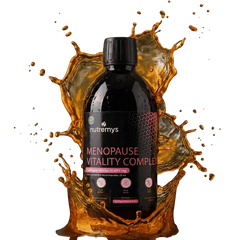
Training comes first - and, as support, our Menopause Vitality Complex combines collagen and targeted active ingredients to support your vitality after 50.
Discover Menopause Vitality ComplexHow to start safely
The cited trial used heavy loads under constant supervision. This is not an invitation to lift heavy alone at home. A few guidelines:
- Start with supervision: a physiotherapist or coach experienced with people over 60. This is what made the absence of fractures in the study possible.
- Progression comes first over first-day intensity: increase the load in stages, exercise by exercise.
- If you have osteoporosis, plan with your doctor and trainer - not alone with a video.
- Fuel your effort: sufficient protein at every meal, plus calcium and vitamin D.
Frequently asked questions
Is lifting weights dangerous for fragile bones?
In the cited trial, conducted under supervision and progressively, no new vertebral fractures were reported. This does not replace medical advice: in cases of osteoporosis, professional supervision and a doctor's approval are essential.
How many times per week?
The study involved two sessions per week. As with any training, consistency over time matters, not a one-off feat.
Is walking enough?
Walking is beneficial but provides little impact for bones. Strength and weight-bearing exercises stimulate bones more. Ideally, combine walking, balance, and strengthening.
Do supplements replace food?
No. Food remains the foundation. Supplements (calcium, vitamin D, collagen…) can provide support, especially when intake is insufficient or needs are increased.
This article is for informational purposes only and does not replace medical advice.
Scientific sources
- Wolff J. - Das Gesetz der Transformation der Knochen (Wolff's law), 1892.
- Watson S. et al. - LIFTMOR trial, resistance training and bone density in postmenopausal women (J Bone Miner Res, 2018).
- Leong D. et al. - Grip strength and mortality, PURE study (The Lancet, 2015).
- EFSA - Authorised health claims (protein, calcium, vitamin D, magnesium, and the maintenance of normal bones / muscle mass).



The information shared on this blog is for educational and informational purposes only. It does not replace medical consultation, diagnosis or treatment prescribed by a healthcare professional. If you have symptoms, are undergoing treatment or are pregnant, consult your doctor before modifying your diet or starting supplementation. Nutremys LAB food supplements should not replace a varied, balanced diet or a healthy lifestyle.
