

At a glance
- The legs are the body's “periphery”: circulation, blood sugar, or blood pressure problems show up there early.
- 7 signals: tingling, swollen ankles, restless legs, calf pain, varicose veins, hair loss, muscle wasting.
- Many can be checked with a blood test or a simple test.
- The soleus exercise, performed while seated, activates the muscle and helps regulate blood sugar.
- After 50: strength + protein + less sitting.
Why your legs speak
Imagine your circulation as a network of roads. The heart is the capital; the farther away you go, the harder deliveries become. Your legs are the most distant periphery: the heart must push blood downward, then the veins must send it back upward, against gravity. As a result, a circulation, blood sugar, blood pressure, or nerve problem often shows up first in the legs, sometimes before appearing in a test result. Your legs are speaking; let's learn to listen to them.

The 7 signals
1. Tingling or numbness in the feet
Often at night, often ignored for years. It has a name: peripheral neuropathy, and most often, it points to a problem with blood sugar (prediabetes, insulin resistance). Excess sugar damages the longest nerves — those that reach the feet. Worth investigating.
2. Swollen ankles and feet
The imprint left by a sock, or a finger that leaves an indentation when pressed (edema). When persistent, this is not a “foot” problem: it may signal that something higher up is under strain - the heart, kidneys, or liver. Have it evaluated.
3. Restless legs at night
The urgent need to move your legs when going to sleep. Common from age 50 onward. Iron and magnesium deficiencies are the most correctable factors: a check-up (ferritin, iron, magnesium) can provide valuable insight. Reducing sugar and refined carbohydrates is often part of the solution.
4. Calf pain when walking that goes away when you stop
This is intermittent claudication: the arteries in the legs are narrowed. Where there are plaques in the legs, there are often plaques elsewhere too. A simple, painless test (ankle-brachial index) can detect it: talk to your doctor.
5. Varicose veins and venous insufficiency
This is no longer “just cosmetic.” Stagnant blood contributes to chronic inflammation. Venous insufficiency deserves medical attention, especially if it is getting worse.
6. Hair loss on the shins
If the hair has disappeared and the skin is shiny and colder, this may indicate poor arterial circulation - sometimes even before pain appears.
7. Muscle wasting in the legs (sarcopenia)
From age 50, muscle is lost more quickly if nothing is done. Yet leg muscles do more than help you walk: they use glucose, regulate insulin and protect you from falls. Losing them means losing independence.

The seated movement that changes the rules
The soleus, a calf muscle, has a special feature: it hardly tires and can work for hours, continuously burning glucose and fat. The movement is simple: while seated, keep your feet flat and raise your heels while keeping your toes on the floor, then lower them slowly. In front of the TV, while reading, or while working. Goal: never remain completely still for more than 30 minutes - every 30 min, do 2 to 3 minutes of soleus raises.
After 50: the winning trio
- Move every 30 min: stand up and do soleus raises.
- Strength training twice a week: squats, stairs, leg press — whatever you can stick with. The goal is to maintain muscle.
- Protein at every meal: after 50, muscle is harder to build and easier to lose. Without sufficient protein, exercise helps little.
Support your legs from within
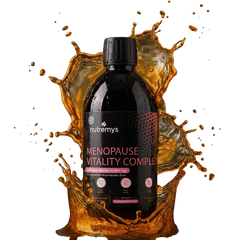
Movement and nutrition first — and, as support, our Menopause Vitality Complex combines collagen and targeted active ingredients to support your vitality after 50.
Discover Menopause Vitality ComplexWhen to seek medical advice
These signs are not a diagnosis. But if they are persistent or progressive — swelling that does not go away, calf pain when walking, regular tingling — talk to your doctor. Simple tests can often clarify things early, when it is most useful.
Frequently asked questions
Do these signs mean that I am sick?
Not necessarily. These are signs to investigate, not ignore. Only a doctor can draw a conclusion, often with the help of a blood test or a simple test.
Is walking enough for your muscles?
Walking is beneficial, but to preserve muscle after 50, strength training and sufficient protein matter more.
Does magnesium help with restless legs?
Iron or magnesium deficiency is a common, correctable factor; a blood test can help determine the cause. Magnesium contributes to normal muscle function.
Are varicose veins serious?
Often benign, but venous insufficiency warrants medical advice, especially if it is progressing or interfering with daily life.
This article is for informational purposes only and does not replace medical advice.
Scientific sources
- Diseases review — diabetic peripheral neuropathy, a predictor of amputation and mortality.
- 2022 study (10-year follow-up) — ankle-brachial index and cardiovascular risk.
- 2021 study (> 12,000 people) — chronic venous insufficiency and all-cause mortality.
- Copenhagen Sarcopenia Study (2019) — loss of leg strength and muscle starting at age 50.
- University of Toronto (2022) — active breaks, blood sugar control, and muscle protein synthesis.
- EFSA — Authorized claims (magnesium, muscle function; protein and muscle mass).



The information shared on this blog is for educational and informational purposes only. It does not replace medical consultation, diagnosis or treatment prescribed by a healthcare professional. If you have symptoms, are undergoing treatment or are pregnant, consult your doctor before modifying your diet or starting supplementation. Nutremys LAB food supplements should not replace a varied, balanced diet or a healthy lifestyle.

