


At a glance
- Between the ages of 45 and 60, many women juggle work, children and dependent parents: this is the “sandwich generation”.
- The mental load - thinking, anticipating and coordinating everything for everyone - weighs heavily on women, and menopause amplifies it.
- Setting boundaries and knowing how to say no protects your energy without cutting you off from others.
- Delegating means sharing the load - not delegating it perfectly.
- Time for yourself, even 20 minutes a day, isn’t a luxury: it’s self-care.
The sandwich generation and the mental load
You get the children up, prepare meals, manage the family schedule, reply to work emails, call your mother’s doctor, remember the birthday gift, the shopping list, the appointment that needs to be rescheduled… and it’s only 9 a.m. This invisible juggling act has a name: the mental load. It isn’t the task itself; it’s having to think about it constantly, anticipate and coordinate everything for everyone.
Between the ages of 45 and 60, this burden often reaches a peak. This is known as the “sandwich generation” (or pivot generation): women caught between children who are still dependent on them and parents who are beginning to need help. Surveys show that caregiving responsibilities, like the mental load of the household, fall mainly on women.
And this is precisely where menopause enters the picture. The hormonal decline is often accompanied by fatigue, sleep problems, and brain fog - that feeling of having your head “in a fog,” searching for words, forgetting things. In other words: the load increases right when your resources for carrying it decrease. This isn't a lack of organization or a failure of willpower. It's a physiological reality, and recognizing it is already a relief. To learn more, see our articles on menopause fatigue and brain fog.
Set boundaries and learn to say no
Saying “yes” to everything eventually drains you. Setting boundaries isn't rejecting others: it's deciding where your energy goes, and that energy is precious and not infinite. It's something you learn, especially when you're used to being “the one people can count on.”
Say no without lengthy explanations
“I can't this time.” One short sentence is enough. You don't have to provide a detailed excuse or apologize for existing.
Postpone rather than refusing outright
“Not today, but I can do Thursday.” Taking back control of the when already eases the pressure considerably.
Ask yourself: is this really mine to handle?
Before rushing to help, pause: can someone else do it? Is it essential, or just a habit?
Block off your time like an appointment
Put your own time in the calendar, just like a meeting. What is scheduled is easier to protect.
Delegate: share the load, let go of perfection
You don't have to carry everything alone. The real obstacle to delegating is often not a lack of people around you - it's the belief that “it won't be done properly” or “it'll be faster if I do it myself.” In the short term, perhaps. In the long term, burnout is guaranteed.
Involve the children according to their age
Set the table, sort the laundry, pack their bag: giving them responsibility lightens your load and helps them grow.
Really share responsibilities with your partner
Not just “helping,” but taking charge of entire areas, including decision-making. The mental load can be shared too.
Accept outside help for your parents
Meal delivery, home help, community support: asking for support isn't giving up, it's what helps you keep going over time.
Aim for “good enough”
A delegated task will be done differently, not necessarily less well. Letting go of control over the details is an immense relief.
Support for getting through this period
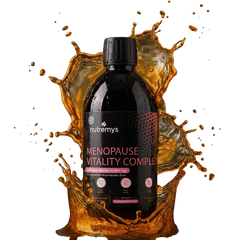
Menopause Vitality Complex supports comfort during the hormonal transition in a liquid form that's easy to fit into your already busy daily life.
Discover Menopause Vitality ComplexTime for yourself, without guilt
“I don't have time.” That's true, and yet setting aside a moment doesn't require long hours. It's less about finding time than deciding that you deserve some, even if it's brief. The guilt that often comes with these moments is a reflex: it eases as you give yourself permission.
20 non-negotiable minutes
A quiet cup of tea, a walk, a chapter of a novel. A daily appointment with yourself, however brief.
Breathe to unwind
Heart coherence - a few minutes of slow breathing - calms the nervous system and fits anywhere in the day.
Writing to clear your mind
Writing down what keeps going around in your head at night helps you “set down” the mental load and sleep better.
Reconnect with what makes you feel good
A neglected hobby, a friend you no longer see: reconnecting with what feels like you boosts your spirits.
Taking care of your health, the foundation
Easing mental load also involves the body. When sleep, nutrition, and movement are on track, we cope better with stress and the fog lifts a little. Nothing spectacular: simple foundations maintained consistently.
| Pillar | What really helps |
|---|---|
| Sleep | Regular schedules, a cool bedroom, screens at a distance. Sleep is often the first thing affected during menopause - and the most worthwhile to protect. |
| Diet | Enough protein, omega-3s, colorful plant foods, calcium, and vitamin D for your bones. Avoid skipping meals when you're rushing around. |
| Movement | Walking, gentle strength training, yoga: regular activity eases certain symptoms, reduces stress, and supports mood. |
| Stress | Breathing, heart rate variability exercises, time outdoors. Chronic stress amplifies fatigue and tension; reducing it changes everything. |
Nutritionally, certain nutrients support everyday balance: magnesium helps reduce fatigue and supports normal nervous system function, while vitamin D helps maintain normal muscle and bone function (claims authorized by the EFSA). For a starting point, see our essential supplements after 50, and our guide to menopause symptoms and gynecologists' advice.
When to ask for help
There is a difference between a busy period and exhaustion that sets in. If fatigue no longer improves with rest, if sadness, anxiety, or feelings of being overwhelmed last for several weeks, or if you persistently lose your enjoyment of things or your sleep, these are not weaknesses to "grit your teeth" and overcome. They are signs that deserve to be heard.
Your frequently asked questions
Why does mental load feel heavier during menopause?
Because two things compound. On the one hand, between the ages of 45 and 60, many women support both their children and their aging parents while working. On the other hand, menopause is often accompanied by fatigue, sleep problems, and brain fog, which make it more difficult to coordinate everything. The load increases while resources decline.
Is taking time for myself not selfish?
No. Taking care of yourself does not mean cutting yourself off from others: it is what allows you to remain available over time without wearing yourself out. A rested woman who is less tense is more present for her family, not less. “You cannot pour from an empty cup”: taking care of yourself is part of the care you give others.
How can I learn to say no when I feel guilty?
Start small, with a short sentence and no lengthy explanation: “I cannot this time.” You can also postpone rather than refuse (“not today, but Thursday”). Guilt eases as you realize that the world does not fall apart. Setting a boundary means protecting your energy, not rejecting people.
I really do not have time. Where should I start?
With a single, tiny daily action: setting aside 20 minutes, calling a friend, or spending a few minutes breathing. The goal is not to reorganize everything, but to establish a first anchor that is just for you. Once you have kept this time, it becomes easier to add more.
How can I tell if it is more than just fatigue?
If fatigue no longer goes away with rest, if sadness, anxiety, or feeling overwhelmed lasts for several weeks, or if you lose pleasure in things, it is time to talk to a healthcare professional. This is not being dramatic: it is giving yourself the means to feel better. This is a sensitive subject, and you do not have to carry it alone.
Sources
- DREES - Studies on family caregivers in France (distribution by gender): drees.solidarites-sante.gouv.fr.
- Dean L, Churchill B, Ruppanner L. “The mental load: building a deeper theoretical understanding of how cognitive and emotional labor overload women and mothers.” Community, Work & Family, 2022.
- EFSA - Authorized health claims (magnesium, vitamin D): EFSA, health claims.
The information shared on this blog is for educational and informational purposes only. It does not replace medical consultation, diagnosis or treatment prescribed by a healthcare professional. If you have symptoms, are undergoing treatment or are pregnant, consult your doctor before modifying your diet or starting supplementation. Nutremys LAB food supplements should not replace a varied, balanced diet or a healthy lifestyle.

