



At a glance
- Menopause is confirmed after 12 months without periods; the average age is around 51 in France.
- After age 45, with typical symptoms, no examination is necessary to make the diagnosis.
- A pharmacy menopause test measures FSH in urine: it indicates a trend, not a verdict.
- With the pill, the bleeding is artificial: it says nothing about your ovaries' activity.
- Before age 45, or if there is any doubt, a blood test prescribed by your doctor is more reliable.
How to know whether you are menopausal: the definition that matters
Menopause is not a sudden event; it is a retrospective determination. It is defined as twelve consecutive months without periods, in the absence of pregnancy or treatment that interrupts the cycle. Before this milestone, it is called perimenopause: a transition during which hormones fluctuate, sometimes from one month to the next.
That is precisely why a single test is difficult to interpret. One day, your hormone levels resemble those of a menopausal woman; three weeks later, they are back to “normal.” The body does not turn off the light all at once; it dims it in fits and starts.
This last figure comes from the American SWAN study, published in JAMA Internal Medicine (Avis et al., 2015): vasomotor symptoms last more than seven years on average. In other words, they appear well before the official date of menopause and continue afterward.
Signs that indicate menopause is approaching
Your body often gives the first clues, long before any test. No single sign is decisive on its own, but their combination is telling:
| Sign | What you may notice |
|---|---|
| Cycle | Periods becoming farther apart, shorter, heavier, or irregular; then no periods for several months. |
| Heat | Hot flashes, night sweats, facial and neck flushing. |
| Sleep and energy | Waking around 3 a.m., persistent fatigue, difficulty concentrating. |
| Mood | Irritability, new anxiety, more fragile mood, declining libido. |
| Mucous membranes and skin | Vaginal dryness, drier skin, thinner hair. |
Menopause test at the pharmacy: how does it work, and how reliable is it?
The menopause test sold in pharmacies (often for around ten to twenty euros) measures FSH in urine. FSH, or follicle-stimulating hormone, is produced by the brain to stimulate the ovaries. When the ovaries respond less effectively, the brain “insists” and FSH rises. Most tests become positive above a threshold close to 25 IU/L, when used in the morning twice, one week apart.
The test is therefore a reference point for curiosity and monitoring, not a diagnosis. It may make sense if you are between 40 and 50 and have unpredictable cycles; if it is positive, keep it to discuss with your doctor rather than drawing conclusions on your own.
Blood test: when is it really useful?
The blood test measures FSH and estradiol more accurately than a urine test. It is recommended mainly in three situations:
- you are under 45 and have cycle irregularities or menopausal symptoms (see our article on early menopause);
- your symptoms are atypical, or you have undergone surgery, chemotherapy, or treatment that makes interpretation difficult;
- your doctor wants to rule out another cause (thyroid, prolactin, pregnancy).
To learn how to read these results, our guide Blood Tests and Menopause: Levels and Interpretation explains each value in detail. And if you are over 45, with typical symptoms and periods that are becoming less frequent, you most often do not need a test to know where you stand: your history is enough.
How to know if you are menopausal while taking the pill or using an IUD
This is one of the most frequently asked questions, and the answer is nuanced.
While taking the pill
The “periods” experienced while taking the pill are withdrawal bleeds: they occur because the hormones in the pill pack are stopped, not because of your ovaries. It is therefore impossible to use them to identify when your cycle has stopped. In addition, the pill suppresses FSH production, which distorts the test result. Around the age of 50-51, your doctor may suggest taking a break or switching methods to assess the situation. Do not stop it on your own: you may remain fertile until menopause is confirmed.
With a hormonal IUD
A hormonal IUD reduces or stops bleeding, but it acts mainly locally and the ovaries continue to function. Symptoms (hot flushes, sleep, mood) and hormone levels therefore generally remain interpretable.
Without a uterus
After a hysterectomy with the ovaries preserved, there are no longer any periods to use as a guide. Symptoms, and if necessary a blood test, then provide guidance.
Signs that you might benefit from supplementation
Knowing where you stand is only the first step. Next, you support your body. If you recognise yourself in any of these situations, targeted nutritional support may make sense, always alongside a balanced lifestyle:
- your skin is drier and less firm than before, and your hair is thinner;
- your joints are stiffer in the morning;
- fatigue and disturbed sleep are setting in despite good habits;
- your diet does not cover all your calcium, vitamin D, or magnesium needs (see signs of calcium deficiency).
Support your transition, starting now
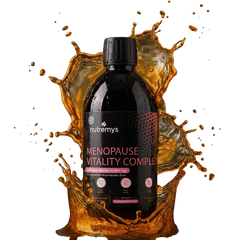
Menopause Vitality Complex combines liquid marine collagen and targeted nutrients to support skin, energy, and well-being during perimenopause and menopause.
Discover Menopause Vitality ComplexFrequently asked questions: how can you tell if you are menopausal?
How can you tell if you are menopausal without a blood test?
After age 45, it is possible: you are considered menopausal when your periods have been absent for 12 consecutive months, often preceded by symptoms such as hot flashes. Keep a journal of your cycles and symptoms, and show it to your doctor.
Is the menopause test sold in pharmacies reliable?
It accurately detects elevated FSH in urine, but this hormone fluctuates during perimenopause. A positive or negative result is not enough to draw a conclusion. Use it as a guide, and confirm with your doctor if you have any doubts.
At what age should you take a menopause test?
There is no official age. In practice, menopause is considered between ages 40 and 50 when cycles become irregular. Before age 45, a prescribed blood test is preferable to rule out early menopause or another cause.
Can you be menopausal and still have bleeding?
After menopause has been confirmed, any bleeding should be reported to your doctor, even if it is light. It is not always serious, but it warrants an assessment. Our article on bleeding after menopause explains what to do.
How can you tell if you are menopausal while taking the pill?
Bleeding while taking the pill is artificial, and the pill alters hormone levels: you cannot rely on your periods. Around age 50-51, your doctor may suggest taking a break or switching methods to assess the situation. Do not stop taking your pill without medical advice.
This article is for informational purposes only and does not replace medical advice. If you have any concerns about your hormonal situation, unusual bleeding, or bothersome symptoms, consult your doctor or gynecologist.
- Avis N.E. et al. — Duration of menopausal vasomotor symptoms over the menopause transition (SWAN study). JAMA Internal Medicine, 2015;175(4):531-539.
- NICE — Menopause: identification and management (NG23), diagnosis of perimenopause and menopause.
- World Health Organization — Menopause, information sheet.
- Inserm — Menopause: information dossier.
- ESHRE — Guideline: Management of premature ovarian insufficiency.
The information shared on this blog is for educational and informational purposes only. It does not replace medical consultation, diagnosis or treatment prescribed by a healthcare professional. If you have symptoms, are undergoing treatment or are pregnant, consult your doctor before modifying your diet or starting supplementation. Nutremys LAB food supplements should not replace a varied, balanced diet or a healthy lifestyle.

