



What you are about to read in this article
After age 50, intestinal absorption of micronutrients decreases by 20 to 30% for certain essential vitamins. The drop in estrogen accelerates bone loss, alters the microbiome, and increases the need for specific active compounds. Medications commonly prescribed at this age—statins, PPIs, metformin—silently deplete nutritional reserves. Even an exemplary diet is no longer enough to meet all nutritional needs.
This guide identifies the seven supplements whose clinical relevance is best documented for women over 50: vitamin D3, magnesium bisglycinate, targeted calcium, hydrolyzed marine collagen, EPA/DHA omega-3s, methylcobalamin vitamin B12, and a range of probiotics. For each: the mechanism, dosage, form to choose—and combinations to avoid.
This article is for informational purposes only. It does not replace a personalized medical assessment. Consult your doctor before starting any supplementation, especially if you take regular medication.
What changes in the body after age 50
The body does not simply age after fifty—it changes how it functions. Intestinal absorption of nutrients gradually decreases: stomach acid production declines, the intestinal lining thins, and certain transport proteins become less efficient. These changes are independent of diet quality—they are structural.
For women, menopause adds its own effects to this general physiological aging. The drop in estrogen accelerates bone resorption, disrupts the regulation of glucose metabolism, alters the composition of the gut microbiome, and increases low-grade inflammation. The result is a multiplication of the need for specific micronutrients precisely when the ability to absorb them is declining.
In addition, there is a factor many people overlook: medications commonly prescribed after 50 create silent nutritional deficiencies. Proton pump inhibitors (PPIs) reduce the absorption of magnesium, calcium, and vitamin B12. Statins lower coenzyme Q10 levels. Metformin interferes with B12 absorption over the long term — an interaction documented for decades but still underestimated in clinical practice.

Accelerated loss of bone density, risk of osteoporosis
Loss of estrogen protection, inflammation
Fatigue, impaired memory and mood
Altered microbiome, reduced absorption
Nutritional deficiencies after 50 are not a matter of neglect. They are physiologically programmed. Even with an impeccable diet, the body absorbs less, processes less, and stores less. This is what makes targeted supplementation not optional, but strategically relevant for maintaining vitality, bone strength, and mental clarity.
The 7 essential supplements after 50
These are not the seven supplements that are currently fashionable: they are the seven for which the scientific evidence is the most consistent, reproducible, and directly relevant to women over 50. For each one, the biological mechanism supports supplementation, while the clinical evidence defines its scope.

Vitamin D3 — the most common deficiency
With 78% of women aged 50 to 64 experiencing deficiency, vitamin D3 is the first supplement to consider after age 50. It is essential for intestinal calcium absorption, maintaining bone density and supporting immune system function. EFSA recognises its role in helping maintain normal bones and normal immune system function—two functions directly weakened during menopause. The D3 form (cholecalciferol) is 2 to 3 times more effective than D2 at raising and maintaining serum 25-OH-D levels.
Magnesium bisglycinate — the cofactor for everything else
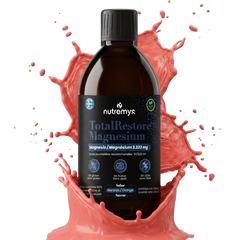
Magnesium is involved in more than 300 enzymatic reactions. Without it, vitamin D remains inactive—it activates the enzyme that converts D3 into its biologically useful form. A study conducted in Granada on 52 menopausal women demonstrated that magnesium supplementation significantly improved vitamin D status without additional D3 intake. This synergistic mechanism—often overlooked—explains why two people taking the same dose of vitamin D can achieve very different results depending on their magnesium status. Magnesium also supports serotonin synthesis, regulates cortisol and improves sleep quality—three functions that are particularly challenged during menopause.
Calcium — targeted supplementation, not routine use
Calcium is essential for bone structure, but supplementation is only necessary if the diet does not meet daily requirements—estimated at 1,200 mg/day for postmenopausal women according to EFSA recommendations. Before taking supplements, actual dietary intake should be assessed: three servings of dairy products a day generally provide 700 to 900 mg. Calcium citrate is preferable after age 50 because it is absorbed independently of stomach acidity—an important advantage for women taking PPIs or experiencing slowed digestion.
Hydrolysed marine collagen — the framework we lose
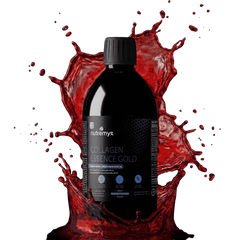
Collagen makes up 30% of the body's proteins and forms the organic matrix to which calcium binds in the bones. The drop in oestrogen levels at menopause directly destabilises its production: oestrogens stimulated fibroblasts and inhibited collagen-degrading enzymes. A randomised controlled trial conducted on 131 postmenopausal women (König et al., 2018) showed that a daily intake of 5 g of marine collagen peptides for 12 months significantly improved bone mineral density. The hydrolysed form, consisting of low-molecular-weight peptides, is essential for absorption beyond the intestinal barrier.
Omega-3 EPA/DHA — cardiovascular and cognitive protection
After menopause, the cardiovascular protection provided by estrogen disappears. EPA and DHA omega-3s have a documented anti-inflammatory effect, support vascular health, and contribute to maintaining cognitive function. Low DHA levels have been associated with an increased risk of memory decline. EFSA recognizes the contribution of a daily intake of 250 mg of EPA + DHA to the maintenance of normal heart function. Recent studies on mood and cognition suggest doses of 1,000 to 2,000 mg per day for a measurable effect.
Methylcobalamin vitamin B12 — the energy that quietly slips away
B12 absorption decreases with age due to reduced stomach acid and lower levels of intrinsic factor—the glycoprotein required for its absorption in the ileum. A B12 deficiency progresses silently for years before manifesting as chronic fatigue, memory problems, or numbness. Methylcobalamin is the active form, directly usable by cells without hepatic conversion. It is particularly indicated for women taking metformin or PPIs, whose B12 absorption is chronically impaired.
Diversified probiotics — optimize the absorption of everything else
A balanced microbiome is a prerequisite for the effective absorption of all other nutrients. After age 50, microbial diversity naturally decreases; menopause amplifies this imbalance by also altering the vaginal microbiome. Strains such as Lactobacillus rhamnosus, Bifidobacterium bifidum, and Lactobacillus reuteri have demonstrated their ability to restore microbial diversity and strengthen intestinal immunity. A high-quality probiotic contains at least 10 billion CFU of clinically documented strains, in a formulation that protects the bacteria from stomach acid until they reach their destination in the colon.
These seven supplements do not work in isolation. Magnesium activates vitamin D. Vitamin D enables calcium absorption. Calcium binds to the collagen matrix. Omega-3s modulate the inflammation that accelerates bone resorption. Probiotics optimize intestinal absorption of all of them. B12 provides the cellular energy required for all these processes. Understanding this chain of synergy means understanding why a well-designed formula will always be more effective than a collection of single-ingredient products taken without an overall rationale.
Preferred bioavailable forms
The same nutrient may be 90% absorbed in one form and 15% in another. After age 50, when intestinal absorption is already reduced, the choice of form directly determines the effectiveness of supplementation. This point is systematically underestimated in parapharmacy aisles, where low prices often conceal poorly bioavailable forms.

Bisglycinate is chelated with an amino acid (glycine), giving it four times greater absorption than oxide and excellent digestive tolerance. Magnesium oxide, widely used because of its low cost, is poorly absorbed and causes intestinal problems in a significant proportion of users.
Calcium citrate is absorbed independently of stomach acidity, a decisive advantage after age 50. Carbonate requires an acidic environment to be absorbed, making it poorly effective for women taking PPIs or experiencing slow digestion—very common situations at this age.
Vitamin D3 is the form naturally synthesized by the skin under the action of UVB rays. It is 2 to 3 times more effective than D2 (ergocalciferol) at raising and maintaining serum 25-OH-D levels. Most positive studies were conducted with D3—it is the only form whose efficacy is firmly documented.
Methylcobalamin is the active form, directly usable by cells. Cyanocobalamin requires hepatic conversion, which the liver performs less efficiently with age. Methylcobalamin is recommended as a priority after age 50, and is essential for women taking metformin or PPIs.
Regardless of the stated dose, unhydrolyzed collagen does not cross the intestinal barrier intact. Only low-molecular-weight peptides (under 3,000 daltons) produced through enzymatic hydrolysis are absorbed and detectable in the bloodstream. The liquid form offers greater bioavailability than powder, and even more than capsules.
- Calcium and iron compete for absorption in the intestines — space doses at least two hours apart.
- Anticoagulants may interact with high-dose omega-3s and vitamin K.
- Proton pump inhibitors reduce the long-term absorption of magnesium, calcium, and B12.
Always tell your doctor or pharmacist about all your supplements if you take regular medication.
When and how to take your supplements
The timing of intake directly affects the effectiveness of supplementation. Some supplements are fat-soluble and are better absorbed with a meal rich in fat. Others compete with dietary proteins and are best taken between meals. These rules are not mere fine-tuning — they can double or halve the effectiveness of the same product.
| Timing | Supplements | Why |
|---|---|---|
| In the morning with breakfast | Vitamin D3, calcium, marine collagen | Vitamin D is fat-soluble — it is absorbed with dietary fat. Take calcium with a meal for optimal tolerance. |
| At midday with lunch | Omega-3s, vitamin B12 | Omega-3s are fat-soluble. B12 is best taken with a meal to prevent mild nausea in sensitive people. |
| In the evening before bedtime | Magnesium bisglycinate | Magnesium promotes muscle and nerve relaxation. The glycine in bisglycinate has a mild sedative effect that improves sleep quality. |
| 30 minutes before a meal or at bedtime | Probiotics | Stomach acidity is lower on an empty stomach or between meals — more of the strains reach the colon. |
- Calcium + iron: calcium inhibits iron absorption — space them at least two hours apart if you take both.
- Calcium + high-dose magnesium taken simultaneously: they compete for the same intestinal transporters. Take them at different times, morning and evening.
- Tea or coffee + calcium or iron: tannins reduce absorption by 40 to 60%. Wait an hour after your coffee before taking these minerals.
Common mistakes to avoid
Vitamins A, D, E, and K accumulate in fatty tissue and can become toxic in excess. An overdose of vitamin D causes hypercalcemia; excess vitamin A increases the risk of bone fractures. Follow the recommended doses and have a blood test before exceeding 2,000 IU of vitamin D per day without medical advice.
A targeted blood test—vitamin D (25-OH-D), erythrocyte magnesium, vitamin B12, calcium, and ferritin—makes it possible to identify actual deficiencies and adjust dosages accordingly. Blind supplementation may cause you to take too much of one nutrient while overlooking a deficiency that continues to worsen.
Taking five or six different capsules separately without considering their interactions and the rationale behind combining them is costly, inconvenient, and sometimes counterproductive. A well-designed synergistic formula incorporates the principles of compatibility and complementarity directly into its formulation, making it easier to follow and often more effective.
A dietary supplement never replaces a treatment prescribed by a doctor. It does not cure osteoporosis, treat hypothyroidism, or substitute for hormone therapy for menopause. Its role is to fill nutritional deficiencies and support physiological functions—in addition to a balanced diet and appropriate medical monitoring.
Frequently asked questions
Formulas designed for the real needs of women over 50
Hydrolyzed marine collagen, vitamin D3, magnesium bisglycinate, phytoestrogens — clinically dosed active-ingredient synergies in a liquid formula with superior bioavailability, without artificial additives.
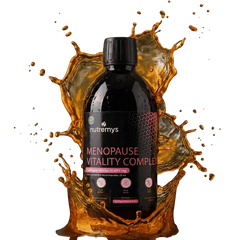
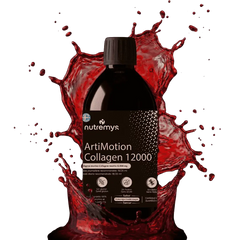
Menopause Vitality Complex → ArtiMotion Collagen →The information shared on this blog is for educational and informational purposes only. It does not replace medical consultation, diagnosis or treatment prescribed by a healthcare professional. If you have symptoms, are undergoing treatment or are pregnant, consult your doctor before modifying your diet or starting supplementation. Nutremys LAB food supplements should not replace a varied, balanced diet or a healthy lifestyle.
