


At a glance
- During menopause, the drop in estrogen shifts fat storage from the hips to the belly: abdominal fat can increase from around 8% to nearly 15–20% of total body fat.
- Muscle mass decreases by 3 to 8% per decade after age 30, and the rate accelerates during menopause. Yet muscle is the body’s primary “engine” for burning calories at rest.
- Average weight gain during the transition is modest—around 0.5 kg per year—but it is concentrated around the belly, making it visible and emotionally burdensome.
- The strategies that work: more protein, strength training, better sleep, and stress management—not restrictive diets.
Why do we gain weight during menopause?
Let’s start by dispelling a widespread sense of guilt: if you gain weight even though your habits have not changed, it is not “in your head.” It is a profound, well-documented hormonal change.
At the heart of the phenomenon is the decline in estrogen. These hormones do more than regulate the cycle: they influence how the body stores fat, manages blood sugar, and distributes energy. When their levels drop, several mechanisms take place at the same time.
1. The redistribution of fat toward the abdomen. 2. Worsening insulin sensitivity, which promotes storage. 3. Muscle loss, which slows energy expenditure at rest. None of these three factors depends on your willpower: they depend on your biochemistry.
Added to this is a basal metabolism that naturally declines with age, along with nights often disrupted by hot flashes and nighttime awakenings—a factor that is vastly underestimated, as we will see later.

Why fat migrates toward the abdomen
This is the most common complaint: “I’m gaining weight mainly around my stomach.” It is not just an impression. Before menopause, estrogen directs fat storage toward the hips and thighs (the so-called “gynoid” body shape). When estrogen levels decline, fat storage shifts toward the abdomen (the “android” body shape).
This abdominal fat, known as “visceral” fat, is about more than aesthetics. It is more metabolically active and associated with lower insulin sensitivity. Long-term follow-up research, such as the American SWAN study (Study of Women's Health Across the Nation), has clearly documented this shift toward abdominal fat during the menopausal transition.
The reassuring message: visceral fat is also the most responsive to physical activity and dietary adjustments. It is often the first to respond when muscle is put back at the center.
The silent culprit: muscle loss
If you had to remember just one lever, this would be it. Sarcopenia — the progressive loss of muscle mass and strength — is the most underestimated phenomenon of menopause.
Why is this central? Because muscle is an “expensive” tissue: even at rest, it consumes energy. Every kilogram of muscle lost lowers basal energy expenditure. As a result, with the same diet, the body stores more. People often talk about a metabolism that “slows down,” but in reality, it is mainly muscle that disappears.
A study published in 2019 in JCI Insight tracked the body composition of women around menopause: lean mass (muscle) declines significantly during the two years surrounding the final menstrual period, while fat mass increases. In other words, changes in body shape reflect less a “lack of discipline” than hormonal remodeling of the body.
The practical implication is liberating: to take back control of your weight, the goal is not to keep eating less, but to protect and rebuild your muscle. This involves two pillars: enough protein and some strength training. We explain this below, and our article on 5 signs of protein deficiency is the perfect complement.

5 science-backed levers to take back control
Forget crash diets: they cause muscle to melt away before fat and worsen the problem over the long term. Here is what really works, without deprivation.
1. Prioritize protein
Aim for around 1.0 to 1.2 g of protein per kilogram of body weight, spread throughout the day. Eggs, fish, legumes, dairy products, poultry: protein is the most satiating nutrient and preserves muscle.
2. Strengthen, don't just run
Two strength-training sessions per week (resistance bands, weights, or bodyweight exercises) restart muscle building more effectively than cardio alone. Muscle is your best ally against fat storage.
3. Protect your sleep
Lack of sleep disrupts hunger hormones (leptin and ghrelin) and encourages snacking. Addressing nighttime awakenings also helps manage weight.
4. Ease stress
Chronically elevated cortisol promotes abdominal fat storage. Walking, breathing exercises, and heart coherence: a few minutes a day really do make a difference.
Certain nutrients support muscle, tissue firmness, and comfort during the transition: protein, vitamin D, and collagen. Vitamin D and protein contribute to the maintenance of normal muscle mass according to EFSA opinions. Collagen, meanwhile, contributes to the structure of connective tissues. Well-chosen supplementation never replaces a balanced diet and movement: it complements them.
To learn more about what your body needs after age 50, our guide to essential supplements after 50 provides an overview without magical promises.
Signs that you may benefit from supplementation
A supplement is never a magic wand. But in the context of menopause, it can support a weakened foundation. Here are the signs that suggest discussing it with a healthcare professional:
- A visible loss of firmness (skin, arms, figure) despite regular activity.
- Persistent fatigue and slower recovery after exercise.
- Protein intake that is difficult to achieve on a daily basis.
- Joint discomfort that limits movement—and therefore muscle maintenance.
If several of these signs resonate with you, targeted support rich in collagen and designed for the hormonal transition may make sense. This is precisely the philosophy behind our collagen approach during menopause.
This article is for informational purposes only and does not replace medical advice. If you experience rapid or unexplained weight gain, consult your doctor.
Support your body during the transition
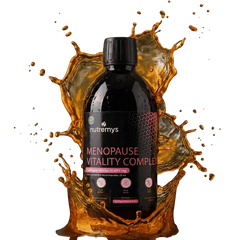
Menopause Vitality Complex combines collagen and active ingredients designed for mature bodies, in a highly absorbable liquid format — to support your tissues and vitality every day.
Discover Menopause Vitality ComplexYour frequently asked questions
Why do we gain weight during menopause even when we do not eat more?
Because the body changes how it functions. Declining estrogen redistributes fat toward the abdomen and impairs insulin sensitivity, while muscle mass decreases and slows resting energy expenditure. With the same food intake, the body therefore stores more. It is not a matter of willpower, but of biology.
How can I lose weight during menopause without a restrictive diet?
The priority is not to eat less, but to preserve muscle. Increase your protein intake (around 1.0–1.2 g/kg/day), add two strength-training sessions per week, sleep better, and ease stress. These four levers address the real cause: muscle loss and abdominal fat storage. Crash diets, on the other hand, cause muscle loss and make the problem worse.
Why am I gaining weight mainly around my stomach?
Before menopause, estrogen directs fat storage toward the hips and thighs. As estrogen levels decline, fat shifts toward the abdomen. This visceral fat is more visible, but also more responsive: it responds well to strength training and a protein-rich diet.
Can a dietary supplement help with weight gain?
No supplement can make you lose weight on its own, and you should be wary of promises that sound too good to be true. However, certain nutrients — protein, vitamin D, and collagen — support the maintenance of muscle mass and tissue tone, which are central to the issue. A well-chosen supplement complements an active lifestyle; it does not replace it.
Is weight gain during menopause inevitable?
Slight weight gain is common, but its extent and location largely depend on your habits. By protecting your muscle and sleep, you can absolutely stabilize your weight and refine your silhouette. Your body changes; you remain in control.
Scientific sources
- Greendale G.A. et al., “Changes in body composition and weight during the menopause transition,” JCI Insight, 2019.
- Study of Women's Health Across the Nation (SWAN) — longitudinal follow-up of the menopausal transition. swanstudy.org
- Lovejoy J.C. et al., “Increased visceral fat and decreased energy expenditure during the menopausal transition,” International Journal of Obesity, 2008.
- EFSA — Authorized health claims (protein and vitamin D for maintaining muscle mass). efsa.europa.eu
- INSERM — Menopause Information Dossier. inserm.fr
Related articles

The information shared on this blog is for educational and informational purposes only. It does not replace medical consultation, diagnosis or treatment prescribed by a healthcare professional. If you have symptoms, are undergoing treatment or are pregnant, consult your doctor before modifying your diet or starting supplementation. Nutremys LAB food supplements should not replace a varied, balanced diet or a healthy lifestyle.
