

At a glance
- Up to 40% of women notice their hair thinning as they approach their fifties.
- The main cause is not stress: it is the decline in estrogen and the hormonal imbalance between androgens and estrogen.
- Signs to watch for: a widening part, thinner hair, and loss of volume on the crown.
- Three effective approaches: hormonal support, targeted nutrition (zinc, biotin, iron, protein, collagen), and scalp care.
- Seek medical advice if hair loss is sudden, occurs in patches, or is accompanied by other symptoms: it is not always due to menopause.
Why do we lose hair during menopause?
Losing between 50 and 100 hairs a day is perfectly normal. The problem begins when regrowth can no longer keep up. At menopause, this imbalance has a very specific hormonal name, and understanding this mechanism changes everything: you stop blaming yourself and finally know where to take action.
Each hair follows a cycle: a long growth phase (the anagen phase, 2 to 6 years), a short transition, then a resting phase before shedding. Estrogen prolongs the growth phase and keeps the hair dense. When estrogen levels plummet at menopause, this phase becomes shorter: hair falls out faster and grows back thinner.
At the same time, declining estrogen levels allow androgens (so-called male hormones, present in all women) to exert more of their effect. In a genetically sensitive individual, they gradually miniaturize the follicle: this is female pattern hair loss, which affects the crown more than the temples. According to the American Academy of Dermatology, this form of hair loss affects a large proportion of women over 50.
Recognizing hormonal hair loss (and not confusing it with other causes)
Not all hair loss looks the same. Menopause-related hair loss has fairly typical characteristics, but other causes may occur alongside it or mimic it. Knowing how to tell them apart helps you avoid spending months pursuing the wrong lead.
Hormonal hair loss during menopause is most often diffuse and progressive: hair loses volume on the top of the head, the part widens, and the ponytail becomes thinner. It does not cause clearly defined patches or intense itching.
This article is for informational purposes only and does not replace medical advice. Sudden, patchy, or unexplained hair loss warrants a medical consultation.
Nutrition that supports your hair
Hair is made up of nearly 95% keratin, a protein. Without the right building materials, the follicle cannot produce a strong fiber, even with proper hormonal balance. Nutrition is not a detail: it is the foundation.
Four nutrient groups are particularly important during menopause. Protein provides keratin; many women lack enough of it after age 50, as explained in our article on 5 signs of protein deficiency. Iron transports oxygen to the follicle. Zinc, biotin, and selenium directly contribute to hair structure—the EFSA recognizes that zinc, biotin, and selenium contribute to the maintenance of normal hair.
Protein & collagen
Aim for 1 to 1.2 g of protein per kilogram of body weight per day. Collagen provides amino acids (proline, glycine) that nourish the scalp matrix.
Iron & ferritin
Lentils, lean red meat, black pudding, combined with vitamin C. Low ferritin is one of the most underestimated causes of hair loss.
Zinc, biotin, selenium
Eggs, seafood, Brazil nuts, pumpkin seeds. This trio supports keratinization and hair anchoring.
Omega-3 & hydration
Oily small fish, rapeseed oil, flaxseeds. They soothe the scalp and keep the hair fiber supple.
To learn more about the key micronutrients during this stage, our essential vitamins during menopause guide details dosages and beneficial combinations.
Natural solutions that deliver results
There is no miracle solution, but a consistent combination produces visible results in 3 to 6 months—the time of a complete hair growth cycle. Patience is part of the protocol: hair grows about one centimeter per month.
When it comes to scalp care, gentleness is key: space out harsh coloring treatments, dry at a moderate temperature, and treat yourself to a two-minute daily massage to stimulate microcirculation. The same active longevity principles apply to the skin—our special menopause skin routine follows this same collagen-rebuilding approach.
Signs that supplementation may help
A balanced diet remains the foundation. But during menopause, needs increase just as absorption becomes less efficient. Targeted supplementation can then help bridge the gap. Here are the signs that indicate it is worth considering:
- Your hair has visibly thinned over the past several months despite a good routine.
- Your nails are brittle and your skin is drier—a sign of a lack of collagen and micronutrients.
- You eat little protein or follow a restrictive diet.
- A blood test revealed low ferritin or vitamin D levels.
- You are experiencing other signs of the transition (fatigue, sensitive joints, sagging skin).
Marine collagen, combined with zinc and biotin, checks several of these boxes at once: it supports hair, skin, and joints, which are often affected together during menopause. This collagen-rebuilding approach is explained in detail in our complete guide to marine collagen and menopause.
Restore body to your hair
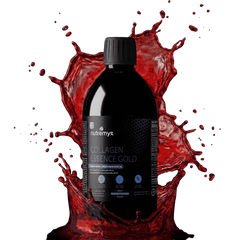
Our Gold Retinol liquid marine collagen provides the amino acids, collagen, and active ingredients that support hair, skin, and joints during menopause.
Discover Collagen Essence Gold RetinolFrequently asked questions
Why do we lose hair during menopause?
Because the drop in estrogen shortens the hair’s growth phase, while androgens progressively thin the follicle on the top of the scalp. As a result, hair falls out more quickly and grows back finer. This is a hormonal phenomenon, not a care problem.
Is hair loss during menopause reversible?
To a large extent, yes, especially if you act early. A miniaturized but still living follicle can regain volume with good hormonal balance, appropriate nutrition, and gentle care. Allow 3 to 6 months before assessing the results: that is the length of a hair-growth cycle.
What natural treatment can help with hair loss during menopause?
There is no single remedy, but an effective combination includes sufficient protein, iron if your ferritin level is low, zinc, biotin and collagen, a scalp cared for with gentle massages, and medical advice about your hormonal balance. Consistency matters more than “miracle” products.
Does collagen really help with hair loss?
Collagen provides amino acids (proline and glycine) that nourish the scalp matrix and hair fiber. It does not replace hormonal balance, but it supplies some of the necessary building blocks—making it all the more useful because it also supports the skin and joints, which are often weakened at the same time.
When should you consult a healthcare professional about hair loss?
Consult a healthcare professional if the hair loss is sudden and extensive, appears in clearly defined patches, or is accompanied by severe fatigue, brittle nails, or a pale complexion. These signs may indicate iron deficiency, a thyroid disorder, or alopecia areata, which require specific treatment.
Scientific sources
- American Academy of Dermatology — Hair loss: Causes / Female pattern hair loss.
- EFSA — Scientific opinions on zinc, biotin and selenium and the maintenance of normal hair (authorized claims, EU Regulation 432/2012).
- Grymowicz A. et al. — Hormonal effects on hair follicles, International Journal of Molecular Sciences, 2020.
- Goluch-Koniuszy Z. — Nutrition of women with hair loss problem during the period of menopause, Menopause Review, 2016.
Related articles

The information shared on this blog is for educational and informational purposes only. It does not replace medical consultation, diagnosis or treatment prescribed by a healthcare professional. If you have symptoms, are undergoing treatment or are pregnant, consult your doctor before modifying your diet or starting supplementation. Nutremys LAB food supplements should not replace a varied, balanced diet or a healthy lifestyle.
