

At a glance
- Up to 75–80 % of women experience hot flashes during the menopausal transition.
- The cause: declining estrogen levels disrupt the thermoregulation center in the hypothalamus.
- Their average duration can reach several years — all the more reason to address them calmly.
- Sleep, stress management, diet, and certain plants (phytoestrogens) are among the documented approaches.
- Targeted nutritional support can help maintain your balance every day.
What exactly is a hot flash?
You may know it all too well: a wave of heat that suddenly rises from the chest to the neck and face, skin that flushes, sometimes sweating, a heart that races for a few seconds, followed by a chill when it subsides. A hot flash generally lasts one to five minutes and may return several times a day. When it occurs at night, it is called a night sweat — the kind that soaks the sheets and fragments sleep.
In medical terms, these episodes are part of the vasomotor symptoms. The term is a little technical, but it describes exactly what happens: your blood vessels suddenly dilate to release heat that your body mistakenly believes is excessive. It is not a sign of weakness, nor is it “all in your head.” It is a very real physiological reflex.

According to the World Health Organization, vasomotor symptoms are among the most common manifestations of menopause. They affect a large majority of women, with intensity varying greatly from one person to another: some barely notice them, while others find their daily lives significantly disrupted.
Why do hot flashes occur during menopause?
It all comes down to a small region of the brain: the hypothalamus, your internal thermostat. It normally keeps your body temperature within a very narrow range. Estrogen helps fine-tune this thermostat.
At menopause, ovarian estrogen production drops and becomes irregular. As a result, the thermostat becomes hypersensitive. The slightest change in temperature—a slightly warm garment, a hot drink, an emotion—is interpreted as overheating. The brain then triggers an emergency response: dilation of the blood vessels, sweating, and an intense sensation of heat. A hot flash is this false thermal alarm.
How long do hot flashes last?
This is the question all my patients ask me. The honest answer: it varies widely. A large American follow-up study, the Study of Women's Health Across the Nation (SWAN), showed that vasomotor symptoms could persist for an average of about seven years, and sometimes longer in women whose symptoms begin early.
This figure may seem discouraging. It isn’t: above all, it means that it’s worth actively addressing them rather than waiting for them to “pass.” Reducing the frequency and intensity of hot flashes means regaining restorative sleep, steady concentration, and a peaceful social life—month after month. For a complete overview of hormonal changes, our guide to menopause symptoms puts hot flashes into context.
How to soothe hot flashes in everyday life
There’s no magic formula—but a combination of measures that, taken together, can make a real difference. Here are the ones I recommend most often in consultations.
🌡️ Cool your environment
Wear several light layers that you can remove, choose cotton and linen, keep your bedroom cool (18–19 °C), and have a small fan within reach at night.
☕ Identify your triggers
Alcool, café, plats épicés, boissons très chaudes et tabac déclenchent souvent les bouffées. Note pendant deux semaines ce qui précède les tiennes : tu identifieras vite tes propres facteurs.
Alcohol, coffee, spicy foods, very hot drinks, and tobacco often trigger hot flashes. For two weeks, note what precedes yours: you will quickly identify your own triggers.
🧘 Soothe your nervous system
🏃♀️ Move, but wisely
Regular physical activity supports overall balance and sleep. Simply avoid very intense exercise just before bedtime, as it can warm up the body.

Nutrition and plants: what science says
Your plate is a discreet yet powerful ally. Certain nutritional approaches are being studied particularly closely in relation to hot flashes.
🌱 Phytoestrogens
Found in soy, flaxseeds, and chickpeas, these plant compounds have a structure similar to estrogen. Several studies are exploring their potential to ease vasomotor symptoms.
💧 Hydration & magnesium
Magnesium contributes to normal nervous system function and helps reduce fatigue—two factors linked to menopausal comfort.
🐟 Omega-3s & fiber
A diet rich in plant foods and healthy fats, and low in added sugars, supports overall metabolic balance, which is often disrupted during this period.

Signs that supplementation could help
Supplementation is not always necessary. But certain signals suggest considering targeted nutritional support, alongside a healthy lifestyle:
| Signal | What this may indicate |
|---|---|
| Frequent hot flashes and night sweats that interrupt sleep | A need for support for the nervous system and sleep |
| Persistent fatigue and irritability during the day | A possible magnesium or B-vitamin deficiency |
| Limited or restrictive diet | Insufficient intake to address intelligently |
If several of these signs resonate with you, talk to your doctor or gynecologist. A comprehensive approach—nutrition, movement, stress management, and, if needed, a suitable supplement—remains the most effective. To learn more, discover our essential supplements after age 50.
Support designed for menopause
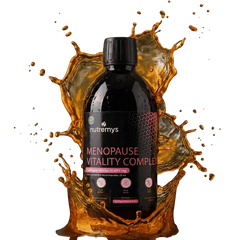
Our liquid formula combines collagen and targeted active ingredients to support your balance during this transition.
Discover Menopause Vitality ComplexYour frequently asked questions
Are hot flashes dangerous to your health?
No, a hot flash is not dangerous in itself. It is uncomfortable but harmless. Its consequences—disrupted sleep, fatigue, and low mood—are what mainly affect quality of life. If your hot flashes are very intense or accompanied by pronounced palpitations, talk to your doctor to rule out other causes.
What should I do when a hot flash strikes during the day?
Breathe slowly and deeply, remove a layer of clothing, take a sip of cool water, and move away from a heat source if possible. The hot flash usually passes within a few minutes. Keeping a fan or facial mist in your bag can really help.
Can diet really reduce hot flashes?
It does not make them disappear as if by magic, but it does play a real role. Limiting alcohol, caffeine, and spicy foods often reduces triggers. A diet rich in plant foods, phytoestrogens, and beneficial nutrients supports overall balance and everyday comfort.
How long before seeing an improvement?
Lifestyle changes (sleep, breathing, triggers) can bring relief within a few weeks. Nutritional support is a long-term process: it is generally evaluated after two to three months of regular use.
Scientific sources
- World Health Organization — “Menopause” fact sheet.
- Avis NE et al., “Duration of menopausal vasomotor symptoms over the menopause transition,” SWAN study, JAMA Internal Medicine, 2015.
- The Menopause Society (NAMS) — Resources on vasomotor symptoms.
- EFSA — Health claims for food supplements.
This article is provided for informational purposes and does not replace personalized medical advice. If you experience bothersome symptoms, consult your doctor or gynecologist.



The information shared on this blog is for educational and informational purposes only. It does not replace medical consultation, diagnosis or treatment prescribed by a healthcare professional. If you have symptoms, are undergoing treatment or are pregnant, consult your doctor before modifying your diet or starting supplementation. Nutremys LAB food supplements should not replace a varied, balanced diet or a healthy lifestyle.
