

At a glance
- 51 years: the average age of menopause in France, according to Inserm. Perimenopause, meanwhile, can begin as early as age 42–45.
- More than 7 years: the median duration of frequent hot flashes in the major SWAN study, including 4.5 years after the final menstrual period.
- 4 major symptom groups: vasomotor, physical, neuro-emotional, and intimate/urinary.
- The list of the 34 symptoms is a recognition tool, not a diagnosis. A medical assessment remains essential to rule out other causes.
Where does the list of the 34 symptoms of menopause come from?
You have probably come across it: a numbered list that circulates on forums, discussion groups, and tracking apps. It sometimes mentions 34 symptoms, and sometimes 35 for perimenopause. One thing should be made clear from the outset: this list has never been validated as an official medical nomenclature. No medical society has published it as such.
Yet it is useful. It emerged in the 2000s in the English-speaking world as a response to a real problem: women undergoing hormonal transition described symptoms to their doctors that were so varied—palpitations one day, forgetfulness the next, itching the following week—that they were often told it “had nothing to do with it.” The list helped connect the dots.
What is scientifically established, however, is the mechanism. Estrogen receptors are not confined to the uterus and ovaries: they are present in the brain, bones, skin, blood vessels, bladder, and connective tissue. When estradiol production drops and becomes erratic, these tissues receive a different signal. This is why the manifestations are so diverse—and so confusing.
The medical reference point is the stage—not the number of symptoms. The international STRAW+10 criteria (Harlow et al., Journal of Clinical Endocrinology & Metabolism, 2012) classify the transition according to cycle regularity and hormonal markers. This is the framework your gynecologist uses, not a symptom count.

At what age do the first menopause symptoms appear?
In France, the average age at menopause—that is, twelve consecutive months without periods—is 51, with a normal range between 45 and 55, as noted in the Inserm Menopause dossier. But this is an arrival date, not a departure date.
The first signs appear well before then. Perimenopause begins on average 4 to 8 years before the final menstrual period, often between the ages of 42 and 47. And this is precisely where the confusion lies: periods are still present, sometimes regular, yet the body is already sending signals. Many women take months to make the connection. If you are wondering what stage you are in, our article on the differences between perimenopause and menopause will help you determine where you stand.
This last piece of data deserves a closer look. The SWAN study published in JAMA Internal Medicine (Avis et al., 2015) followed 3,302 women for seventeen years. Result: in more than half of them, frequent hot flashes lasted more than seven years and persisted for an average of 4.5 years after their final menstrual period. In other words, it is neither “all in your head” nor “a matter of a few months.”
A simple guide for you. Keep track for three months: the date of your period, your sleep (good / average / poor), and the days when you experience hot flashes. This written record is more valuable than any list—it is the most useful document you can bring to your appointment.
The complete list of 34 symptoms, category by category
Rather than a random list, we have grouped the symptoms into four categories according to the physiological mechanism involved. It is easier to read—and above all, more useful for understanding why you feel what you feel.
1. Vasomotor symptoms (thermoregulation)
The drop in estrogen disrupts the internal thermostat located in the hypothalamus. The thermal comfort zone narrows: even a minimal change can trigger an emergency cooling response.
- Hot flashes — a sudden wave of heat from the torso to the face
- Night sweats — the same phenomenon during sleep
- Chills — often occurring just after a hot flash
- Palpitations — temporary acceleration of the heart rate
To understand this mechanism and the ways to address it in detail, see our guide to the causes and solutions for hot flashes.
2. Physical and structural symptoms
Estrogen helps maintain collagen, bone density, and muscle mass. Its decline is visible and felt, quite literally, in the body’s structure.
- Joint pain and morning stiffness
- Muscle pain and slower recovery
- Loss of muscle mass despite the same level of exertion
- Weight gain, particularly around the abdomen
- Bloating and more unpredictable digestion
- Drier and thinner skin
- Thinning hair or increased hair loss
- Brittle and ridged nails
- Tingling sensations in the hands or feet
- Itching, sometimes with the feeling of “skin itching for no reason”
- Headaches or more frequent migraines around your cycles
- Dizziness and feelings of unsteadiness
- Dry mouth and more sensitive gums
- Dry eyes and discomfort with contact lenses
- Tender or painful breasts
- Changes in body odor
Two of them come up particularly often in our conversations with readers: joint pain and hair loss.

3. Neuroemotional and cognitive symptoms
The brain is rich in estrogen receptors, particularly in the hippocampus — the seat of memory — and the prefrontal cortex. This is the most destabilizing category because it affects identity.
- Persistent fatigue, not relieved by rest
- Insomnia and waking between 3 a.m. and 5 a.m.
- Brain fog and difficulty finding words
- Short-term memory problems
- Difficulty concentrating
- Rapid and disproportionate mood swings
- Irritability and a lower tolerance threshold
- Anxiety, sometimes new after age 45
- Depressed mood or loss of motivation
- Feeling « out of touch with yourself », loss of confidence
If this quartet of fatigue, insomnia, brain fog, and irritability sounds familiar, our articles on menopausal fatigue, insomnia, and brain fog each explore a specific mechanism in depth.
4. Intimate and urinary symptoms
The vulvovaginal and urinary tissues are among the most estrogen-dependent. These symptoms are also the least discussed — yet among the easiest to relieve.
- Intimate dryness and daily discomfort
- Lower libido
- Frequent urination or stress incontinence
- Recurrent urinary tract infections
A clinical point to watch. This list is not a substitute for a diagnosis. Severe fatigue, rapid weight gain, or palpitations may also indicate hypothyroidism, anemia, or iron deficiency — three common conditions after age 45 that are easy to confirm with testing. Our article on blood tests during menopause details the useful tests.
The 8 most common symptoms (and what they mean)
If you had to remember only a few, these are the ones. They form the core of the experience reported in consultations.
| Symptom | What happens | What most often helps |
|---|---|---|
| Hot flashes | Dysregulated hypothalamic thermostat | Layers of clothing, reduced alcohol/caffeine, phytoestrogens |
| Fragmented sleep | Night sweats + declining progesterone | A bedroom at 18°C, magnesium, regular sleep schedules |
| Widespread fatigue | Sleep debt + reduced metabolic efficiency | Blood tests, protein at breakfast |
| Joint pain | Loss of collagen and the anti-inflammatory effect of estrogen | Daily movement, collagen, omega-3s |
| Abdominal weight gain | Redistribution of fat toward the trunk | Strength training, protein intake |
| Brain fog | Understimulated brain estrogen receptors | Sleep, aerobic activity, B vitamins |
| Mood swings | Rapid fluctuations in estradiol | Regularity, magnesium, psychological support |
| Intimate dryness | Thinning of the mucous membrane | Local moisturizers, gynecological advice |
One detail matters: these symptoms feed into one another. Night sweats disrupt sleep, lack of sleep worsens brain fog and irritability, and fatigue reduces physical activity, which intensifies muscle loss. Acting on just one link is often enough to loosen the entire chain. That is why the goal is never to treat everything at once.
Signs that you might benefit from supplementation
A supplement is not a substitute for medical advice or a balanced diet. It makes sense when certain signals keep recurring:
Several systems affected at once
You have symptoms in at least three of the four categories above. The signal is no longer isolated: it is systemic.
Dietary intake is no longer keeping up
Little oily fish, few legumes, and few dairy products or alternatives. Calcium, magnesium, and vitamin D needs increase after age 45.
The skin, hair, and joints change together
These three change together: this is the hallmark of a decline in collagen synthesis.
Lifestyle adjustments are no longer enough
You have already addressed sleep, activity, and diet for three months without any clear improvement.
Whatever you choose, keep one simple principle in mind: prioritize formulas with transparent, well-documented dosages. Health claims authorized in Europe are publicly available in the EFSA register of health claims — a useful way to distinguish a marketing promise from a recognized effect. Our comparison of the best menopause supplement details the ingredients to look for.
Support designed for this stage
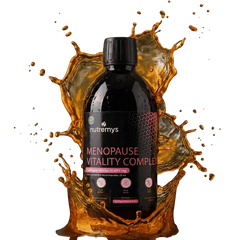
Menopause Vitality Complex combines marine collagen, phytoestrogens, magnesium, and B vitamins in a fast-absorbing liquid formula, with no hormones.
Discover Menopause Vitality ComplexWhen to seek medical attention without delay
Some signs should never be self-diagnosed, no matter how comprehensive the list. Make an appointment promptly if you experience:
- Bleeding after menopause, even if minimal, even just once
- Very heavy or closely spaced periods during perimenopause
- Palpitations with shortness of breath or chest pain
- Persistent depressive mood lasting more than two weeks
- Marked symptoms before age 45, which warrant ruling out premature ovarian insufficiency
This article is for informational purposes only and does not replace medical advice. General reference information is available in the French national health insurance menopause information sheet.
Frequently asked questions
What are the 34 symptoms of menopause?
They fall into four groups: vasomotor (hot flashes, night sweats, chills, palpitations), physical (joint and muscle pain, weight gain, bloating, dry skin, thinning hair, brittle nails, tingling, itching, headaches, dizziness, dry mouth and eyes, breast tenderness, changes in body odor, muscle loss), neuro-emotional (fatigue, insomnia, brain fog, memory and concentration problems, mood swings, irritability, anxiety, low mood, loss of confidence), and intimate/urinary (dryness, decreased libido, frequent urination, recurrent infections).
You will not experience all 34. Most women experience between 5 and 12, with widely varying intensity.
How many symptoms does a woman experience on average?
Between five and twelve, with intensity varying greatly from one woman to another and from month to month. Approximately one in four women goes through this stage with minimal discomfort, while one in four reports symptoms that significantly affect her professional and personal daily life.
Can these symptoms appear before periods stop?
Yes, and this is actually the most common situation. During perimenopause, menstrual cycles continue, but estradiol fluctuates erratically — sometimes higher than before, sometimes very low. These fluctuations, rather than the absolute level, trigger symptoms. Many women experience symptoms three to five years before their final menstrual period.
How long do menopause symptoms last?
The median duration of frequent hot flashes is 7.4 years in the SWAN study, including approximately 4.5 years after the final menstrual period. Intimate and urinary symptoms, on the other hand, tend to persist or even worsen over time if left untreated — unlike hot flashes, which generally become less severe.
How can I tell whether my symptoms are really caused by menopause?
The overall body of evidence matters more than a single symptom: your age, the regularity of your cycles, and the simultaneous presence of signs from several groups. A blood test — FSH, estradiol, TSH, ferritin, vitamin D — is mainly used to rule out other common causes. Track your symptoms for three months before your appointment: this is the most useful information for your doctor.
Scientific sources
- Inserm — Menopause dossier, French National Institute of Health and Medical Research.
- Avis NE et al. — Duration of menopausal vasomotor symptoms over the menopause transition, JAMA Internal Medicine, 2015 (SWAN study, 3,302 women).
- Harlow SD et al. — Executive summary of the Stages of Reproductive Aging Workshop + 10 (STRAW+10), Journal of Clinical Endocrinology & Metabolism, 2012.
- Assurance Maladie — Menopause: symptoms and diagnosis, ameli.fr.
- EFSA — Health claims, European Food Safety Authority.
The information shared on this blog is for educational and informational purposes only. It does not replace medical consultation, diagnosis or treatment prescribed by a healthcare professional. If you have symptoms, are undergoing treatment or are pregnant, consult your doctor before modifying your diet or starting supplementation. Nutremys LAB food supplements should not replace a varied, balanced diet or a healthy lifestyle.
