

At a glance
- Nearly 50 % of women report joint pain during the menopausal transition.
- Cartilage, synovial membrane, and tendons have estrogen receptors: when the hormone declines, local inflammation increases.
- Menopausal arthralgia is not osteoarthritis: it is often reversible with the right habits.
- The evidence-based trio: daily gentle movement + an anti-inflammatory diet + collagen and cofactors.
Why menopause triggers joint pain
Hot flashes get a lot of attention, but joints get less. Yet the studies are clear: in a review published in the journal Maturitas, more than half of women in perimenopause and menopause report arthralgia — joint pain without visible damage. The large American SWAN study, which followed thousands of women during the transition, found joint pain or stiffness in about 6 in 10 women at the end of perimenopause.
The reason is biological, not psychological. Your joints are living tissues, and estrogen plays three protective roles there:
First role: anti-inflammatory. Estrogens inhibit the local production of inflammatory cytokines in the synovial membrane. When estrogen levels drop, low-grade inflammation sets in—hence this diffuse morning stiffness. Second role: trophic. Estradiol stimulates chondrocytes, the cells that produce cartilage, as documented in the research published in Arthritis Research & Therapy. Third role: tissue hydration. Less estrogen means less hyaluronic acid in the synovial fluid—the joint is less “lubricated.”

Note: this pain is often accompanied by progressive muscle loss. Muscles and joints form a single team: a weakened muscle shifts the load onto the joint, which complains more.
Recognizing menopausal arthralgia (and not confusing it with osteoarthritis)
This is the question my patients ask me most often during consultations: “Is it osteoarthritis?” Not necessarily. Menopausal hormonal arthralgia has a distinct signature: it is diffuse, symmetrical, and fluctuating. It commonly affects the fingers, wrists, knees, and shoulders—often on both sides—and is more pronounced in the morning, improving with movement.
Osteoarthritis, on the other hand, is localized mechanical wear: one specific joint, with pain that increases with exertion and eases with rest. The two can coexist, but they do not call for the same response.
| Characteristic | Menopausal arthralgia | Osteoarthritis |
|---|---|---|
| Location | Diffuse, often symmetrical (fingers, knees, shoulders) | One or two specific joints |
| Timing | Morning stiffness, improves with movement | Pain with exertion, relieved by rest |
| Progression | Fluctuating, linked to hormonal variations | Progressive over time |
| Reversibility | Often improved with lifestyle and nutrition | Established damage, progression can be slowed |
Did you know? Morning stiffness lasting more than 45 minutes, swollen, warm, or red joints, or severe associated fatigue should prompt a medical consultation: an inflammatory condition must be ruled out (particularly rheumatoid arthritis, whose peak onset coincides with the fifties). This article is for informational purposes only and does not replace medical advice.
Joint pain during menopause: solutions that really work
The good news: unlike mechanical wear and tear, hormonal arthralgia responds well to lifestyle changes. Three key factors stand out in the literature.
🚶♀️ Move gently every day
The joint paradox: the less you move, the more it hurts. Movement nourishes cartilage (which has no blood vessels and relies on compression and decompression to receive nutrients). Brisk walking, swimming, cycling, yoga: 30 minutes a day is enough.
💪 Strengthen weight-bearing muscles
Two strength-training sessions per week (modified squats, resistance bands, core exercises) take pressure off the knees and hips. It is also the best defense against sarcopenia.
🥗 Eat an anti-inflammatory diet
Oily fish twice a week (omega-3 EPA/DHA), colorful vegetables, olive oil, turmeric, and fewer refined sugars and ultra-processed foods. The Mediterranean diet remains the best-studied approach.
😴 Protect your sleep
Sleep deprivation lowers the pain threshold. If your nights are interrupted, address that issue too: our guide to insomnia during menopause will help.

Consultation tip: Keep a mini-journal for 3 weeks (pain on a scale of 1 to 10, sleep, activity). Most of my patients discover that their worst joint days follow their worst nights—not their physical exertion.
Collagen, vitamin C, magnesium: what the science says about supplements
Joint tissue is composed mainly of type II collagen (cartilage) and type I collagen (tendons, ligaments). Yet collagen production drops sharply after menopause—with up to 30% of the body's collagen lost in the first five years, according to available dermatological and connective tissue data.
This is where supplementation has a solid rationale. Randomized clinical trials conducted with hydrolyzed collagen peptides show a reduction in activity-related joint pain after 12 weeks of daily use. Once absorbed, collagen peptides provide chondrocytes with the specific amino acids (glycine, proline, hydroxyproline) they need—and appear to stimulate their synthesis activity.
Three cofactors deserve attention:
Vitamin C
EFSA-approved claim: it “contributes to normal collagen formation to support the normal function of cartilage.” Without it, there is no collagen synthesis.
Magnesium
Contributes to normal muscle function—and well-functioning muscles protect the joints. Often deficient during menopause.
Omega-3 EPA/DHA
Marine fatty acids help modulate the inflammatory response. Two servings of oily fish per week, or a high-quality supplement.

A note on dosage form: to reach clinically studied doses (5 to 12 g of collagen peptides per day), the liquid form is more practical than capsules—you would need to swallow more than fifteen capsules to get the same dose. This is the choice we made at Nutremys, and it is explained in detail in our complete guide to marine collagen during menopause.
Signs that you may benefit from supplementation
Joint supplementation may be particularly worthwhile if several of these situations apply to you:
- Diffuse morning stiffness that appeared or worsened during perimenopause;
- Symmetrical pain in the fingers, knees, or shoulders, fluctuating from week to week;
- More frequent cracking and popping, with a feeling of “dry” joints;
- Thinner skin and more brittle hair at the same time—signs of an overall collagen deficiency;
- Low dietary intake of protein and oily fish;
- Reduced physical activity due to pain.
In all cases, a medical assessment is necessary if the pain is severe or localized, or accompanied by swelling or redness. For an overview of micronutrients that may be useful during this stage of life, see our guide to essential vitamins during menopause, as well as our complete guide to menopause symptoms.
FAQ — Joint Pain and Menopause
Can menopause really cause joint pain?
Yes. Approximately one in two women reports joint pain during the menopausal transition. Cartilage, the synovial membrane, and tendons have estrogen receptors: the drop in hormone levels increases local inflammation, reduces joint lubrication, and slows collagen turnover. This pain is real, common—and usually manageable.
How can you tell whether it is osteoarthritis or menopause?
Menopausal arthralgia is typically diffuse, symmetrical, and more pronounced in the morning, improving with movement. Osteoarthritis is localized to one joint, worsened by exertion, and relieved by rest. If in doubt, or in case of swelling, redness, or morning stiffness lasting more than 45 minutes, consult your doctor to rule out an inflammatory condition.
How long does menopausal joint pain last?
They are most pronounced during perimenopause and the first few postmenopausal years, when hormonal fluctuations are greatest. In many women, they then subside spontaneously. With a healthy lifestyle — daily movement, an anti-inflammatory diet, protected sleep, and sufficient intake of collagen and cofactors — improvement is often noticeable within 8 to 12 weeks.
Which supplement should you choose for joints during menopause?
Look for hydrolyzed collagen peptides at a clinically studied dose (5 to 12 g/day), combined with vitamin C — essential for normal collagen formation, according to the EFSA-approved claim. The liquid form makes it possible to reach these doses in a single serving. Magnesium and omega-3s usefully complement the strategy.
Your joints deserve a clinically dosed solution
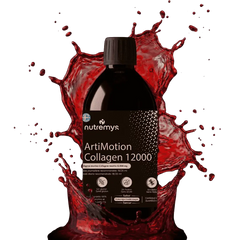
ArtiMotion Collagen 12 000 provides 12 g of liquid collagen peptides per serving, with the cofactors your joint tissue needs. Applied biochemistry for your movement.
Discover ArtiMotion Collagen 12 000Scientific sources
- Magliano M. Menopausal arthralgia: Fact or fiction. Maturitas. 2010;67(1):29-33.
- Dugan SA, et al. Musculoskeletal pain and menopausal status. Clin J Pain. 2006;22(4):325-31 (SWAN study).
- Roman-Blas JA, et al. Osteoarthritis associated with estrogen deficiency. Arthritis Res Ther. 2009;11(5):241.
- Zdzieblik D, et al. Improvement of activity-related knee joint discomfort following supplementation of specific collagen peptides. Appl Physiol Nutr Metab. 2017;42(6):588-95.
- EFSA. Authorized health claim: vitamin C contributes to normal collagen formation to ensure normal cartilage function. Regulation (EU) No. 432/2012.
- Thompson Z, et al. Defining the impact of estrogen on the tendon and its healing. J Orthop Res. 2020.
This article is for informational purposes only and does not replace medical advice.
The information shared on this blog is for educational and informational purposes only. It does not replace medical consultation, diagnosis or treatment prescribed by a healthcare professional. If you have symptoms, are undergoing treatment or are pregnant, consult your doctor before modifying your diet or starting supplementation. Nutremys LAB food supplements should not replace a varied, balanced diet or a healthy lifestyle.
