

At a glance
- Early menopause = ovarian function stopping before age 40; between ages 40 and 45, it is referred to as “early” menopause.
- It affects approximately 1% of women before age 40, and 0.1% before age 30.
- Signs: periods becoming less frequent or stopping, hot flashes, disturbed sleep, vaginal dryness, more fragile mood.
- Diagnosis: FSH level above 25 IU/L, combined with menstrual disturbances for at least 4 months.
- Priority: appropriate hormone therapy, generally until the natural age of menopause, supplemented by a lifestyle that protects your bones, heart and mental well-being.
Early menopause: what are we talking about?
In France, menopause occurs on average around age 51. We speak of early menopause when the ovaries stop functioning before age 40. Doctors now prefer the term premature ovarian insufficiency (POI), which is more accurate: ovarian activity may still be intermittent, unlike in “classic” menopause.
Between ages 40 and 45, it is more accurately referred to as early menopause. The two situations have one thing in common: the body is deprived of estrogen earlier than expected, and for longer. This is why monitoring is so important.

This figure comes from an analysis of more than 300,000 women published in The Lancet Public Health (Zhu et al., 2019). It should not be a cause for concern, but rather motivation: this risk decreases significantly when early menopause is recognized and managed.
Signs of early menopause
The symptoms are the same as those of perimenopause. The difference is age: at 35, menopause is rarely suspected, and diagnosis is often delayed.
| Sign | What you may notice |
|---|---|
| Menstrual cycle | Periods becoming less frequent, irregular, or stopping for several months (excluding pregnancy and stopping the pill). |
| Vasomotor symptoms | Hot flashes, night sweats, palpitations. |
| Sleep and energy | Nighttime awakenings, persistent fatigue, difficulty concentrating. |
| Mood | Irritability, anxiety, more fragile mood, decreased libido. |
| Mucous membranes | Vaginal dryness, discomfort during intercourse, drier eyes. |
For a broader overview, also see our complete list of the 34 symptoms of menopause.
Causes of early menopause
In most cases, no specific cause is found: this is called idiopathic POI. This is often frustrating, but it does not change management. The identified causes are:
- Genetic: Turner syndrome, FMR1 gene premutation (fragile X), family history of early menopause.
- Autoimmune: POI is more common in cases of thyroiditis, Addison's disease, or other autoimmune diseases.
- Medical (iatrogenic): chemotherapy, pelvic radiotherapy, ovarian surgery.
- Lifestyle factors: smoking advances the age of menopause by one to two years on average. It does not explain POI on its own, but it is a factor that can be changed.
How early menopause is diagnosed
Diagnosis is based on two elements, according to the European ESHRE recommendations:
- cycle disturbances (absent or very infrequent periods) for at least 4 months;
- an FSH level above 25 IU/L. The level may be checked a second time if in doubt.
Doctors often also check estradiol, prolactin, TSH, and sometimes AMH (anti-Müllerian hormone), which reflects ovarian reserve. To learn how to read these results, see our guide blood tests and menopause.
Early menopause: protecting your bones, heart, and mood
Estrogens protect the skeleton, arteries, and brain. When they are lacking ten or fifteen years earlier than expected, this must be addressed. The cornerstone of care is hormone therapy, generally recommended until the natural age of menopause (around age 50), unless contraindicated. This is not a comfort choice: it protects your bones and heart. Your gynecologist will help you choose the right formulation.
Around this pillar, your lifestyle really matters:
Calcium in your diet (dairy products, sardines, calcium-rich water), vitamin D, and weight-bearing exercise: brisk walking and strength training.
No smoking, 150 minutes of activity per week, and monitoring of blood pressure, cholesterol, and blood sugar.
An early diagnosis can be upsetting, especially if it affects plans to have children. Psychological support or a patient association can help a great deal.
Vaginal moisturizers and lubricants, and an open discussion with your doctor if the discomfort persists.
Signs that you might benefit from supplementation
Let's be clear: no dietary supplement can replace hormone therapy for premature ovarian insufficiency. However, certain nutritional intakes can usefully complement medical care if you recognize yourself in these situations:
- You consume few dairy products or oily fish, and your calcium intake is low (see the signs of calcium deficiency);
- Your vitamin D level is low, especially in autumn and winter;
- You feel that your skin is drier and less firm, and your joints are less flexible;
- Fatigue and disrupted sleep weigh on your daily life despite good habits.
In these cases, targeted collagen, vitamin, and mineral intake may support your well-being, always in consultation with your doctor.
Daily support, alongside your care
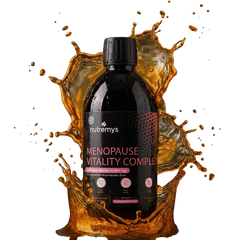
Menopause Vitality Complex combines liquid marine collagen and targeted nutrients to support your skin, energy, and well-being during the hormonal transition.
Discover the Menopause Vitality ComplexFrequently asked questions about early menopause
What are the signs of early menopause?
The first sign is often that periods become less frequent or stop before age 40. Classic menopause symptoms may also occur: hot flashes, night sweats, sleep problems, vaginal dryness, and irritability.
If you are under 40 and have not had a period for more than 4 months (excluding pregnancy), consult a doctor for a hormone evaluation.
Can you get pregnant after early menopause?
It is possible, but rare. With premature ovarian insufficiency, the ovaries may still function intermittently: around 5% of affected women achieve a spontaneous pregnancy. If you are planning to have a child, discuss it early with a fertility center; egg donation is the most effective option.
How can early menopause be prevented?
It is most often linked to genetic, autoimmune, or medical causes, so it is rarely preventable. Not smoking remains the only clearly proven lifestyle measure. Before chemotherapy, fertility preservation may be offered.
Can early menopause be treated naturally?
Natural approaches (diet, physical activity, stress management, supplements) can help you feel better, but they do not replace the missing estrogen. Before age 45, hormone therapy is recommended to protect the bones and heart, unless contraindicated. The two approaches complement each other.
What is the difference between early menopause and perimenopause?
Perimenopause is the normal transition to menopause, which generally begins after age 45. Early menopause refers to the cessation of ovarian activity before age 40. To better identify your stage, read our article perimenopause or menopause.
This article is for informational purposes only and does not replace medical advice. If you experience menstrual cycle irregularities or unusual symptoms, consult your doctor or gynecologist.
- ESHRE — Guideline: Management of premature ovarian insufficiency (updated 2024).
- Haute Autorité de Santé — PNDS Premature ovarian insufficiency.
- Zhu D. et al. — Age at natural menopause and risk of incident cardiovascular disease: a pooled analysis. The Lancet Public Health, 2019.
- Coulam C.B. et al. — Incidence of premature ovarian failure. Obstetrics & Gynecology, 1986.
- Inserm — Menopause: information resource.
The information shared on this blog is for educational and informational purposes only. It does not replace medical consultation, diagnosis or treatment prescribed by a healthcare professional. If you have symptoms, are undergoing treatment or are pregnant, consult your doctor before modifying your diet or starting supplementation. Nutremys LAB food supplements should not replace a varied, balanced diet or a healthy lifestyle.

