

At a glance
- Hormonal acne affects a significant proportion of women during perimenopause and menopause.
- The cause: declining estrogen disrupts the balance with androgens, which stimulate sebum production.
- It typically appears on the lower face: chin, jawline, neck.
- Because the skin is thinner and drier, harsh practices make the situation worse.
- Zinc, vitamin A, a gentle routine, and a low-glycemic-index diet are among the approaches studied.
Why acne returns during menopause
You thought you had left breakouts behind in adolescence, and now they are back, sometimes for the first time in your life. It is confusing, a little unfair, but far from random. Like so many symptoms of this phase, the answer comes down to one word: hormones.
During your fertile years, estrogen tempered the action of androgens, the so-called “male” hormones that the female body also produces in small amounts. During perimenopause and then menopause, estrogen levels plummet, while androgens decline more slowly. The balance shifts: androgens become relatively dominant. They stimulate the sebaceous glands, which produce more sebum. This sebum, combined with dead skin cells, clogs pores and promotes inflammation - the very mechanism behind a pimple.
This phenomenon is well documented in the dermatological literature. A review published in International Journal of Women's Health (Khunger & Mehrotra, 2019) emphasizes that menopausal acne, long neglected, has a clear hormonal basis and deserves appropriate treatment, different from that for adolescent acne. Mature skin is indeed thinner, drier, and more reactive: treating it like young skin is counterproductive.
Recognizing hormonal acne
Not all blemishes are alike. Menopausal hormonal acne has a recognizable pattern: predominantly deep, tender lesions (known as papules and nodules) that recur in the same area, mainly on the lower face. It often occurs in flare-ups, less regularly than before as cycles begin to fade.
| Sign | Menopausal hormonal acne | Warning signs |
|---|---|---|
| Location | Chin, jawline, neck, lower cheeks | Diffuse redness with visible blood vessels (suggestive of rosacea) |
| Type of lesions | Deep, tender spots, few blackheads | A single lesion that grows, bleeds or does not heal |
| Progression | Flare-ups linked to stress and fatigue | Sudden hair growth, deeper voice, sudden flare-up |
| Background | Skin otherwise rather thin and dry | Intense itching, scaly patches |
This table is a guide, not a diagnosis. Menopausal acne can be confused with rosacea, which is common at the same age but requires different care. And if the spots are accompanied by signs of marked androgen excess (hair growth, hair loss, voice changes), medical advice is necessary. The difference between the stages of this transition is explained in our article perimenopause vs menopause.
Give your skin the support it deserves
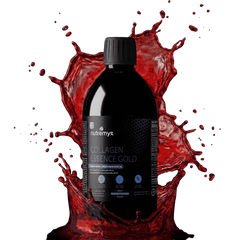
Collagen Essence Gold Retinol combines marine collagen with active ingredients designed to enhance radiance and comfort for mature skin.
Discover Collagen Essence GoldGentle solutions that really work
When it comes to menopausal acne, there is no single solution, but rather a range of approaches whose effectiveness is documented. The first principle is counterintuitive: treat your skin gently rather than attacking it.
A minimalist routine
A gentle soap-free cleanser morning and evening, a non-comedogenic moisturiser, and sun protection. This is the foundation for restoring the skin barrier without irritating it.
Well-chosen active ingredients
Niacinamide (soothing), low-dose salicylic acid, and gentle retinoids in the evening to regulate cell turnover. Introduce one active ingredient at a time, gradually.
A low-glycemic-index plate
Sugars and dairy products are associated with flare-ups in several studies. Focusing on vegetables, quality proteins, and healthy fats helps moderate the hormonal response.
Easing stress
Chronic stress raises cortisol levels, which in turn stimulates sebum production. Sleep, breathing exercises, and physical activity are not cosmetic details.
Collagen and the skin barrier
At menopause, collagen production drops significantly - by up to 30% in the first five years, according to dermatological data. The skin becomes thinner and its barrier weaker, making it more reactive and prone to blemishes. Supporting the skin matrix is therefore part of a holistic approach. Supplementing with collagen peptides is attracting growing interest for skin hydration and elasticity; our complete guide to marine collagen and menopause explains the different forms and dosages.
When to seek advice
Acne that leaves marks, resists gentle measures, or affects your mood warrants a dermatological opinion. Solutions exist, from topical treatments suited to mature skin to hormonal approaches, which should be discussed with a professional. To care for your skin daily, also see our menopause skincare routine.
Signs that supplementation may help
Adjusting your routine and diet is sometimes enough. But certain signs indicate that targeted nutritional support may be worthwhile:
Skin that is both oily and dehydrated
Blemishes coexist with areas that feel tight: the skin barrier is unbalanced.
Recurrent flare-ups despite a good routine
Gentle measures are no longer enough to space out flare-ups, which are often linked to stress.
Low-zinc diet
Few seafood, seeds, or legumes, the main sources of this mineral.
Skin signs of declining collagen
Loss of elasticity and firmness accompanying barrier fragility.
Your frequently asked questions
Why do I have acne during menopause when I no longer had it?
Because hormonal balance changes. The drop in estrogen leaves androgens relatively more active, and they stimulate sebum production. Pores become clogged more easily, especially on the chin and jawline. This is neither a lack of hygiene nor a step backward: it is a hormonal signal, like hot flashes.
How can you naturally soothe menopausal hormonal acne?
Start with a gentle routine: soap-free cleanser, non-comedogenic moisturizer, sun protection, and well-chosen active ingredients such as niacinamide or a gentle retinoid in the evening. Add a low-glycemic-index diet, stress management, and good sleep. In terms of nutrients, zinc and vitamin A are the most studied for maintaining normal skin.
Should certain foods be avoided?
Several studies link rapidly absorbed sugars and dairy products, particularly skim milk, to worsening acne. Without resorting to strict diets, choosing a low-glycemic-index plate - vegetables, quality proteins, healthy fats - helps moderate the hormonal response and inflammation. Every skin type reacts differently: observing your own triggers remains the best approach.
Acne or rosacea: how can you tell the difference?
Hormonal acne causes deep pimples and well-defined lesions, especially on the lower face. Rosacea, which is common at the same age, is characterized more by diffuse redness, visible blood vessels, and sensations of heat in the center of the face. Both can coexist. If in doubt, a dermatologist will make the correct diagnosis, as the treatments differ significantly.
Scientific sources
- Khunger N, Mehrotra K. “Menopausal Acne – Challenges And Solutions.” International Journal of Women's Health, 2019. Available via the PubMed database.
- Baldwin H, Tan J. “Effects of Diet on Acne and Its Response to Treatment.” American Journal of Clinical Dermatology, 2021.
- Perkins AC et al. “Acne vulgaris in women: prevalence across the life span.” Journal of Women's Health, 2012.
- EFSA — Authorized health claims (zinc, vitamin A): EFSA, health claims.
The information shared on this blog is for educational and informational purposes only. It does not replace medical consultation, diagnosis or treatment prescribed by a healthcare professional. If you have symptoms, are undergoing treatment or are pregnant, consult your doctor before modifying your diet or starting supplementation. Nutremys LAB food supplements should not replace a varied, balanced diet or a healthy lifestyle.
