


The endometrium: a key tissue highly sensitive to hormones
The endometrium is the inner lining of the uterus. During the fertile years, it renews with each cycle to receive a potentially fertilized egg. At menopause, the drop in estrogen should make it thinner and more stable. However, in some women, it continues to thicken—which may reflect excess estrogen without sufficient progesterone, polyps, fibroids, or other medical conditions requiring investigation.
In this article, you will find the most common causes, warning symptoms, treatment options, and practical advice to support your hormonal balance naturally.
What is the endometrium?
The endometrium is the innermost layer of the uterus, a highly vascularized tissue that changes with each menstrual cycle. Its main function is to prepare to receive a fertilized egg. If fertilization does not occur, it is shed during menstruation and begins a new cycle.
This tissue is extremely sensitive to hormonal fluctuations. Estrogens stimulate its growth, while progesterone regulates its thickness and promotes its stability. The uterus is composed of three layers: the perimetrium (outer), the myometrium (muscular), and the endometrium (inner).
The endometrium during menopause: what changes
With the onset of menopause, estrogen production decreases significantly. The endometrium should therefore gradually thin and stop renewing cyclically. In the absence of ovulation, there is no luteal phase or endogenous progesterone.
During perimenopause, anovulatory cycles can cause fluctuating endometrial thickness—this is often normal. However, persistent thickening or bleeding after established menopause (12 months without periods) always requires gynecological evaluation.
Causes of a thickened endometrium during menopause
Endometrial thickening generally results from an excess of estrogen without progesterone counterbalance—whether endogenous (produced by the body) or exogenous (provided through treatment). Several factors may be involved.
Anovulatory cycles during perimenopause suppress the luteal phase. Without progesterone, estrogens stimulate endometrial growth unchecked. This is the most common cause.
Adipose tissue converts hormone precursors into estrogens through aromatization. The greater the amount of body fat, the higher the peripheral estrogen production—even after menopause.
Polyps are small, benign growths inside the uterus that can mimic thickening on ultrasound. Submucosal fibroids deform the uterine cavity and can cause bleeding.
Certain medications used to treat breast cancer (such as tamoxifen) have an estrogen-mimicking effect on the endometrium. HRT without adequate progestogen can also promote thickening.
Diabetes, hypertension, and liver disorders can alter hormone metabolism and indirectly contribute to endometrial thickening.
Symptoms to watch for
In many cases, endometrial thickening is asymptomatic and discovered during a routine ultrasound. However, certain signs should raise concern and prompt a timely consultation.
Any vaginal bleeding after menopause is a warning sign that must be urgently evaluated by a gynecologist — even if it is light or occurs only once. Do not wait or minimize it. An ultrasound evaluation and, if necessary, an endometrial biopsy will help determine the cause.
Risk factors
Increase peripheral estrogen production through aromatization of adipose tissue.
Hormone replacement therapy without adequate progesterone or with an inappropriate dosage.
Used for breast cancer, it acts as a partial estrogen agonist on the endometrium.
Diabetes, hypertension, and metabolic syndrome — alter hormone metabolism.
Endometrial polyps, submucosal fibroids, and adenomyosis — may mimic or cause true endometrial thickening requiring specific evaluation.
Treatments for a thickened endometrium during menopause
Treatment depends on the identified cause, the severity of symptoms, and the patient's medical history. It should only be initiated after a complete medical evaluation.
Rebalancing estrogen and progesterone levels under strict medical supervision. Reviewing current treatments if necessary.
Allows direct visualization of the inside of the uterus, removal of polyps or fibroids, and targeted biopsy.
Follow-up ultrasounds, biopsies if indicated, and hormone tests. Essential for adjusting treatment and preventing complications.
Maintaining a healthy weight, controlling blood sugar and blood pressure, and following an anti-inflammatory diet to limit peripheral estrogen.
Endometrial hyperplasia is excessive thickening that can, in some cases involving cellular atypia, progress to endometrial cancer. It must not be ignored. Endometrial biopsy is the only test that can distinguish simple hyperplasia (often reversible with treatment) from atypical hyperplasia or carcinoma. Early diagnosis considerably improves the prognosis.
Natural support & dietary supplements
In addition to medical care, certain natural approaches can help support overall well-being during menopause—particularly in cases of fatigue, irritability, or emotional imbalance associated with this transitional period.
Maintaining a healthy weight is one of the most effective ways to limit peripheral estrogen production and reduce the risk of endometrial thickening. A diet rich in fiber and low in refined sugars, combined with regular physical activity, supports this goal while promoting hormonal balance.
Avoiding phytoestrogens without guidance from a healthcare professional, monitoring blood sugar, and checking your blood pressure are other important preventive measures.
Support your feminine balance naturally every day
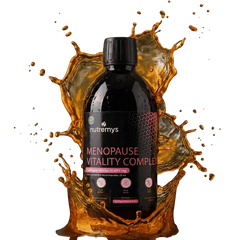
Our Menopause Vitality Complex is specifically formulated to support women during the menopausal transition. Energy, emotional balance, everyday comfort—a comprehensive approach to caring for yourself during this essential stage. Designed to complement medical care and a suitable lifestyle.
Discover Menopause Vitality Complex →Dietary supplement—not a substitute for medical advice or prescribed treatment.
Frequently asked questions about a thickened endometrium during menopause
doi.org/10.1016/S0140-6736(11)61484-6
doi.org/10.1001/jama.280.17.1510
doi.org/10.1016/j.canep.2018.01.003
acog.org
doi.org/10.1016/j.maturitas.2009.09.011
flavia.es



The information shared on this blog is for educational and informational purposes only. It does not replace medical consultation, diagnosis or treatment prescribed by a healthcare professional. If you have symptoms, are undergoing treatment or are pregnant, consult your doctor before modifying your diet or starting supplementation. Nutremys LAB food supplements should not replace a varied, balanced diet or a healthy lifestyle.
