



Contents
At a glance
- During menopause, consistency matters more than perfect timing: a forgotten supplement cannot work.
- “Habit stacking” — attaching a new action to an existing habit — is the most reliable way to stick with it.
- Some nutrients have an ideal time: magnesium in the evening, vitamin D with a fatty meal, omega-3s during a meal.
- Make your routine visible and frictionless: one place, one reminder, simple steps.
- Missing one day is not a failure. Simply start again.
Why consistency matters more than perfection
You may have a drawer full of good intentions: a collagen supplement you started, some magnesium bought at the pharmacy, vitamin D prescribed last winter. The problem is almost never the product. It’s remembering to take it every day, in an already busy daily routine.
During menopause, this mental load is sometimes amplified by brain fog, that notorious brain fog that makes attention and memory more unpredictable. Relying on willpower alone, or on “I’ll take it when I remember,” almost always leads to forgetting. Yet a supplement only works if it is taken regularly over time: most benefits develop over several weeks, not after a single dose.
A landmark study estimated that it takes an average of 66 days for a behavior to become automatic, with wide variation from person to person (Lally et al., European Journal of Social Psychology, 2010). In other words: aiming for perfection from the first week is the best way to give up. Aiming for consistency, even imperfect consistency, is what works. To understand brain fog, see our article on perimenopausal brain fog.
“Habit stacking”: linking an action to a habit
The most reliable way to stick to a routine does not rely on motivation — which fluctuates — but on a simple mechanism: “habit stacking”, or stacking habits. The principle: link the new action (taking your supplement) to a habit that is already firmly established (morning coffee, brushing your teeth). The existing habit becomes the trigger for the new action.
The wording is always the same: “After [habit I already do], I take [my supplement].”
In the morning
“After making my coffee, I take my vitamin D and collagen.” The coffee ritual, already automatic, pulls the new habit along with it.
At lunchtime
“When I sit down for lunch, I take my omega-3s.” A meal is the perfect anchor for nutrients that should be taken with food.
In the evening
“When I brush my teeth at night, I take my magnesium.” Ideal for calming, sleep-supporting nutrients.
Just one to start
Add just one trigger at a time. Once it runs on its own, add another. Small and repeatable beats ambitious and short-lived.
When to Take What: The Nutrient-by-Nutrient Guide
There is no universal «perfect» time, and the label of each product is always authoritative. However, some nutrients are better absorbed, or better tolerated, at a specific time of day. Here are the most useful guidelines for women going through menopause.
| Nutrient | Recommended timing | Why |
|---|---|---|
| Magnesium | In the evening, with a meal | A calming effect on the nervous system, conducive to relaxation and sleep. The bisglycinate form is well tolerated. |
| Vitamin D | In the morning, with a meal containing fats | Fat-soluble vitamin: dietary fats improve its absorption. In the morning, to avoid any sleep disruption. |
| Collagen | Any time, but every day | Consistency comes first. Some people take it with vitamin C, a cofactor in synthesis. |
| Omega-3 | With a meal | Better absorbed with fats, and less likely to cause unpleasant burps than when taken on an empty stomach. |
| Probiotics | Depending on the strain (often on an empty stomach in the morning or at bedtime) | Tolerance to gastric acidity varies; follow the product instructions. |
| Iron (if prescribed) | In the morning, away from coffee/tea and calcium | Coffee, tea, and calcium reduce its absorption; vitamin C improves it. Take only on medical advice. |
These guidelines answer most of the questions we really ask ourselves: when to take magnesium, when to take vitamin D, when to take probiotics. To go further, our detailed guides will help you choose: which magnesium to choose, vitamin D3, and marine collagen.
Fewer steps, greater consistency
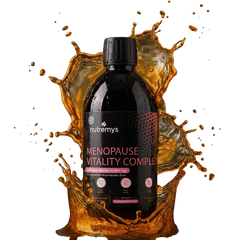
Menopause Vitality Complex combines several active ingredients in a single, easy-to-absorb liquid dose - one less thing to remember during your day.
Discover Menopause Vitality Complex5 ways to stick to your routine
Once you've chosen the right trigger, a few very simple adjustments make the difference between a routine that lasts and just another good intention.
1. Make it visible
Place your supplements where you pass by at the right time: near the coffee maker, next to your toothbrush. What you see, you do.
2. Give them a "home"
One fixed place, always the same. Moving your bottles between rooms, your bag, and cupboards is the best way to forget.
3. Reduce friction
A weekly pill organizer prepared on Sunday, a liquid or pre-dosed format: every decision eliminated is another chance to stick with it.
4. Set a reminder
A phone alarm, a calendar reminder, or a small checkmark on a calendar is enough while the habit takes hold.
5. Keep it simple
You don't need a ten-step routine. One or two well-established actions, repeated every day, are better than an ambitious regimen maintained for three days. Simplicity is what makes a habit last.
Missed doses and mistakes to avoid
No one sticks to a routine 100% of the time. The goal isn't perfection, but consistency over time. A few principles can help you stay on track:
Skipping a day is not a failure
Travel, a shifted wake-up time, a disrupted day: start again the next day, without feeling guilty or giving up altogether.
Don't double the dose
After missing a dose, don't "catch up" by taking twice as much. Follow the product instructions.
Don't change everything at once
Supplements, exercise, diet, sleep: overhauling everything on the same day rarely works. One change at a time.
Read each label
Each supplement has its own instructions (with or without food, interactions). You should not assume they are all taken the same way.
Your frequently asked questions
When should you take magnesium?
Magnesium is generally taken in the evening, with a meal: its calming effect on the nervous system makes it an ally for relaxation and sleep, which is often disrupted during menopause. The bisglycinate form is known to be gentle on digestion. The key is to take it every day, at a time you can stick to.
When should you take vitamin D, in the morning or evening?
Preferably in the morning, and especially with a meal containing fat: it is a fat-soluble vitamin, better absorbed with lipids. Taking it in the morning also helps avoid any sleep disturbance reported by some people when taking it in the evening. In France, supplementation is common from October to March.
Can you take all your supplements at the same time?
Not necessarily. Some are better absorbed with a meal (vitamin D, omega-3s), while others are better taken on an empty stomach (some probiotics), and iron should be taken separately from coffee, tea, and calcium. Check each product’s label. Grouping what can be taken together does, however, simplify the routine and helps you avoid forgetting anything.
How long before seeing results?
It depends on the nutrient and the person, but most benefits develop over several weeks, often 8 to 12. That is precisely why consistency matters so much: a supplement taken twice a week does not have enough time to work. A modest, consistent daily intake is better.
I keep forgetting my supplements. What can I do?
Don’t rely on your memory alone, especially if brain fog is involved. Tie taking your supplements to an already automatic habit (coffee, brushing your teeth), keep your supplements visible in that specific place, and set a phone reminder until the routine takes hold. Consistency comes from your environment, not willpower.
Scientific sources
- Lally P et al. “How are habits formed: Modelling habit formation in the real world.” European Journal of Social Psychology, 2010. Available via Wiley Online Library.
- Dawson-Hughes B et al. “Dietary fat increases vitamin D-3 absorption.” Journal of the Academy of Nutrition and Dietetics, 2015.
- EFSA — Authorized health claims (magnesium, vitamin D): EFSA, health claims.
- ANSES — Guidelines on vitamin D supplementation and nutritional status in France: anses.fr.



The information shared on this blog is for educational and informational purposes only. It does not replace a medical consultation, a diagnosis or a treatment prescribed by a healthcare professional. If you have symptoms, are on treatment or are pregnant, consult your doctor before changing your diet or starting any supplementation. Nutremys LAB food supplements are not a substitute for a varied and balanced diet or a healthy lifestyle.

