

At a glance
- Breasts are rich in estrogen receptors: when these hormones decline, they change.
- Common changes: pain (mastodynia), sagging, changes in volume, itching, and breasts that feel more “lumpy.”
- What helps: a well-fitting bra, less caffeine and salt, good hydration, and a stable weight.
- Monthly self-examination and screening (mammography) remain essential: knowing your breasts means quickly noticing what changes.
- This article is for informational purposes and does not replace medical advice.
Why menopause changes your breasts
The breast is one of the organs most sensitive to hormones. It is dotted with estrogen receptors, hormones that maintain the density of glandular tissue throughout the reproductive years. During perimenopause and then menopause, their production plummets.
Direct consequence: the breast tissue becomes less dense and fattier. The glands that produced milk regress (a process called involution) and give way to fat. This is why your breasts may feel and look different from what you were familiar with.

Added to this is the decline in collagen. Estrogen supports collagen production, which keeps the skin and connective tissue firm and elastic. Yet we already lose around 1% of our collagen reserves per year from our mid-twenties, and perimenopause accelerates this process. As a result, the breasts' natural support is weakened.
The 5 most common changes
1. Pain and tightness (mastodynia)
Mastodynia — the medical term for breast pain — is one of the most common reasons for consultation during this period. During perimenopause, hormones rise and fall erratically: estrogen surges can increase the number of ducts and glands and cause the breast to retain water, resulting in a feeling of heaviness and tightness.
Many women describe pain that differs from their usual premenstrual tenderness: rather than diffuse soreness in both breasts, it may sometimes feel like burning, a sharp twinge, or intense pain that may affect only one breast, part of a breast, or radiate toward the armpit.
2. Sagging and change in shape
As collagen and elastin decrease, the breasts may sag, change shape, or even appear smaller and sit lower. This is a common aesthetic change, often difficult to cope with — but it is not indicative of any medical abnormality.
3. Volume that increases… or decreases
Some women see their breasts shrink; others, on the contrary, gain one or two cup sizes. This increase is linked to the weight gain that is common during menopause and, above all, to the redistribution of fat: as testosterone levels decline, fat is stored more around the waist and breasts.
4. Itching and drier skin
As collagen decreases, the skin on the breasts becomes thinner, drier, and more sensitive. Bra friction, increased sweating, sensitivity to fabrics or detergents: all can cause itching. A bra that is too small and rubs can also cause eczema-like irritation under the breasts.
5. Breasts becoming more “lumpy”
Hormonal fluctuations can make breast tissue feel more uneven. The vast majority of these lumps are benign - cysts, fibroadenomas (small, mobile lumps), or simply dense tissue. But it is precisely because the breast changes that you need to learn what is normal for you, to distinguish “your normal” from what is new.
How to perform a breast self-examination, step by step
“The purpose of breast self-examination is to become familiar with the usual appearance and texture of your breasts. By checking regularly, you can immediately spot anything out of the ordinary,” reminds Dr. Mariam E.K. Ideally: a complete examination once a month. Although rare, some changes may be an early sign and deserve to be shown to a healthcare professional promptly.
| Step | What you are looking for |
|---|---|
| Look | In front of a mirror: skin that wrinkles or dimples, swelling in the armpit or near the collarbone, a sudden change in size, shape or color (redness, an “inflamed” appearance). |
| Feel | From the armpit to the collarbone, on and underneath each breast: a lump, thickening, or unusual and persistent pain. |
| Observe the nipples | Change in position, a retracted nipple, crusting or redness. Clear or milky discharge is common; gray, brown, yellow or bloody discharge is not normal. |
| Note | Schedule a monthly appointment with yourself so you don't forget. |
7 steps for more comfortable breasts
If pain and tightness interfere with your daily life - sleep, exercise, intimacy - several simple measures can make a difference.
2. Cut back on caffeine. As a diuretic, it has been associated in several studies with worsening breast pain. If you are sensitive, limit coffee, tea, cola, and energy drinks, and try decaffeinated versions.
3. Reduce salt. Too much salt promotes water retention, which is itself linked to breast tenderness. Also watch out for the “hidden” salt in prepared foods.
4. Choose a mostly plant-based diet. Evidence suggests that a diet lower in fat and more plant-based may help reduce swelling and sensitivity. See also our nutrition guidelines after age 50.
5. Stay hydrated. Hot flashes and night sweats cause dehydration; even mild dehydration can increase water retention and discomfort. Drink regularly and choose water-rich foods.
6. Limit alcohol and tobacco. Both are associated with an increased risk of breast problems; tobacco is also linked to more pain.
7. Aim for a stable weight. Maintaining a healthy weight reduces both volume-related discomfort and long-term risk.
When to consult without delay
Most of the changes described here are benign. However, some signs should prompt a prompt consultation, without giving in to panic:
- a new lump or thickening in the breast or armpit;
- skin that wrinkles, dimples, or retracts (an “orange peel” appearance);
- a recently retracted nipple, crusting, or persistent redness;
- spontaneous discharge, especially bloody discharge or discharge of an unusual color;
- localized, persistent pain that does not change over time.
Knowing “your normal” is the best tool: it helps you quickly spot what changes and discuss it with your doctor early.
Support your skin and tissues from within
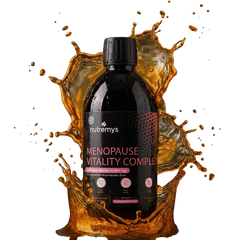
Nutremys liquid marine collagen supports skin firmness and connective tissue in maturity - a wellness practice, not a treatment.
Discover the Menopause Vitality ComplexFrequently asked questions
Is breast pain during menopause normal?
Yes, mastodynia is very common during perimenopause and menopause, due to fluctuations followed by a drop in estrogen. It is usually benign. Nevertheless, it warrants medical advice if it is localized, persistent, does not vary over time, or is accompanied by a lump or skin change.
Why do my breasts change size during menopause?
The drop in estrogen makes the tissue less glandular and fattier, and fat redistribution tends to store more fat around the breasts and waist. About one in five women gains a cup size after menopause; others, conversely, see their breasts decrease in size.
Why do my breasts itch?
The skin becomes thinner and drier as collagen decreases, making it more prone to itching. Bra friction, perspiration, detergents, or fabrics can worsen the discomfort. Moisturize your skin and check your bra size. If the itching persists or is accompanied by redness or a crust around the nipple, consult a doctor.
How often should I have a mammogram?
In France, the organized screening program offers a free mammogram every 2 years for women aged 50 to 74. This is an appointment not to be missed. Between screenings, consult a doctor without delay if you notice an unusual change.
Can collagen prevent my breasts from sagging?
No supplement can "lift" the breasts. Firmness depends on the skin, connective tissue, and genetics. Collagen intake, good hydration, and wearing a properly fitting bra may support skin quality, without promising to reverse sagging.
This article is for informational purposes and does not replace medical advice. If in doubt or if you experience an unusual symptom, consult your doctor or gynecologist.
- Cancer Research UK — Breast cancer symptoms.
- NHS Breast Screening — Helping you decide.
- PubMed — Caffeine intake and breast pain (PMID 2927749).
- PubMed — Dietary fat and cyclical mastalgia (PMID 2899188).
- PubMed — Bra size and breast support in exercise-induced breast pain.
- PAR Journal — Collagen decline with age (parjournal.net/article/view/3863).
The information shared on this blog is for educational and informational purposes only. It does not replace medical consultation, diagnosis or treatment prescribed by a healthcare professional. If you have symptoms, are undergoing treatment or are pregnant, consult your doctor before modifying your diet or starting supplementation. Nutremys LAB food supplements should not replace a varied, balanced diet or a healthy lifestyle.

