

This article compares collagen types to help you make the right choice. To understand the biological mechanisms and timeline of results, read our scientific guide: Marine Collagen and Menopause: What the Science Says →
What you will read in this article
Menopause does not affect the body uniformly. It specifically targets tissues whose renewal is regulated by estrogen—and collagen is one of them. Understanding this mechanism means understanding how to read a dietary supplement label using the right criteria.
This article examines the biologically relevant differences between the available sources, molecular forms, and dosages of collagen. It compares marine, bovine, and plant-based collagen on the basis of documented scientific evidence. It specifies effective dosages, essential cofactors, and the realistic timeline for results observed in clinical studies. Every claim is sourced. Every limitation is identified.
This article is for informational purposes only and does not replace personalized medical advice. Consult your doctor or gynecologist before starting any supplementation, especially if you are undergoing menopausal hormone therapy or taking anticoagulant medication.
What Menopause Does to Collagen—The Exact Mechanism
Before comparing formulas, it is essential to understand what changes biologically during menopause. This understanding is precisely what makes a supplement choice relevant rather than arbitrary—and what will help you avoid being misled by claims that sound right but are not.
Collagen is a family of fibrous proteins that make up the extracellular matrix of most connective tissues. There are 28 distinct types. Type I—the most abundant in the body—forms the fibers that give the skin, tendons, and bones strength and density. Type III is associated with skin and vascular elasticity. These are precisely the two types that decline most rapidly during menopause, for a very specific mechanical reason.
Skin fibroblasts, osteoblasts, and chondrocytes carry estrogen receptors (ER-α and ER-β). These receptors are not there by coincidence: estrogens exert dual regulation over collagen metabolism. They activate the transcription of the genes responsible for the synthesis of type I and III collagen—in other words, they direct production. At the same time, they inhibit matrix metalloproteinases (MMPs), the enzymes responsible for breaking down aging fibers.
When estrogen levels drop during menopause, both of these regulatory processes break down at the same time. Synthesis slows down. Degradation accelerates. This is a documented scissors effect: a study published in the British Journal of Dermatology (Brincat et al., 1987) measured an approximately 2% annual loss of skin collagen from menopause onward, with an initial drop of up to 30% in the first five years. These findings have since been confirmed by ultrasound dermal imaging, which directly quantifies fiber density in the dermis.
Beyond the skin: bones, joints, and deep connective tissue
This decline is not limited to the skin—and that is important to understand when evaluating the potential benefits of supplementation for connective tissue as a whole. Collagen accounts for approximately 30% of bone mass: it is the organic framework onto which hydroxyapatite crystals attach. Its depletion partly explains why bone density decreases so rapidly after menopause. It also shows why calcium alone is not enough without the protein infrastructure that holds it in place.
Articular cartilage—which is made up of 60–70% type II collagen—is also affected. Its progressive thinning contributes to the joint pain that many women report as early as perimenopause, sometimes several years before their periods stop. The connective tissue of the pelvic floor, which is rich in types I and III, also contributes to this general weakening process. This helps explain the increased risk of prolapse and stress incontinence in the years following menopause.
Collagen is not just another cosmetic active ingredient. It is a structural protein whose decline during menopause has measurable biological consequences for the skin, bones, joints, and deep connective tissue. This distinction radically changes how supplementation is evaluated—and the expectations we have of it.

Which collagen for menopause: the four decisive criteria
The question “which collagen for menopause” has no single answer because it encompasses four distinct questions. The origin of the raw material. The molecular state of the finished product. The daily dosage. The dosage form. Together, these four parameters determine the actual effectiveness of a supplement—and none can be assessed independently of the others.
Marine, bovine, porcine. Each source has a distinct amino acid profile and molecular size, with direct implications for bioavailability and relevance to menopause.
Native or hydrolyzed. This is the most important distinction—and the one most frequently overlooked. It determines whether collagen can cross the intestinal mucosa.
Clinical literature places the effective range between 5,000 and 10,000 mg of hydrolyzed collagen peptides per day. Below 2,500 mg, effects are marginal in the majority of published protocols.
Liquid or capsule. The form determines the speed and rate of absorption—with documented pharmacokinetic advantages for the liquid form, particularly after age 50.
These four criteria form a whole. A hydrolyzed marine collagen at 10,000 mg in liquid form is not equivalent to a non-hydrolyzed marine collagen at the same dose—bioavailability is not comparable. Conversely, a well-formulated liquid form cannot compensate for inadequate hydrolysis. Effective label reading means checking all four parameters simultaneously.
The meta-analysis by León-López et al. (2019), published in Nutrients and covering 1,125 participants in 11 randomized controlled trials, confirms the range of 5,000 to 10,000 mg of hydrolyzed peptides per day as the threshold for clinical relevance, with an excellent safety profile over periods of up to six months. These results specifically concern hydrolyzed peptides—not native collagen. Molecular form is a trial variable, not a packaging detail.
Marine, bovine, and plant-based collagen—a objective comparison
Three major categories of collagen coexist in the dietary supplement market. Their rigorous comparison is based on measurable biological criteria—not trend-based arguments.
| Source | Main types | Profile for menopause | Points to consider |
|---|---|---|---|
| Marine (fish) | Predominantly Type I | Amino acid profile structurally close to human collagen. Smaller initial molecular size—more effective hydrolysis. Traceability can be controlled. | Allergies to seafood. Verify the species, the part used (skin, scales), and the hydrolysis process. |
| Bovine | Types I and III | Reference standard in many clinical studies. Good bioavailability once hydrolyzed. Provides types I and III simultaneously. | Traceability varies according to farming practices. Risk of residues depending on certification. Incompatible with certain dietary practices. |
| Porcine | Types I and III | Comparable profile to bovine collagen. Less represented in recent clinical studies. | Incompatible with halal, kosher, or vegetarian diets. Traceability should be verified. |
| “Plant-based” | No collagen | Contains no collagen—contains precursors (vitamin C, glycine, proline) that support endogenous synthesis without replacing hydrolyzed peptides. | The name is misleading. The effect is real but distinct—it acts on synthesis cofactors, not by supplying directly absorbable peptides. |
A clarification about “plant-based collagen” deserves further explanation because commercial confusion is common. Collagen is an exclusively animal protein—it does not exist in the plant kingdom. Products marketed under this name contain precursors for endogenous synthesis: amino acids (glycine, proline, hydroxyproline), vitamin C, and sometimes silicon or biotin. These nutrients have genuine, documented value, but they do not provide the Pro-Hyp and Hyp-Gly peptides that constitute the specific mechanism of action of hydrolyzed collagen. These are two biologically distinct strategies—complementary, not equivalent.
For women going through menopause, the specific advantage of marine collagen lies in two documented factors:
- Its amino acid profile is closer to that of human collagen than bovine collagen’s, which promotes optimal recognition by fibroblasts.
- Its smaller initial molecular size allows hydrolysis to produce peptides with a lower molecular weight, resulting in faster intestinal absorption.
Its traceability—species, anatomical part, hydrolysis process, certifications—is also easier to verify than that of collagen from land-based livestock, whose tissues may contain residues depending on production practices.

Hydrolyzed or native: the question labels avoid asking
The term “collagen” without further specification does not distinguish between molecular forms. This is a critical point when evaluating a supplement—perhaps the most critical of all—and precisely where marketing communications tend to stop before going into the details.
Native collagen—whether marine, bovine, or another type—is a triple helix of three polypeptide chains wound around one another. Its molecular mass exceeds 300,000 daltons. This architecture, precisely what gives it mechanical strength in biological tissues, is also what makes intestinal absorption biologically impossible in this form. Digestive enzymes—pepsin, trypsin, and chymotrypsin—break it down into free amino acids, mainly glycine, proline, and hydroxyproline, which enter the general amino acid pool. These amino acids are useful to the body, but they do not provide the specific peptides that directly activate fibroblasts.
What hydrolysis changes in practical terms
Enzymatic hydrolysis breaks peptide bonds in a controlled manner, reducing the molecular weight to less than 3,000 daltons. The resulting fragments—in particular the dipeptides Pro-Hyp (proline-hydroxyproline) and Hyp-Gly (hydroxyproline-glycine)—cross the intestinal mucosa through specific transporters (PEPT1 and PEPT2). Once in the bloodstream, they are detectable 30 to 120 minutes after ingestion, according to a study published in the Journal of Agricultural and Food Chemistry (Iwai et al., 2005). They then reach dermal fibroblasts and osteoblasts, where they are recognized as a signal of connective-tissue breakdown. The body responds by increasing its synthesis of endogenous collagen—a mechanism documented in vitro and confirmed by plasma procollagen levels measured in clinical trials.
This mechanism explains why the quality of hydrolysis—the degree of depolymerization and the resulting peptide profile—is as decisive as the raw concentration displayed on the label. A product that states “10,000 mg of collagen” without specifying “hydrolyzed” or “collagen peptides” does not guarantee bioavailability equivalent to that of a properly characterized product. Verifying this detail is the most important step when reading a label.
The liquid form: a documented pharmacokinetic advantage
The dosage form extends the logic of bioavailability. A capsule containing hydrolyzed collagen peptides must first dissolve in the stomach before the peptides can come into contact with the intestinal lining. The liquid form eliminates this step. Plasma concentrations of active peptides are higher during the first two hours after ingestion, which is particularly relevant for women whose gastric acid secretion physiologically decreases with age — a common change after age 50 that can reduce the effectiveness of capsule dissolution.
"10,000 mg Collagen" → Without the mention of "hydrolyzed" or "peptides," absorption is uncertain.
"10,000 mg hydrolyzed collagen peptides" → The molecular form is specified. If the molecular weight is indicated (< 3,000 Da), this is an additional sign of transparency.
The difference between these two formulations is not a mere wording detail — it is a biochemical distinction with consequences for the product's actual effectiveness.
Dosage, timing, and essential cofactors
Dosage is the variable most often overlooked in communications about dietary supplements — and yet it is the most decisive factor for effectiveness. Clinical studies showing measurable results for the skin use doses ranging from 5,000 to 10,000 mg of hydrolyzed collagen peptides per day. The meta-analysis by León-López et al. (2019), published in Nutrients, confirms this range across 1,125 participants and reports an excellent safety profile over six months. Below 2,500 mg per day, the effects are marginal in the vast majority of published protocols.
Timing: consistency above all
The timing of intake influences absorption without being the determining factor. Daily consistency matters more than the choice of timing. That said, two windows offer documented physiological advantages.
| Timing | Physiological advantage | Condition | Relevance |
|---|---|---|---|
| In the morning while fasting | Maximum absorption — no competition with dietary proteins for intestinal transporters | Empty stomach for at least 2 hours | Ideal |
| 30 minutes before a meal | A good compromise between absorption and digestive tolerance | Partially empty stomach | Very good |
| After physical exertion | The post-exercise anabolic window promotes protein synthesis — increased bone and joint benefits | Combined with a source of vitamin C | Excellent with regular physical activity |
| In the evening before bed | Coincides with the peak of nighttime growth hormone, which optimizes protein synthesis | 2 hours after dinner | Excellent if fasting is observed |
| With a meal | Practical, no digestive risk | No particular constraints | Acceptable — lower absorption |
The cofactors that synthesis cannot do without
Collagen does not work alone. Three micronutrients have been documented to enhance its action and deserve to be systematically combined with every dose—their absence may partially neutralize the effectiveness of an otherwise optimal peptide intake.
Vitamin C is the most critical. As a cofactor for the enzymes prolyl hydroxylase and lysyl hydroxylase, it is essential for stabilizing newly formed collagen triple helices. Without it, synthesis is biologically blocked downstream of peptide intake—this is the mechanism that explains the severe skin manifestations of scurvy. In accordance with EU Regulation No. 432/2012, vitamin C “contributes to normal collagen formation for the normal function of the skin.” A study by Shaw et al. (2017), published in the American Journal of Clinical Nutrition, measured a doubling of blood levels of synthesized collagen when the peptides were combined with vitamin C, compared with collagen alone.
Zinc regulates the activity of matrix metalloproteinases, helping slow the degradation of existing collagen. Hyaluronic acid, which binds up to 1,000 times its weight in water in the dermis, complements collagen's structural action by restoring tissue turgor and the skin's visual density. These three cofactors, ideally integrated into a single formula, avoid the complexity of multiple doses and ensure their simultaneous availability when the peptides reach the fibroblasts.
Take collagen without a simultaneous source of vitamin C. Synthesis cannot occur without this enzymatic cofactor—regardless of the quality of the peptides provided. If your formula does not include it, always take it with a food rich in vitamin C (kiwi, raw bell pepper, citrus fruit) or a dedicated supplement.
Second point to watch: heat degrades peptides. Never dissolve collagen powder in a liquid above 70°C. The hydrolyzed liquid form can be consumed on its own or mixed with a cold or lukewarm beverage—eliminating this risk.
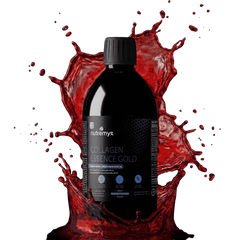
12,500 mg of hydrolyzed marine collagen.
With vitamin C, hyaluronic acid, and retinol.
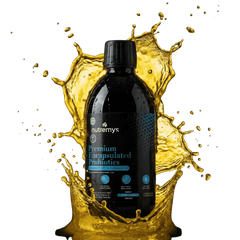
Collagen Essence Gold combines the four selection criteria described in this article: marine origin, enzymatic hydrolysis, a clinically relevant dosage, and a liquid form with bioavailability up to 3 times higher than capsules. Clean label. European manufacturing. GMP-, HACCP-, and ISO 22000-certified.
View Collagen Essence Gold →Signs that your connective tissue is calling for additional support
Certain functional signs may indicate that connective tissue is undergoing a period of accelerated weakening — which is common during the first five years after the onset of menopause. These signs do not constitute a diagnosis. They provide reference points for assessing whether supplementation is appropriate in consultation with your doctor, and for distinguishing what results from insufficient nutritional intake from what requires specific medical care.
Noticeable loss of firmness and density when palpated. Persistent dryness resistant to topical care. Fine lines appearing where the skin was previously smooth. Changes in facial contours unrelated to weight variation.
Prolonged morning stiffness in the hands, knees, or hips, lasting more than 30 minutes. Gradual reduction in range of motion. Diffuse joint pain during moderate exertion that was not present before menopause.
Nails becoming fragile and breaking horizontally or splitting. Changes in hair texture, with increased diffuse hair loss or dryness. These signs may also result from an iron or biotin deficiency — a biological assessment is recommended.

These manifestations are not exclusively caused by a collagen deficiency. Other deficiencies — iron, vitamin D, total protein, zinc — can produce similar symptoms or overlap with them. The appropriate approach is to conduct a biological assessment before concluding that there is a single cause. The purpose of this list is not to establish certain causation, but to identify signals that, in the context of menopause, warrant structured nutritional attention — and an open dialogue with your doctor.
A minimum course of three months is necessary to assess the effectiveness of collagen supplementation for the skin. Six months for bone and joint effects. Collagen production is a slow biological process — unrealistic expectations are the main cause of premature discontinuation, often precisely when the first effects are beginning to appear.
Stopping supplementation leads to a gradual return to the initial state within four to six weeks. This timeframe supports continuous use or a maintenance dose of 5,000 mg/day after the initial course, rather than fragmented courses.
What marine collagen does not do — limitations to name
Scientific credibility is also earned by what you do not say. Marine collagen does not regulate hormones. It does not:
- act on estrogen receptors,
- contribute to reducing hot flashes,
- alter the quality of sleep disrupted by menopause,
- or support the hypothalamic-pituitary axis.
For these symptoms, other active ingredients—soy and red clover phytoestrogens, Dong Quai, maca, and B vitamins—have documented mechanisms of action that collagen does not.
Nor does it replace menopausal hormone therapy. These are two interventions with distinct biological targets: one acts on the structural framework of connective tissue, while the other acts on the hormonal regulation that governs it. A woman undergoing hormone therapy may benefit from collagen supplementation as an adjunct—exogenous estrogens partially restore fibroblast regulation, while collagen provides the substrate for synthesis—but the two approaches are not interchangeable.
Frequently asked questions about choosing collagen during menopause
doi.org/10.1111/j.1365-2133.1987.tb04228.x
doi.org/10.1159/000355523
doi.org/10.3390/nu11122557
doi.org/10.1021/jf048166l
doi.org/10.3390/nu10010097
doi.org/10.3945/ajcn.116.138594
pubmed.ncbi.nlm.nih.gov/41049371
efsa.europa.eu



The information shared on this blog is for educational and informational purposes only. It does not replace medical consultation, diagnosis or treatment prescribed by a healthcare professional. If you have symptoms, are undergoing treatment or are pregnant, consult your doctor before modifying your diet or starting supplementation. Nutremys LAB food supplements should not replace a varied, balanced diet or a healthy lifestyle.
