

What you are about to read
During menopause, declining estrogen levels slow the hair cycle and weaken nail keratin. A hair and nail supplement is useful only if it provides the right nutrients in the right amounts.
We review what European regulations (EFSA) say about biotin, zinc and selenium, the actual role—and limitations—of marine collagen for nails, and the practical criteria for choosing a formula that delivers on its promises.
This article is for informational purposes only and does not replace medical advice. Significant or sudden hair loss warrants an assessment (iron, thyroid) by your doctor.
Why your hair and nails become weaker during menopause
Hair and nails are made of keratin, a protein whose production depends directly on hormonal balance. Estrogens prolong the hair growth phase (anagen phase) and support the activity of the cells that produce keratin. When estrogen levels drop at menopause, the cycle accelerates toward the shedding phase: hair grows for less time, becomes finer, and density decreases.
Nails follow the same pattern. The nail matrix produces keratin that is less dense and less hydrated, leading to ridges, splitting and more frequent breakage. This is not inevitable: it is a rapidly renewing tissue, and therefore particularly sensitive—both positively and negatively—to your nutritional status.

Hair and nail weakening at menopause is primarily hormonal—but it is amplified by common deficiencies after age 40 (iron, zinc, protein). This is precisely the nutritional lever that a well-dosed supplement can target. To understand the mechanisms behind menopausal hair loss, see our dedicated article.
The nutrients that really matter for hair and nails
Not all “hair supplements” are created equal. What distinguishes a useful formula from a marketing product is the nutrients whose role is recognized by the European Food Safety Authority (EFSA)—and, above all, their actual dosages. Here are the ones that matter.
| Nutrient | Recognized role (EFSA) | Why it matters at menopause |
|---|---|---|
| Biotin (B7) | Contributes to the maintenance of normal hair | Cofactor in keratin synthesis; needs are more difficult to meet after age 40 |
| Zinc | Contributes to the maintenance of normal hair and nails | Essential for matrix cell division; deficiency is common in women |
| Selenium | Contributes to the maintenance of normal hair and nails | Protects follicles from oxidative stress |
| Vitamin C | Contributes to normal collagen formation | Essential for the connective tissue supporting the hair and nail bed |
| Iron | Helps reduce fatigue; plays a role in oxygen transport | Low ferritin is one of the leading causes of diffuse hair loss—check with a blood test |
A review published in Dermatology and Therapy (Almohanna et al., 2019) highlights that supplementation with biotin, zinc, and iron has demonstrated value only in cases of deficiency or increased need. In women without a deficiency, the effect is marginal: the priority is to correct a genuine deficiency, not to pile on megadoses.
The key message: synergy and dosage matter more than the number of ingredients listed. Biotin alone, without zinc or cofactors, is less effective than a complete, well-balanced intake—which is why formulas combining these nutrients in a single dose are worthwhile.
What collagen does for nails (and what it does not do)
Hydrolyzed marine collagen is often associated with hair and nails. Let’s be precise: nails and hair are made of keratin, not collagen. Collagen is therefore not their direct building material.
By contrast, it plays a role in structural support: the nail bed and the dermis from which the hair emerges are connective tissues rich in collagen. Combined with vitamin C—which contributes to normal collagen formation—an intake of low-molecular-weight hydrolyzed marine collagen supports this connective tissue, which translates, in some studies, into less brittle nails and better skin quality. To learn more about the biology of marine collagen during menopause, see our scientific guide.
The most coherent combination for nails and hair during menopause: biotin + zinc + selenium (keratin) + collagen + vitamin C (supporting tissue). It is this “keratin + structure” approach that produces the most consistent results, rather than a single isolated ingredient.
How to choose a hair and nail supplement
Four criteria distinguish an effective formula from a disappointing product.
1. Meaningful doses, not symbolic ones
Make sure the zinc, selenium, and biotin are present in useful amounts (close to the reference intakes), rather than trace amounts intended to “look good” on the label.
2. Synergy, not an isolated ingredient
Hair and nails are nourished by a combination of nutrients: keratin (biotin, zinc, selenium) + supporting tissue (collagen, vitamin C). A complete formula avoids accumulating several bottles.
3. Liquid form
A liquid formula is absorbed more quickly, without a dissolution step—an advantage after age 50, when gastric secretion decreases.
4. Transparency
Made in Europe, with detailed dosages and certifications (GMP, HACCP). Beware of biotin “megadoses”: above a certain threshold, they can interfere with some blood test results (thyroid).
Hair, nails, and skin—in a single shot
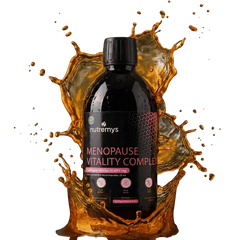
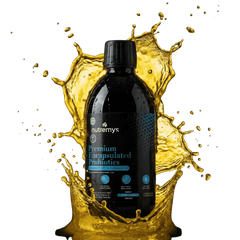
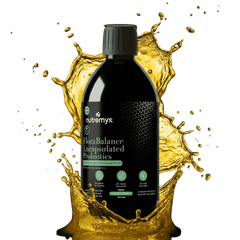
Menopause Vitality Complex combines biotin, zinc, and selenium (for normal hair and nails) with 10,000 mg of marine collagen and vitamin C in a hormone-free liquid formula.
Discover Menopause Vitality Complex →Signs that you could benefit from supplementation
These signs, common during the first five years of menopause, deserve nutritional attention—and sometimes a medical checkup.
Hair
Diffuse thinning (a widening part), loss of volume, hair that grows more slowly or for a shorter time than before.
Nails
Nails that split, develop ridges, break horizontally, or take longer to grow back.
These signs can also indicate an iron deficiency or an underactive thyroid. A blood test (ferritin, TSH) is the first step before drawing any conclusions. For an overall view, see our essential supplements after age 50.
Foods that nourish your hair and nails
No supplement can replace a well-balanced plate: it provides the raw materials for keratin day after day. Before considering supplements, it is worth checking that your diet covers the key nutrients. During menopause, appetite and absorption often decrease, making these nutrients harder to obtain—which is why it is important to target the right foods.
| Nutrient | Where to find it | Practical tip |
|---|---|---|
| Protein | Eggs, fish, poultry, legumes, tofu | Aim for a source of protein at every meal: keratin is first and foremost a protein. |
| Zinc | Oysters, pumpkin seeds, lean red meat, lentils | A handful of pumpkin seeds as a snack provides a substantial share of your needs. |
| Iron | Black pudding, red meat, lentils, spinach | Pair plant-based iron with vitamin C (citrus fruits, bell peppers) for better absorption. |
| Biotin (B7) | Egg yolk, liver, nuts, oats | Cooked egg yolk provides biotin without the risk of avidin from raw egg white. |
| Selenium | Brazil nuts, fish, eggs | 1 to 2 Brazil nuts a day are enough—more than that becomes excessive. |
| Omega-3s | Small oily fish (sardines, mackerel), rapeseed oil, flaxseed | They soothe the scalp and support the flexibility of the hair fiber. |
A typical meal: a serving of protein (eggs, fish, or legumes), colorful vegetables rich in vitamin C, a source of omega-3s, and a small handful of nuts. It is this consistency—not an isolated “superfood”—that nourishes keratin over the long term.
Beyond nutrients: habits that protect the hair fiber
Nutrition builds hair from the inside, but daily habits determine how it ages on the outside. During menopause, the hair fiber is finer and drier: it tolerates damage less well. A few simple adjustments limit breakage and preserve the foundation your diet is rebuilding.
Gentle washing
Prefer lukewarm water rather than hot water, gentle shampoos without harsh sulfates, and space out washes if your scalp allows it. The goal: preserve the protective hydrolipidic film.
Controlled heat
Dry at a moderate temperature, keep the hair dryer at a distance, and limit straighteners and very hot curling irons, which weaken keratin that is already depleted of moisture.
Moisturized nails
Massage a plant oil (castor or jojoba) onto your nails and cuticles every evening, and wear gloves for household chores: water and detergents worsen splitting.
Microcirculation
A daily two-minute scalp massage stimulates the microcirculation that supplies the follicle—a free, consistent habit that is surprisingly effective over time.
Nutrition and care are not opposed; they complement each other. Even the best supplement will produce few results if the hair shaft is damaged every day by heat or overly harsh washing. Together, these two levers make the difference.
A realistic timeline: what to expect, month by month
The main reason people abandon a course is expecting immediate results. Hair and nails are slow-growing tissues: they renew over weeks, not days. Here is an honest timeline of what biology can really deliver.
Weeks 1 to 4
Nothing visible on the hair shaft—that is normal. Behind the scenes, the body is replenishing its stores (iron, zinc). You may notice improved energy if a deficiency was present.
Months 2 to 3
The first nails grown “with supplements” appear: they are often less brittle and more even. Hair also starts to look slightly denser at the roots.
Months 3 to 4
This is the point at which to honestly assess the effect on the hair: growth achieved during the course, volume, and vitality. Before 3 months, it is too early to draw conclusions.
After stopping
The benefits gradually fade if nutrient intake becomes insufficient again. That is why a solid diet is important as a follow-up, along with a maintenance course during sensitive periods.
Sudden, patchy, or extensive hair loss is not simply a nutritional issue: it warrants a consultation and assessment (ferritin, thyroid TSH). No supplement should delay medical advice in this situation.
Common mistakes to avoid
Many women take hair and nail supplements without seeing results—not because they lack commitment, but because of a few avoidable pitfalls. Here they are.
Relying on biotin alone
Biotin is beneficial, but on its own it rarely makes a difference. Without sufficient zinc, selenium, protein, and iron, links are missing from the keratin chain.
Mega-doses of biotin
Beyond a certain threshold, biotin provides no additional benefit and can interfere with certain blood tests (thyroid, troponin). More is not better.
Ignoring iron and thyroid function
Low ferritin or an underactive thyroid are major causes of diffuse hair loss. Taking supplements without checking for these issues sometimes means treating the wrong problem.
Stopping too early
Stopping after three weeks because no visible results have appeared means giving up just before the window when effects emerge. Consistency comes first.
Frequently asked questions
Which vitamin is best for hair and nails during menopause?
Does biotin really make hair grow back?
Is collagen good for nails?
How long does it take to see results?
efsa.europa.eu
doi.org/10.1007/s13555-018-0278-6
doi.org/10.1111/jocd.12393
The information shared on this blog is for educational and informational purposes only. It does not replace medical consultation, diagnosis or treatment prescribed by a healthcare professional. If you have symptoms, are undergoing treatment or are pregnant, consult your doctor before modifying your diet or starting supplementation. Nutremys LAB food supplements should not replace a varied, balanced diet or a healthy lifestyle.
