

Menopause transforms intimate life—it is not inevitable
According to a Kantar study, half of menopausal women report that their sex life is negatively affected. Vaginal dryness is cited as one of the most impactful symptoms—more so than hot flashes or sleep problems. These difficulties are real, biologically documented, and largely treatable.
This article explains the biological mechanisms behind these changes, offers practical solutions in stages—from local solutions to internal approaches—and clarifies the role phytoestrogens may play in restoring vaginal comfort and long-term intimate well-being.
Always consult your gynecologist or primary care physician for personalized support, particularly if you have a history of hormone-dependent cancers.
Why does menopause affect intimate life?
The answer is primarily hormonal. The drop in estrogen at menopause has direct, measurable effects on genital tissues and the sexual response—changes that are due neither to age alone nor to psychological changes, but to precise biochemical changes.
Estrogen plays a central role in maintaining vaginal health: it regulates the thickness of the vaginal epithelium, the production of lubricating secretions, and vaginal pH. When estrogen levels decrease, all three functions are affected simultaneously. This is the phenomenon clinically known as vulvovaginal atrophy (VVA) or genitourinary syndrome of menopause (GSM).
The drop in estrogen reduces the thickness of the vaginal epithelium, decreases the production of lactic acid (which regulated pH), and reduces local blood flow. Together, these changes reduce the elasticity and natural hydration of the mucous membranes. At the same time, lower androgen levels (testosterone) contribute to reduced sexual desire and genital sensitivity, while sleep problems and the general fatigue of menopause amplify the overall effects.
The intimate changes in detail

Understanding precisely what is happening in the body helps better assess the available options. Here are the four most common intimate changes and their mechanisms.
Reduced secretions and natural hydration — the first intimate symptom of menopause
Thinner, less hydrated mucous membrane — painful friction (dyspareunia)
Increased vaginal pH — intimate flora more vulnerable to infections
Combination of pain + discomfort + fatigue that gradually reduces libido
Some women also experience light bleeding after sexual intercourse, related to the fragility of mucous membranes weakened by atrophy. This symptom, which is benign in this context, should always be reported to your gynecologist to rule out other causes, particularly after menopause.
4 approaches to restore comfort

The biological changes associated with menopause cannot be avoided, but their impact on intimate life can be considerably reduced with targeted, gradual approaches.
Moisturizing vaginal creams or suppositories based on hyaluronic acid, emollient oils, or botanical extracts help restore mucosal hydration between sexual encounters. Effectiveness is greatest with regular preventive use — several times a week — rather than only as an emergency treatment before sexual intercourse. Early management slows the progression of mucosal atrophy.
During sexual intercourse, a water-based intimate lubricant formulated with hyaluronic acid and lactic acid (to respect the natural vaginal pH) reduces painful friction and immediately restores comfort. Compatible with condoms. This is a necessary physiological response — not an admission of weakness.
Menopause increases vulnerability to recurrent urinary tract infections by altering pH and weakening the mucosal barrier. Urinating systematically after every sexual encounter helps prevent ascending bacterial colonization. Cranberry, rich in type A proanthocyanidins, reduces the adherence of E. coli bacteria to the bladder walls — a mechanism documented in several meta-analyses.
Open communication about new needs and discomforts profoundly changes the quality of intimate life. Menopause reshapes the rhythm and ways of experiencing pleasure—it does not eliminate the ability to orgasm or connect intimately. What works after 50 is not necessarily what worked at 30: exploring new forms of tenderness and intimacy, naming what feels good, and rephrasing what feels uncomfortable—these are acts of care toward yourself and the other person.
Regular intimate stimulation—with or without intercourse—helps maintain local blood flow and the tone of the vaginal mucous membranes. Prolonged abstinence, on the other hand, accelerates tissue atrophy. The biological mechanism is simple: local blood flow, stimulated by intimate activity, maintains the thickness and hydration of the epithelium.
Pelvic floor and intimate life: the most underestimated exercise
Menopause causes a decrease in pelvic-floor muscle tone, directly linked to the drop in estrogen levels—these hormones help maintain collagen and the elasticity of pelvic tissues. A weakened pelvic floor can cause stress urinary leakage, a feeling of “looseness,” and reduced sensitivity during intercourse. This is not inevitable, and targeted exercises produce measurable results within a few weeks.
- Contract the muscles you would use to stop the flow of urine—without contracting your buttocks, thighs, or abdomen.
- Hold the contraction for 5 seconds, then relax for 5 seconds.
- Repeat 10 times.
- Do 3 sets a day, ideally in various positions (lying down, sitting, standing).
Consistency over 6 to 12 weeks is key: studies show significant improvements in continence and sexual sensitivity with a daily protocol.
Once you have mastered long contractions, incorporate quick contractions: contract and release at a brisk pace, 10 times in a row. These quick contractions strengthen fast-twitch muscle fibers, which are responsible for reflex responses—particularly useful for preventing stress urinary leakage (sneezing, laughing, running).
For frequent urinary leakage, prolapse, or persistent pelvic pain, pelvic-floor rehabilitation guided by a specialized physiotherapist is recommended. In France, it is covered by Health Insurance with a medical prescription. A pelvic-floor assessment can determine whether the issue is a muscle that is too weak, too tense, or poorly coordinated—which completely changes the rehabilitation protocol.
Pair Kegel exercises with a specific time of day—while reading, waiting at a bus stop, or in a meeting—to build a habit without dedicating extra time to it. The invisibility of the exercise is one of its major advantages.
Phytoestrogens: addressing the hormonal terrain
Local solutions (lubricants, moisturizing creams) provide symptom relief. To address the underlying causes—the estrogen deficiency that weakens the mucosa and reduces desire—an oral approach may provide a more lasting difference.
Phytoestrogens are plant-derived molecules with a chemical structure similar to human estrogens that can bind—more gently and selectively—to the same hormone receptors. Their action is modulatory, not substitutive: they do not replace estrogens, but exert partial activity on their receptors, helping to reduce the effects of estrogen deficiency on the mucosa, skin, and mood.

A 2014 Cochrane review covering 43 clinical trials confirms a measurable improvement in vasomotor and genitourinary symptoms with soy isoflavones—the best-documented phytoestrogen—with a favorable safety profile for most women. Specific effects on vaginal mucosa (hydration, epithelial thickness) have been reported in several randomized trials. Phytoestrogens also support collagen production in the vaginal mucosa and skin, helping restore the elasticity and thickness of tissues weakened by estrogen deficiency.
The most effective approach is always combined: local solutions (lubricants, topical treatments) for rapid relief, and oral phytoestrogens to address the underlying hormonal terrain in depth. These two levels complement each other; they are not interchangeable. The effects of phytoestrogen supplementation on vaginal comfort are generally observed after 4 to 12 weeks of consistent daily use.
Always consult your gynecologist or primary care physician before starting phytoestrogen supplementation, particularly if you have a personal or family history of hormone-dependent cancers.
Rediscover comfort and balance from within.
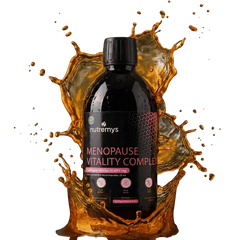
Menopause Vitality Complex combines soy phytoestrogens, 10,000 mg of marine collagen, and hyaluronic acid in a liquid formula designed for active women aged 45+.
View Menopause Vitality Complex →Frequently asked questions



The information shared on this blog is for educational and informational purposes only. It does not replace medical consultation, diagnosis or treatment prescribed by a healthcare professional. If you have symptoms, are undergoing treatment or are pregnant, consult your doctor before modifying your diet or starting supplementation. Nutremys LAB food supplements should not replace a varied, balanced diet or a healthy lifestyle.
