


What you will learn
Your gut houses 38 trillion microorganisms—as many as the total number of human cells in your body. This ecosystem, the gut microbiome, directly influences your digestion, immunity, mood, skin, and even your weight. Probiotics are the live bacteria that help maintain, restore, and strengthen it.
In this guide, we answer the most frequently asked questions: what are the proven benefits of probiotics, how do they work for constipation, the gut microbiota, and the vaginal microbiota, can they be given to children, and what is the difference between probiotics and prebiotics. We also present our Premium Encapsulated Probiotics formula, designed with patented microencapsulation technology to ensure that the strains actually reach the gut alive.
What is a probiotic? Definition and how it works
According to the WHO's official definition, probiotics are live microorganisms that, when administered in adequate amounts, confer a health benefit on the host. In short, they are beneficial bacteria that, once in your gut, actively work to support your health.
Your gut microbiome is made up of more than 1,000 different bacterial species, representing approximately 1.5 kg of mass. This ecosystem is unique to each individual—as unique as a fingerprint. It forms from birth and evolves throughout life under the influence of diet, stress, antibiotics, lifestyle, and the environment.
When this balance is disrupted—known as dysbiosis—the symptoms are numerous: digestive disorders, fatigue, weakened immunity, mood disorders, and chronic inflammation. Probiotics help restore and maintain this balance by colonizing the gut with beneficial strains.
The gut and brain are connected by the vagus nerve via the gut-brain axis. Your microbiome produces approximately 90% of your body's serotonin—the neurotransmitter associated with well-being. Recent studies show that microbiome composition directly influences mood, mental clarity, stress management, and even the risk of depression. Probiotics therefore act well beyond digestion.
The scientifically proven benefits of probiotics

With more than 1,000 clinical trials published in peer-reviewed journals, probiotics are among the most extensively studied dietary supplements in the world. Here are the most strongly documented benefits.
Probiotics facilitate food breakdown, improve nutrient absorption, and prevent digestive disorders such as bloating, constipation, and diarrhea. They also relieve irritable bowel syndrome (IBS) and leaky gut.
A healthy microbiome is the first line of defense against infections. Probiotics increase NK (Natural Killer) cell activity, stimulate antibody production, and reduce inflammation markers—thereby lowering the risk of chronic diseases.
Via the gut-brain axis, probiotics positively influence the production of serotonin and GABA. Clinical studies show a measurable reduction in anxiety and low mood after 4 to 8 weeks of supplementation with specific strains.
Certain strains (particularly Bifidobacterium lactis and Lactobacillus plantarum) are clinically associated with reduced fat accumulation, improved insulin sensitivity, and appetite regulation via the GLP-1 and PYY hormones.
Specific strains of Lactobacillus inhibit the proliferation of pathogenic bacteria responsible for cavities and gingivitis. Oral health is closely linked to the overall state of the gut microbiome.
Acne, eczema, psoriasis, and rosacea are all skin conditions linked to imbalances in the gut microbiome. Preliminary studies show that restoring the gut flora improves skin condition by reducing systemic inflammation.
A meta-analysis published in Nutrients (2020), covering 82 randomized controlled trials, concluded that multi-strain probiotics have significantly greater effects than single-strain probiotics on digestive and immune health. The researchers emphasized the critical importance of strain viability upon arrival in the intestine—a factor often overlooked in standard capsule formulations.
Probiotics and constipation: what the science says
Chronic constipation affects approximately 20% of the French population, with a higher prevalence among women and people over 60. It is often the visible sign of an imbalance in the gut microbiome.
Probiotics act on constipation through several complementary mechanisms. First, they speed up intestinal transit by stimulating colonic motility through the production of short-chain fatty acids (SCFAs), particularly butyrate. These SCFAs nourish colonocytes (cells in the colon wall) and stimulate the peristaltic contractions that move intestinal contents forward.
Next, certain strains produce lactic acid, which slightly acidifies the intestinal environment, promoting water retention in the stool and making it easier to pass. Finally, by restoring the balance of the gut flora, probiotics reduce excessive fermentation responsible for the bloating that often accompanies constipation.
A meta-analysis published in the American Journal of Clinical Nutrition (2014), analyzing 14 randomized controlled trials involving 1,182 participants, concluded that probiotics increase stool frequency by 1.3 times per week and improve stool consistency according to the Bristol Stool Scale. The most effective strains identified were Bifidobacterium lactis and Lactobacillus acidophilus—precisely two of the four strains present in our Premium Encapsulated Probiotics formula.
To maximize the effect of probiotics on constipation, combine them with sufficient hydration (1.5 to 2 L of water per day) and prebiotic foods (see next section) that nourish beneficial bacteria. The effect on bowel movements is generally felt within 2 to 4 weeks of regular use.
Prebiotics and probiotics: what’s the difference?
Confusion between prebiotics and probiotics is extremely common—and yet their roles are fundamentally different, even though the two are complementary.
The term synbiotic refers to a supplement that combines both probiotics and prebiotics in the same formula—an especially effective approach because prebiotics nourish probiotic bacteria and improve their colonization rate.
In practice, we recommend combining our Premium Encapsulated Probiotics with a diet rich in prebiotic fiber: leeks, artichokes, Jerusalem artichokes, garlic, and slightly green bananas. This combination creates an optimal intestinal environment for the colonization and multiplication of beneficial strains.
Probiotics and the female vaginal flora

The vaginal flora is a bacterial ecosystem distinct from the gut microbiota, but closely influenced by it. Under normal conditions, the vaginal flora is 90–95% dominated by Lactobacilli—primarily Lactobacillus acidophilus, Lactobacillus crispatus, and Lactobacillus rhamnosus—which maintain an acidic pH (3.8–4.5) that protects against infections.
An imbalance in the gut microbiota (dysbiosis) can lead to changes in the vaginal flora through the enterogenital tract. This is why recurrent bacterial vaginosis, yeast infections, and cystitis are often associated with an impoverished gut microbiota. Conversely, restoring a healthy gut microbiota helps normalize the vaginal flora.
Which strains support the vaginal flora?
The Lactobacillus acidophilus strain—present in our Premium Encapsulated Probiotics formula—is the most studied for its action on the vaginal flora. It produces lactic acid and hydrogen peroxide (H₂O₂), two molecules that inhibit the proliferation of pathogenic bacteria such as Gardnerella vaginalis and fungi such as Candida albicans.
A study published in the Journal of Lower Genital Tract Disease (2019), involving 125 women with recurrent bacterial vaginosis, shows that oral supplementation with Lactobacillus acidophilus for 6 weeks significantly reduces the recurrence rate (−54% versus placebo) and normalizes vaginal pH in 78% of cases. The authors conclude that oral administration is as effective as vaginal administration for restoring the intimate flora via the gut-vaginal axis.
Oral probiotics support the intimate flora but do not replace medical treatment in the event of a confirmed infection. If you experience symptoms (unusual discharge, pain, burning), consult your doctor or gynecologist. Probiotics are used for prevention and as a complement to treatment, not as a stand-alone treatment.
Probiotics for children

A child's microbiome continues developing until around the age of 3. The first months of life—mode of delivery, breastfeeding or formula feeding, and introduction of solid foods—largely determine the composition of this microbiome for decades to come. A diverse microbiome from childhood is associated with better immune development, a lower risk of allergies, and better mental health.
From what age?
Our Premium Encapsulated Probiotics is formulated and clinically tested for children aged 3 and over. The dosage is the same as for adults (15 ml per day), and the liquid format with a natural lemon flavor makes it easier for children to take, as they are much more likely to accept a small amount of fruity liquid than a capsule.
When are probiotics particularly useful for children?
Probiotic supplementation is particularly recommended for children in several situations:
- Taking antibiotics (which indiscriminately destroy both beneficial and harmful bacteria)
- Infectious diarrhea
- Recurrent ENT infections (nasopharyngitis, ear infections)
- Allergies and atopic eczema
- Functional intestinal disorders (colic, constipation, bloating)
A meta-analysis published in the Cochrane Database of Systematic Reviews (2019), analyzing 33 clinical trials involving 6,352 children, concluded that probiotics reduce the risk of antibiotic-associated diarrhea in children by 51%. The authors recommend taking them simultaneously with antibiotics (2 hours apart) and for at least 2 weeks after completing treatment. The Lactobacillus acidophilus and Bifidobacterium lactis strains show the most consistent results.
Our Premium Encapsulated Probiotics can be taken straight as a shot or diluted in 200 ml of water, fruit juice, or applesauce. For children taking antibiotics, allow a 2-hour interval between the medication and the probiotic to prevent the antibiotic from destroying the probiotic bacteria before they reach the intestine.
Why microencapsulation changes everything
This is the central problem with all conventional probiotic capsules: the vast majority of bacteria die before reaching the intestine. The stomach produces hydrochloric acid with a pH of 1.5 to 3.5—an extremely hostile environment that destroys 60 to 90% of unprotected bacteria in less than 30 minutes.
Added to this is the action of bile salts in the duodenum, which form a second lethal barrier for fragile strains. The result: an ordinary probiotic capsule may display 10 billion CFU on the label, but deliver only a few million live bacteria to your colon—100 to 1,000 times less than the stated dose.
How does microencapsulation work?
The patented microencapsulation technology used in our formula envelops each bacterium in a protective lipid capsule that withstands stomach acid and bile salts. This coating dissolves precisely in the small intestine—where the bacteria need to colonize—releasing live, active strains exactly where they are needed.
In addition to microencapsulation, our strains are tyndallized—an intermittent heat treatment that ensures their long-term stability without refrigeration before opening, while preserving their biological efficacy.
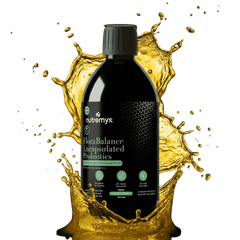
Our formula: Premium Encapsulated Probiotics
Premium Encapsulated Probiotics
500 ml · 15 ml per dose · 33-day course · 10 billion CFU per dose · 4 microencapsulated strains · Vitamin C 80 mg (100% NRV) · Vegan L-Glutamine 50 mg · 100% natural flavors and colors.
Discover the product →Our liquid formula contains 4 clinically tested and microencapsulated strains, selected for their complementary properties and documented effectiveness for the main benefits sought:
| Strain | Clinically documented benefits |
|---|---|
| Bifidobacterium lactis | Constipation, bowel movements, immunity (NK cells, antibodies), cholesterol reduction, inflammation |
| Lactobacillus acidophilus | Vaginal flora, antibiotic-associated diarrhea, IBS, calcium and lactose absorption |
| Lactobacillus plantarum | Intestinal permeability (leaky gut), inflammation, cardiovascular health, gut-brain axis |
| Lactobacillus salivarius | Oral health, reduction of oral pathogens, atopic eczema, ENT infections in children |
The formula is supplemented with vitamin C (80 mg, 100% of the NRV) — whose immune benefits are recognized by EFSA — and vegan L-Glutamine (50 mg), an amino acid essential for the integrity of the intestinal lining.
How should I take Premium Encapsulated Probiotics?
15 ml every morning — as a pure shot or diluted in 200 ml of water or juice. Shake gently before use. Store at room temperature before opening, and in the refrigerator afterward. Consume within 2 months of opening. Suitable for adults and children aged 3 and over.
Your microbiome deserves the best bacteria
10 billion microencapsulated probiotics that survive stomach acid and truly colonize your gut. Vegan, sugar-free, suitable from age 3.
Discover Premium Encapsulated Probiotics →FAQ — Frequently asked questions about probiotics
Take care of your microbiome starting today
10 billion probiotics per dose · Patented microencapsulation technology · Vegan, sugar-free, from age 3 · Made in Sweden according to GMP & HACCP standards.
Discover Premium Encapsulated Probiotics →
Gynecologist practicing in Paris for 18 years, specialized in women's hormonal health, perimenopause and menopause. At Nutremys LAB, she brings her medical perspective to every product we offer.
Learn more about Dr. Mariam E.K. →The information shared on this blog is for educational and informational purposes only. It does not replace medical consultation, diagnosis or treatment prescribed by a healthcare professional. If you have symptoms, are undergoing treatment or are pregnant, consult your doctor before modifying your diet or starting supplementation. Nutremys LAB food supplements should not replace a varied, balanced diet or a healthy lifestyle.
