

- Hot flashes affect 75 to 80% of menopausal women — but their intensity varies greatly depending on the individual.
- Some natural remedies have a genuine scientific basis (common sage, phytoestrogens, valerian). Others are myths.
- Homeopathy and Bach flowers: a real effect on stress, but insufficient clinical evidence for hot flashes alone.
- When basic remedies are no longer enough, clinically dosed supplementation changes the game.
Why your body goes into overdrive: what is really happening
In my practice, this is often the first question a woman asks after her first hot flash: “Why is my body doing this?” The short answer: it is trying to protect you. The longer answer is a little more interesting.
The role of the drop in estrogen
During perimenopause, estrogen levels fluctuate erratically before falling permanently. This hormonal instability disrupts the hypothalamus — the region of the brain that regulates body temperature. Your thermoneutral zone, which is normally fairly broad, narrows considerably. As a result, the slightest temperature change becomes an alarm signal for the brain, which orders peripheral vasodilation to release heat. This is what you feel: the sudden wave of heat, flushing, and sweating.
This mechanism is involuntary and automatic. It does not mean that something is “malfunctioning” in the pathological sense of the term — it means that your body is recalibrating. What we can do, however, is support this process rather than simply endure it.
Why some women suffer more than others
What I always explain to my patients: hot flashes are not uniform. Their frequency, duration, and intensity depend on a combination of factors — genetic, metabolic, and lifestyle-related. Chronic stress, an overworked liver, an imbalanced microbiome, a high body mass index, and prolonged stress levels all amplify the phenomenon.
This is precisely why I resist the temptation to give a universal answer. What works for one woman may not be enough for another. The goal is to understand your profile — and choose the right levers.

Grandmother’s remedies put to the test
I am not the kind of person to dismiss traditional knowledge out of hand. My grandmother used sage for everything — and honestly, she was not entirely wrong. What science allows us to do today is understand why some of these remedies work, at what dose, and in which situations they reach their limits.
Here is my clinical assessment of the main traditional remedies, without complacency or excessive romanticism.
A double-blind clinical study involving 71 menopausal women observed a significant reduction in the frequency of hot flashes after 8 weeks of supplementation with standardized sage extract. The results are consistent with this plant’s modulatory effects on the autonomic nervous system — the same system that regulates thermoregulation.
What is important to understand: sage works better as a standardized extract than as a simple infusion, where the concentration of active compounds is too variable to guarantee a reproducible effect.
What homeopathy and essential oils can — and cannot — do
I know this topic can be sensitive. My position is simple: I am neither for nor against anything on principle. I support what genuinely helps my patients, and I am honest about the limitations of each approach.

Essential oils that really help
Clary sage (Salvia sclarea) is the best-documented essential oil for menopause. It contains sclareol, a compound with a diterpene structure similar to estrogen. Applying it by massaging the wrists or ankles may provide noticeable relief, particularly for nighttime hot flashes.
True lavender essential oil (Lavandula angustifolia) has a demonstrated effect on anxiety and activation of the sympathetic nervous system — the latter playing a direct role in triggering stress-related hot flashes. Diffused in the evening or inhaled directly, it may reduce the frequency of nighttime episodes in women whose hot flashes are strongly correlated with stress.
The limitations no one tells you about
Homeopathy itself has no solid clinical evidence for hot flashes beyond the placebo effect — which is itself documented and not insignificant. If a patient tells me that Lachesis or Sepia helps her, I do not try to dissuade her. But I encourage her not to rely on it alone if her symptoms are severe, because randomized clinical trials show no measurable effect beyond placebo.
What homeopathy can do, however, is help with the anxiety component. And as I explained, anxiety amplifies hot flashes. So indirectly, if an approach reduces your stress level, it may reduce the frequency of episodes.
There is no approach that works for everyone. What is certain is that combining several small, consistent actions — carefully chosen plants, stress management, an appropriate diet, targeted supplementation if needed — always produces better results than a single miracle solution.
The human body is not a problem to solve. It is a system to support.
When natural remedies are no longer enough
There is a moment during a consultation when I see a patient’s expression change. She has tried everything — sage, isoflavones, breathing exercises, dietary changes. And yet, the hot flashes continue to disrupt her sleep and professional life. That is when we need to have an honest conversation about what targeted supplementation can offer.
Signs you may benefit from supplementation
| Situation | What I observe | Recommended approach |
|---|---|---|
| Mild hot flashes, 1 to 3/day | Limited disruption, no associated insomnia | Sage extract + stress management are often sufficient |
| Moderate hot flashes, 4 to 8/day | Impact on concentration, a few nighttime awakenings | Plants + well-dosed phytoestrogen complex or modulating active ingredients |
| Severe hot flashes, >8/day or frequent nighttime episodes | Chronic fatigue, significantly impaired quality of life | Clinically dosed multi-ingredient supplementation, gynecological guidance |
| Hot flashes accompanied by multiple hormonal symptoms | Vaginal dryness, weight gain, unstable mood | Comprehensive approach — complete formula tailored to menopause |
What the liquid format changes compared with an infusion
This point matters to me because it’s often underestimated. When you drink a sage infusion, the concentration of active compounds varies depending on the quality of the leaves, steeping time, and water temperature. You have no control over the actual dose you absorb.
A clinically dosed liquid formula is the opposite: each milliliter contains exactly the same amount of active ingredients, with significantly greater bioavailability than a capsule or infusion. Absorption through the oral mucosa and digestive tract occurs without an encapsulation barrier to overcome. Absorption is faster, more complete, and more predictable.
Keep a hot-flash diary for two weeks — time, duration, intensity, context. This helps identify triggers and measure the effectiveness of what you try.
Coffee, alcohol, spices, stress, ambient heat, large meals — every woman has her own triggers. Identifying and reducing them is often more effective than any remedy.
The best results I see in consultations come from combinations: diet + well-chosen plants + targeted supplementation. No single approach does everything.
Natural approaches don’t work in 48 hours. A complete cycle of 6 to 8 weeks is the minimum needed to assess the effect of a plant or nutritional complex.
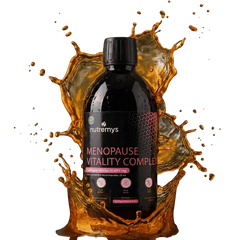
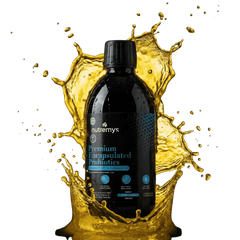
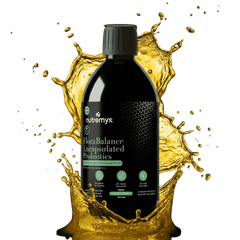
Menopause Vitality Complex — the comprehensive answer to menopause
9 synergistic active ingredients, including clinically dosed black cohosh, standardized sage, and liquid hormonal collagen. Formulated for women who read the label before buying.
Discover the Menopause Vitality Complex formulaThe liver, stress, and hot flashes: the forgotten connection
There’s one aspect of hot flashes that’s rarely discussed in mainstream articles, yet it makes a real difference in my practice: the role of the liver.
Why supporting your liver changes everything
The liver is the organ that metabolizes estrogen. When it is overloaded—by alcohol, medications, a diet high in saturated fat, or simply chronic stress—it metabolizes hormones less efficiently. These insufficiently broken-down estrogens accumulate, further disrupting hormonal balance and amplifying vasomotor symptoms.
This is not an alternative theory: it is basic biochemistry. Supporting liver function with milk thistle, artichoke, or simply reducing the alcohol and caffeine load during a trial period can have a measurable impact on the frequency of hot flashes.

Diet and stress management as amplifiers
Stress activates the sympathetic nervous system—the same system involved in triggering hot flashes. This is no coincidence: in some women, I find that hot flashes almost completely disappear during vacation and return as soon as the first busy workdays begin. The message is clear.
When it comes to diet, the strongest evidence points to a Mediterranean-style diet—rich in green vegetables, omega-3s, legumes, and low in refined sugars—as a protective factor. Researchers have observed that Japanese women, whose traditional diet is rich in soy isoflavones and oily fish, report significantly fewer severe hot flashes than Western women.
Reduce coffee to 1 cup in the morning and observe for 2 weeks. Caffeine is one of the most underestimated triggers of hot flashes—it directly activates the sympathetic nervous system. This simple adjustment can reduce the frequency of episodes by 20 to 30% in sensitive women.
If your liver is under strain, add milk thistle tea in the evening for 3 weeks. No pressure—just observe the effect.
Menopause is not a condition you simply have to endure. It is a transition to navigate with the right tools—and the curiosity to understand what is happening in your body rather than fight it.
To learn more about the hormonal symptoms of perimenopause, you can read our complete guide to menopause symptoms. And if you're wondering where you are in your hormonal transition, this article on the differences between perimenopause and menopause will help you understand.
Frequently asked questions about hot flashes
Ready to go beyond basic remedies?
Menopause Vitality Complex was formulated for women who are not satisfied with incomplete solutions. 9 synergistic active ingredients, a true clinical dose, liquid format for maximum absorption.
Explore Menopause Vitality ComplexThis article is written for informational and educational purposes. It does not replace personalized medical advice. In case of severe or persistent symptoms, consult your gynecologist or physician.

Gynecologist practicing in Paris for 18 years, specialized in women's hormonal health, perimenopause and menopause. At Nutremys LAB, she brings her medical perspective to every product we offer.
Learn more about Dr. Mariam E.K. →The information shared on this blog is for educational and informational purposes only. It does not replace medical consultation, diagnosis or treatment prescribed by a healthcare professional. If you have symptoms, are undergoing treatment or are pregnant, consult your doctor before modifying your diet or starting supplementation. Nutremys LAB food supplements should not replace a varied, balanced diet or a healthy lifestyle.
