

At a glance
- From perimenopause onward, the skin loses collagen (up to 30% in the first five years) and water: it becomes thinner, drier, and less firm.
- Autumn adds to the challenge: dry air, heating, and cold wind increase insensible water loss.
- The right approach: cleanse without stripping, then hydrate AND nourish (water + lipids).
- Key ingredients: hyaluronic acid, ceramides, niacinamide, retinol or bakuchiol, vitamin C, and daily SPF.
- The “in & out” approach complements skincare: collagen, omega-3s, and hydration support the skin from within.
Why your skin changes in autumn after 45
You know the feeling: as soon as temperatures drop, your skin feels tight after a shower, your complexion loses its summer glow, and fine lines appear where your skin seemed smooth. It's not just a seasonal impression. During menopause, your skin undergoes a profound transformation, and autumn acts as a revealer.
Once again, estrogen is to blame. These hormones stimulate the production of collagen and elastin, sebaceous gland activity, the synthesis of hyaluronic acid and ceramides - the lipids that cement the skin barrier. When their levels plummet, this entire system slows down at once. The skin retains less water, defends itself less effectively, and becomes drier and more reactive.
This 30% figure is well documented: a major review notes that skin loses a significant portion of its collagen in the first few years after menopause, followed by approximately 2% per year (Brincat et al., Climacteric). At the same time, declining estrogen levels are directly associated with drier skin and a weakened skin barrier (Thornton, Dermato-Endocrinology, 2013). Autumn does not add any hormonal changes, but cold, dry air, wind, and indoor heating increase transepidermal water loss: already fragile skin becomes dehydrated more quickly.
Cleanse and exfoliate without irritation
The first mistake after 45 is wanting skin that feels “squeaky clean.” Mature, dry skin needs gentleness: cleansing should remove impurities without taking away the hydrolipidic film that protects it.
Textures that respect the skin's lipids
Cleansing oil, balm, or milk dissolves makeup and pollution without stripping the skin. Skip foaming gels that leave skin feeling tight and alkaline soaps, which are too drying for autumn.
Lukewarm water, never scalding
Very hot water dilates the capillaries and weakens the skin barrier. A lukewarm rinse, or simply a soft cotton pad, helps limit redness and tightness.
A gentle enzymatic exfoliation
Fruit acids (AHA) or enzymes smooth the skin’s texture without rubbing. Once or twice a week is enough: consistency matters more than intensity.
Put the grainy scrubs away
On skin that is becoming thinner, scrubs create micro-injuries and worsen redness. Gentle chemical exfoliation is more effective and better tolerated.
The active ingredients that really matter
There is no need to layer ten products. A few carefully chosen active ingredients, introduced one at a time, do more for mature skin than an overloaded routine. Here is what matters most for autumn.
Hydrate: hyaluronic acid and ceramides
Hyaluronic acid retains a large amount of water and plumps the superficial layers, reducing dehydration fine lines. But water alone evaporates: it needs to be “sealed in.” That is the role of ceramides and lipids (squalane, plant oils), which rebuild the skin barrier’s cement. In autumn, this combination of water + lipids is the key to comfort.
Smooth and firm: retinol or bakuchiol
Retinol remains the best-studied active ingredient for stimulating cell renewal and supporting collagen. Introduce it gradually, two evenings a week, then increase use as tolerated. For reactive or thinner skin, bakuchiol - a plant-based alternative - offers comparable benefits with less irritation. Autumn, with less intense sunlight, is the right season to (re)introduce these active ingredients.
Protect: SPF, even under gray skies
UVA rays pass through clouds and windows all year round and remain the leading cause of skin aging. Since retinol and AHAs make the skin more sensitive, daily SPF 30 is not optional, even in October. A lightweight texture incorporated into your day cream is enough to protect your firmness reserves and prevent dark spots. By far, this is the most worthwhile step for preserving youthful-looking skin.
Radiance that also comes from within
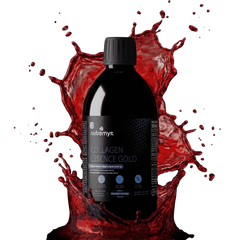
Collagen Essence Gold Retinol combines marine collagen and active ingredients designed to support mature skin's hydration, elasticity, and radiance.
Discover Collagen Essence GoldThe “in & out” approach: nourish the skin from within
The skin is an organ: what you apply to it matters, but what you provide from within matters too. This is the whole logic behind the “in & out” approach, which combines topical skincare and nutrition. During menopause, when raw materials become scarce, this dual approach takes on its full meaning.
Collagen, the skin's framework
The dermis is made up of approximately 70% collagen. Its decline after menopause partly explains the loss of firmness and the appearance of wrinkles. Supplementing with collagen peptides is attracting growing interest: several trials report improved skin hydration and elasticity after a few weeks of regular use. To understand the different forms and dosages, see our complete guide to marine collagen and menopause.
Good fats and hydration
Omega-3s (oily fish, flax, walnuts) and essential fatty acids support skin suppleness by strengthening its lipid barrier - valuable when it becomes dry. And the simplest step remains underestimated: drink enough. No serum can compensate for chronic dehydration. To complete your routine, explore our essential supplements after age 50.
Your autumn routine, morning and evening
Here is a simple, manageable routine designed for mature skin that becomes drier in autumn. The idea is not to do more, but to do better, consistently.
| Step | Morning | Evening |
|---|---|---|
| Cleansing | Lukewarm water or gentle cleanser | Cleansing oil or milk |
| Targeted care | Vitamin C serum (antioxidant, radiance) | Retinol or bakuchiol, 2–3 evenings / week |
| Hydration | Hyaluronic acid + cream | Rich cream with ceramides / lipids |
| Protection / repair | SPF 30, every day | Nourishing skincare, gentle massage |
Signs that additional support is needed
Adapting your routine is often enough. But certain signs indicate that topical and nutritional support may be worthwhile:
Daily tightness
The skin feels tight as soon as you cleanse and “drinks up” creams without feeling satisfied.
Dull complexion and new fine lines
Dehydration fine lines appear, and the glow of summer has faded.
Loss of firmness
Bounce and density decrease, a sign of reduced collagen.
Diet low in healthy fats
Little oily fish, nuts, or high-quality sources of protein.
Your frequently asked questions
Why does my skin become drier in autumn after age 45?
Because two factors combine. First, the drop in estrogen during menopause reduces natural sebum, ceramides, and hyaluronic acid: the skin retains less water. Then autumn brings colder, drier air, wind, and indoor heating, which increase water loss. Already weakened skin therefore becomes dehydrated more quickly.
Which active ingredients should you prioritize for an autumn facial routine?
For hydration: hyaluronic acid, sealed in with ceramides or a lipid-rich product. To smooth and firm: retinol, or bakuchiol for reactive skin. For radiance and correcting summer damage: vitamin C. And SPF 30 every morning. Introduce one active ingredient at a time, gradually, to give the skin time to adapt.
Do you really need to wear sunscreen when it is cloudy?
Yes. UVA rays, the main cause of skin aging and dark spots, penetrate clouds and windows all year round. In addition, retinol and fruit acids make the skin more sensitive to the sun. Daily SPF 30 therefore remains the most effective way to preserve firmness, even in October.
What is the difference between dehydrated and undernourished skin?
Dehydrated skin lacks water: it has fine lines and temporary tightness. Undernourished skin lacks lipids (fats): it feels rough, shows flaking, and has lasting discomfort. In autumn, the two approaches are often combined: a water-based hyaluronic acid serum and a richer product to seal in hydration.
Do supplements really help the skin during menopause?
They do not replace a good routine, but they complement it effectively. Collagen peptides are being studied for hydration and elasticity; omega-3s support the skin barrier; zinc and vitamin A help maintain normal skin. This is the “in & out” approach: working from the outside and inside, consistently and over time.
Scientific sources
- Thornton MJ. “Estrogens and aging skin.” Dermato-Endocrinology, 2013. Available via the PubMed database.
- Brincat MP et al. “Skin collagen changes related to age and hormone replacement therapy.” Climacteric.
- Rinnerthaler M et al. “Oxidative stress in aging human skin.” Biomolecules, 2015.
- EFSA - Authorized health claims (zinc, vitamin A, vitamin C): EFSA, health claims.
The information shared on this blog is for educational and informational purposes only. It does not replace medical consultation, diagnosis or treatment prescribed by a healthcare professional. If you have symptoms, are undergoing treatment or are pregnant, consult your doctor before modifying your diet or starting supplementation. Nutremys LAB food supplements should not replace a varied, balanced diet or a healthy lifestyle.

