

🔍 At a glance
- Marine collagen is type I collagen extracted from fish skin and hydrolyzed into highly absorbable peptides.
- Clinical studies show effects on skin hydration and elasticity and joint comfort, starting at 2.5 to 10 g per day for 8 to 12 weeks.
- It is generally well tolerated; true contraindications are rare (especially fish allergy).
- The key selection criteria: type I hydrolysate, actual dose per serving, purity, and the presence of vitamin C as a cofactor.
- Morning or evening: it makes little difference. Consistency is what produces results.
What is marine collagen and what is it used for?
Collagen is the most abundant protein in the human body: it accounts for approximately 30% of our total proteins and forms the framework of the skin, tendons, cartilage, and bones. Yet its natural production declines by about 1% per year from the late twenties onward—a decline that accelerates in women at menopause, when estrogen levels drop.
The “marine” version is said to be type I, the same type that predominates in human skin. Once hydrolyzed, collagen is broken down into low-molecular-weight peptides, which cross the intestinal barrier and stimulate fibroblasts—the cells that produce our own collagen. It is this mechanism, rather than direct “filling,” that explains the effects observed in studies.

The science-backed benefits of marine collagen
Skin
Randomized trials (including Bolke et al., 2019) show improved skin hydration, elasticity, and density after 12 weeks of collagen peptides.
Joints
In athletes and older adults alike, collagen hydrolysate is associated with reduced joint discomfort (Clark et al., 2008).
Bones
Specific collagen peptides improved bone mineral density in postmenopausal women over 12 months (König et al., 2018).
Hair & nails
Collagen provides the amino acids (glycine, proline) needed for keratin; preliminary data suggest stronger nails.

For skin specifically, our article on marine collagen and skin radiance explains the skin mechanisms, while our menopausal skincare routine shows how to incorporate it into your daily routine.
Is marine collagen dangerous? Side effects and contraindications
The main concern is the variable quality of products, not the molecule itself. A poorly purified hydrolysate may contain unwanted traces—that’s why it is important to choose a manufacturer that is transparent about its source and testing (heavy metals, purity). In Europe, supplements are regulated and claims are assessed by the EFSA.
Who should avoid it or seek medical advice?
Contraindications and precautions
Avoid in case of an allergy to fish or shellfish. Medical advice is recommended in case of kidney failure (protein intake should be monitored), phenylketonuria, during pregnancy and breastfeeding (as a precaution), or if you are undergoing long-term treatment.
Does marine collagen cause weight gain?
No. A daily dose of 10 g provides approximately 35 to 40 kcal—the equivalent of half an apple. Collagen is a protein: it contributes to satiety and helps maintain lean mass, two allies in weight management. If your overall protein intake is insufficient, our article on 5 signs of protein deficiency is worth reading.
“Collagen is not recommended for postmenopausal women”: true or false?
What the science says
False. This misconception confuses collagen with hormone supplements. Collagen has no hormonal activity: it is simply a protein. Supplementation actually makes the most sense during menopause, when the drop in estrogen accelerates the loss of skin and bone collagen—by up to 30% in the first 5 years after menopause, according to dermatological data.

Which marine collagen should you choose? The 5 criteria that matter
| Criterion | Why it matters | The benchmark |
|---|---|---|
| Hydrolysate (peptides) | Actual intestinal absorption | “Hydrolyzed collagen” or “peptides,” ~2,000–5,000 Da |
| Actual dose per serving | The dose makes the difference | 5 to 10 g/day — check the mg per serving, not per package |
| Marine Type I | The dominant type in the skin | Source: fish skin, controlled fishing |
| Cofactors | Vitamin C is essential for synthesis | Formula with vitamin C included |
| Format | Consistency comes first | Liquid > powder > capsules for high doses |
The most common trap: capsules, often dosed at 300–500 mg each—you would need more than fifteen a day to reach the dose used in studies. Powder works if you can tolerate the taste; concentrated liquid remains the easiest way to reach 10,000 mg in a single serving. Whether in a pharmacy or online, the requirements are the same: read the label.
Nutremys' advice
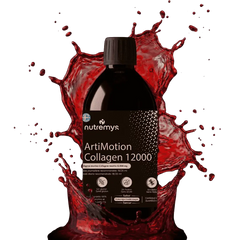
Vitamin C is not a marketing bonus: without it, fibroblasts simply cannot assemble collagen. Our guide to vitamin C, its requirements, and its sources explains this partnership. For joints specifically, a dedicated formula such as ArtiMotion Collagen 12 000 combines collagen with cartilage-supporting active ingredients.
How and when should you take marine collagen?
The “best time” is therefore the one you will not forget: many women take it with breakfast or as part of their evening routine. Effects follow tissue biology: allow 4 to 6 weeks for the first signs (nails, hydration), 8 to 12 weeks for the skin and joints, and up to 6 months for bone tissue.

Marine or bovine collagen? And after age 50?
Bovine collagen (types I and III) is effective too, but marine collagen has two advantages: smaller peptides on average — meaning higher bioavailability — and a pure type I profile, which is most relevant for the skin. It is also suitable for those who avoid bovine products. “Plant-based” collagen, however, does not exist: vegan products provide cofactors, not collagen.
After age 50, the question is no longer “which one?” but “why not sooner?”: hormonal decline accelerates the loss of skin and bone collagen. Our dedicated guide Marine Collagen & Menopause explores this topic in greater depth, while our selection of essential supplements after 50 puts collagen into a broader strategy.
Signs that you might benefit from supplementation
Skin that marks more easily and loses its bounce, morning joint stiffness, brittle nails, thinner hair, slower muscle recovery — especially after age 45 or during perimenopause. If several of these signs sound familiar, a serious 12-week trial at an effective dose will give you a clear answer.
Marine collagen designed for discerning women
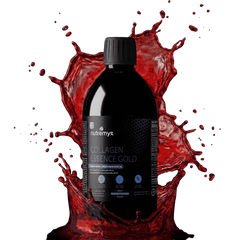
Collagen Essence Gold combines 12,500 mg of liquid hydrolyzed marine collagen with targeted active ingredients for mature skin — the dose used in studies, in a format that is easy to stick with over time.
Discover Collagen Essence GoldFrequently asked questions about marine collagen
This article is for informational purposes only and does not replace medical advice. Consult a healthcare professional before making any decision regarding your health.
Scientific sources
- Bolke L. et al. “A Collagen Supplement Improves Skin Hydration, Elasticity, Roughness, and Density,” Nutrients, 2019.
- Clark K.L. et al. “24-Week study on the use of collagen hydrolysate as a dietary supplement in athletes with activity-related joint pain,” Current Medical Research and Opinion, 2008.
- König D. et al. “Specific Collagen Peptides Improve Bone Mineral Density and Bone Markers in Postmenopausal Women,” Nutrients, 2018.
- EFSA — Assessments of health claims relating to proteins and collagen.
- ANSES — Recommendations on food supplements, 2021.
The information shared on this blog is for educational and informational purposes only. It does not replace medical consultation, diagnosis or treatment prescribed by a healthcare professional. If you have symptoms, are undergoing treatment or are pregnant, consult your doctor before modifying your diet or starting supplementation. Nutremys LAB food supplements should not replace a varied, balanced diet or a healthy lifestyle.
