



Toutes les formes de magnésium ne se valent pas — la différence d'absorption varie de 4 % à 80 %
Quel magnésium choisir parmi les dizaines de formes disponibles ? La réponse dépend de votre objectif : sommeil, stress, santé osseuse, cognition ou transit. Mais un fait est universel : la forme de magnésium détermine la quantité réellement absorbée par votre organisme — et l'écart est colossal. Un oxyde de magnésium à 300 mg vous apporte en réalité ~12 mg après absorption. Un bisglycinate à 150 mg vous en apporte ~120 mg.
Ce guide compare les 7 principales formes de magnésium, identifie le meilleur magnésium pour la ménopause, et vous explique quand et comment le prendre pour en tirer le maximum de bénéfices.
Pourquoi le magnésium est vital après 40 ans et pendant la ménopause

Le magnésium intervient dans plus de 300 réactions enzymatiques de l'organisme. Il est indispensable à la production d'énergie, à la contraction musculaire, au fonctionnement du système nerveux, à la qualité du sommeil et au maintien de la densité osseuse. L'EFSA reconnaît officiellement ses rôles dans la réduction de la fatigue, le fonctionnement normal du système nerveux et le maintien d'une ossature normale.
Le problème ? 77 % des Françaises n'atteignent pas les apports recommandés en magnésium (étude SU.VI.MAX). Et la situation empire après 40 ans : l'absorption intestinale diminue avec l'âge, certains médicaments courants (IPP, diurétiques) épuisent les réserves, et la ménopause accélère la perte de magnésium par les fluctuations hormonales.
Le magnésium est le cofacteur indispensable de la vitamine D : sans lui, la vitamine D reste sous forme inactive et ne peut pas remplir son rôle dans l'absorption du calcium. C'est la chaîne complète : magnésium → active la vitamine D → permet l'absorption du calcium → qui se fixe sur la trame de collagène osseuse. Briser un maillon de cette chaîne compromet toute la structure.
Les 7 formes de magnésium comparées : biodisponibilité, tolérance et usages
Voici le comparatif des sept formes de magnésium les plus courantes, classées par biodisponibilité décroissante. La forme que vous choisissez détermine directement l'efficacité de votre supplémentation.
Sommeil, stress, nerveux
Le meilleur choix
Transit, énergie
Bonne option
Fatigue, muscles
Énergie cellulaire
Cognition, mémoire
Brain fog
Cardiovasculaire
Palpitations
Mélange variable
Cure d'entretien
Effet laxatif
À éviter
🏆 Bisglycinate de magnésium — la référence absolue
Le bisglycinate (ou glycinate) est une forme chélatée : le magnésium est lié à deux molécules de glycine, un acide aminé ayant lui-même des propriétés relaxantes sur le système nerveux. Résultat : une biodisponibilité d'environ 80 %, une tolérance digestive excellente (zéro effet laxatif) et un double bénéfice grâce à la glycine. C'est la forme recommandée pour le stress, le sommeil, l'anxiété et les crampes. Si vous ne devez retenir qu'une seule forme : c'est celle-ci.
🍋 Citrate de magnésium — la bonne alternative polyvalente
Le citrate offre une biodisponibilité correcte (~35 %) et un léger effet stimulant sur le transit — ce qui en fait un choix intéressant pour les personnes sujettes à la constipation. L'acide citrique, une fois métabolisé, a des propriétés alcalinisantes. Moins adapté au sommeil que le bisglycinate, il reste une bonne option pour une cure d'entretien énergétique ou une reminéralisation générale.

🍎 Malate de magnésium — pour l'énergie cellulaire
Le malate associe le magnésium à l'acide malique, un intermédiaire du cycle de Krebs (production d'énergie cellulaire). Cette forme est souvent recommandée pour la fatigue chronique et les douleurs musculaires. Sa biodisponibilité est correcte (~30 %) et sa tolérance digestive bonne. Moins efficace que le bisglycinate pour le sommeil, mais intéressant en complément d'une activité physique régulière.
🧠 Thréonate de magnésium — le magnésium qui passe la barrière du cerveau
Le L-thréonate de magnésium est la seule forme ayant démontré sa capacité à traverser la barrière hémato-encéphalique et à augmenter les concentrations de magnésium dans le cerveau. Un essai contrôlé randomisé (Hausenblas et al., 2024) sur 76 adultes a montré une amélioration significative de la qualité du sommeil et du fonctionnement diurne après seulement 3 semaines. Un second essai (Lopresti & Smith, 2025) sur 100 adultes a confirmé des améliorations de la cognition, de la mémoire de travail et du temps de réaction. Forme particulièrement pertinente pour le brain fog de la ménopause.
❤️ Taurate de magnésium — le choix cardiovasculaire
Le taurate associe le magnésium à la taurine, un acide aminé qui soutient la fonction cardiaque et la régulation de la pression artérielle. Cette forme est recommandée pour les femmes présentant des palpitations, de l'hypertension ou un risque cardiovasculaire accru — un enjeu particulièrement pertinent après la ménopause, quand la protection estrogénique disparaît.
🌊 Magnésium marin — le faux ami naturel
Le magnésium marin est extrait de l'eau de mer et contient un mélange de sels de magnésium (souvent beaucoup d'oxyde). Sa biodisponibilité est modérée (20-30 %) et varie considérablement selon les produits. Il peut convenir pour une cure d'entretien courte, mais il est nettement inférieur au bisglycinate pour une supplémentation régulière. Attention aux troubles digestifs fréquents liés à la présence d'oxyde.
⚠️ Oxyde de magnésium — le faux bon plan à éviter
L'oxyde de magnésium est la forme la moins chère — et la moins efficace. Avec une biodisponibilité de seulement 4 %, un comprimé de 300 mg d'oxyde ne vous apporte en réalité que ~12 mg de magnésium utilisable. Le reste provoque un appel d'eau dans l'intestin, d'où un effet laxatif prononcé. Malgré sa forte teneur en magnésium élémentaire (60 %), c'est un piège : ne vous fiez jamais au dosage total affiché sans vérifier la forme.
Magnésium réellement absorbé = teneur élémentaire × biodisponibilité. Un bisglycinate contenant 150 mg de magnésium élémentaire à 80 % de biodisponibilité vous apporte ~120 mg utilisables. Un oxyde contenant 300 mg de magnésium élémentaire à 4 % ne vous apporte que ~12 mg. Le bisglycinate à moitié du dosage affiché donne 10 fois plus de magnésium réel. C'est pourquoi la forme compte autant — sinon plus — que le dosage inscrit sur l'étiquette.
Quel est le meilleur magnésium pour la ménopause ?
La réponse est claire : le bisglycinate de magnésium est la forme la plus adaptée à la ménopause. Et les preuves s'accumulent.

L'étude pilote de Park et al. (2011) menée sur 29 femmes ménopausées atteintes de cancer du sein a montré qu'une supplémentation de 400 mg/jour de magnésium pendant 4 semaines réduisait la fréquence des bouffées de chaleur de 41,4 % et leur intensité de 50 %. Une alternative prometteuse pour les femmes ne pouvant pas prendre de THS.
L'étude de Grenade (2020) sur 52 femmes ménopausées a démontré que 500 mg/jour de magnésium pendant 8 semaines améliorait significativement le statut en vitamine D — même sans apport supplémentaire de D3. Le magnésium est le cofacteur indispensable à la conversion de la vitamine D en sa forme active (calcitriol).
L'essai contrôlé de Hausenblas et al. (2024) a montré que le magnésium L-thréonate améliorait significativement la qualité du sommeil profond et le fonctionnement diurne après 3 semaines. Le bisglycinate, grâce à la glycine, offre un bénéfice similaire sur la relaxation et l'endormissement.
Une revue systématique publiée dans Nutrients (Boyle et al., 2017) a analysé l'ensemble des études sur le magnésium et l'anxiété. Conclusion : la supplémentation en magnésium montre un effet positif sur l'anxiété subjective et le stress, particulièrement chez les personnes présentant une vulnérabilité accrue — ce qui inclut les femmes en périménopause et ménopause, période de grande fluctuation des neurotransmetteurs.
Active la vitamine D en calcitriol
Permet l'absorption intestinale du calcium
Se fixe sur la trame osseuse organique
La matrice sur laquelle le calcium se dépose
Synergie complète pour la santé osseuse
Choix #1 : Bisglycinate de magnésium — 300-400 mg/jour le soir → sommeil, stress, crampes, cofacteur D3. C'est l'actif de base de tout bon supplément pour la ménopause.
Choix complémentaire : Thréonate de magnésium — si brain fog ou troubles cognitifs dominants (seule forme qui traverse la barrière hémato-encéphalique).
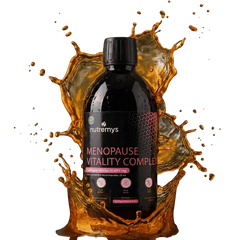
Le magnésium fait partie de notre formule ménopause
Magnésium, collagène marin hydrolysé, vitamine D3 — une synergie d'actifs pensée pour accompagner la ménopause avec science et douceur.
Découvrir Menopause Vitality →Quand et comment prendre son magnésium pour un effet optimal
Le moment de prise, le fractionnement et les associations influencent directement l'efficacité de votre magnésium. Voici le guide pratique issu de notre guide des compléments après 50 ans.
La glycine du bisglycinate a un effet relaxant documenté sur le système nerveux. Prendre le magnésium le soir optimise son effet sur la qualité du sommeil et l'endormissement. Idéal avec un grand verre d'eau, hors du repas ou avec une collation légère.
Son léger effet stimulant sur le transit le rend plus adapté au matin. À prendre avec un repas pour améliorer la tolérance digestive. Évitez de le combiner au même moment avec du thé ou du café — les tanins et la caféine réduisent l'absorption du magnésium de 40 à 60 %.
La capacité d'absorption intestinale du magnésium sature au-delà de 200 mg par prise. Prendre 400 mg en une seule fois, c'est perdre une bonne partie du dosage. Répartissez en deux prises (matin et soir) pour optimiser l'absorption totale. C'est aussi valable pour le citrate et le malate.
La vitamine B6 améliore l'entrée du magnésium dans les cellules — c'est pourquoi de nombreuses formules les associent. La vitamine D3 et le magnésium sont mutuellement dépendants : le magnésium active la D3, et la D3 optimise l'utilisation du magnésium. Les prendre ensemble amplifie l'effet de chacun.
Les premiers effets sur le stress et le sommeil apparaissent en 2 à 4 semaines. Les bénéfices sur la densité osseuse et le statut en vitamine D nécessitent 2 à 3 mois. Ne faites pas l'erreur d'arrêter après 2 semaines en pensant que "ca ne marche pas" — le magnésium agit progressivement. La cure peut être renouvelée autant que nécessaire, tant que les dosages sont respectés.
Magnésium + thé/café : attendez 1h minimum — les tanins et la caféine réduisent l'absorption. Magnésium + fer : ils se concurrencent à l'absorption. Espacez-les de 2 heures. Magnésium + calcium à haute dose en même temps : en grande quantité simultanée, ils se gênent mutuellement. La solution : calcium le matin, magnésium le soir.
Les 5 erreurs les plus fréquentes avec le magnésium
Même avec la bonne intention, une supplémentation mal conduite peut être inefficace. Voici les pièges à éviter absolument.
C'est la forme la moins chère — et la moins efficace. 4 % d'absorption signifie que 96 % du magnésium pris traverse l'intestin sans être absorbé, provoquant des troubles digestifs. Si votre pharmacien vous propose un magnésium "à forte teneur" en magnésium élémentaire, vérifiez qu'il ne s'agit pas d'oxyde.
"500 mg de magnésium" sur l'étiquette ne veut rien dire si la forme n'est pas précisée. Ce qui compte, c'est le magnésium élémentaire × la biodisponibilité. Lisez la composition détaillée : "bisglycinate de magnésium apportant 150 mg de magnésium élémentaire" vous en dit bien plus que "magnésium 500 mg".
L'absorption intestinale du magnésium sature au-delà de 200 mg par prise. Au-delà, le surplus n'est pas absorbé et peut provoquer des troubles digestifs. Fractionnez toujours en 2 prises espacées (matin/soir) pour maximiser l'absorption réelle.
Le magnésium n'est pas un antidouleur — il agit en reconstituant progressivement vos réserves cellulaires. Les premiers effets apparaissent après 2 à 4 semaines de prise régulière. Abandonner après 10 jours parce qu'on "ne sent rien" est l'erreur la plus fréquente et la plus dommageable.
Certains médicaments épuisent activement vos réserves de magnésium : les inhibiteurs de la pompe à protons (IPP, oméprazole), les diurétiques (furoSémide), certains antibiotiques (fluoroquinolones) et les laxatifs stimulants. Si vous prenez l'un de ces traitements, votre besoin en magnésium est probablement supérieur à la moyenne — et la forme bisglycinate est d'autant plus importante pour maximiser l'absorption. Informez toujours votre médecin de votre supplémentation.
FAQ — Questions fréquentes sur le magnésium
Découvrez nos formules intégrant le magnésium
Magnésium, collagène marin, vitamine D3 — des synergies d'actifs pensées pour la femme après 40 ans.
Menopause Vitality → Guide compléments après 50 ans →anses.fr
efsa.europa.eu
pubmed.ncbi.nlm.nih.gov/21271347
pmc.ncbi.nlm.nih.gov/PMC7468838
pubmed.ncbi.nlm.nih.gov/39252819
pubmed.ncbi.nlm.nih.gov/41601871
doi.org/10.3390/nu9050429
Les informations partagées sur ce blog sont à titre éducatif et informatif. Elles ne remplacent en aucun cas une consultation médicale, un diagnostic ou un traitement prescrit par un professionnel de santé. Si vous présentez des symptômes, suivez un traitement ou êtes enceinte, consultez votre médecin avant de modifier votre alimentation ou de débuter une supplémentation. Les compléments alimentaires Nutremys LAB ne sauraient se substituer à un régime alimentaire varié et équilibré, ni à un mode de vie sain.
