



Des saignements qui changent : un signal hormonal, pas une fatalité
En périménopause, les ovaires n'ovulent plus systématiquement. Sans ovulation, la progestérone — hormone qui régule et stabilise le cycle — chute en premier, tandis que les œstrogènes continuent de fluctuer. Le résultat : un endomètre qui s'épaissit de façon irrégulière et se détache par fragments, provoquant des saignements prolongés, des règles abondantes ou du spotting entre les cycles.
Dans cet article, nous expliquons pourquoi ces changements arrivent, comment différencier un saignement normal d'un signal d'alerte, quelles approches naturelles et médicales existent, et quand consulter un professionnel de santé. Cet article est à titre informatif et ne remplace pas un avis médical.
Pourquoi les saignements changent en périménopause

La périménopause — cette transition hormonale qui débute en moyenne vers 45-47 ans et dure de 4 à 8 ans — bouleverse profondément le cycle menstruel. Et le premier changement que la plupart des femmes remarquent concerne précisément les saignements. Pour comprendre ce qui se passe, il faut revenir à la mécanique hormonale. Si vous souhaitez d'abord situer précisément votre étape, notre guide périménopause vs ménopause peut vous aider.
🧬 Le mécanisme hormonal en cause
Pendant un cycle normal, l'ovulation déclenche la production de progestérone, l'hormone qui stabilise l'endomètre (la muqueuse utérine) et prépare des règles ordonnées. En périménopause, l'ovulation devient irrégulière, puis de plus en plus rare. Quand il n'y a pas d'ovulation, la progestérone n'est pas produite en quantité suffisante.
Pendant ce temps, les œstrogènes — bien qu'en déclin global — continuent de fluctuer, parfois à des niveaux plus élevés que la normale. Sous l'effet de ces œstrogènes non compensés par la progestérone, l'endomètre continue de s'épaissir de façon excessive, puis se détache de manière irrégulière et prolongée au lieu de se renouveler proprement à chaque cycle.
Sans ovulation, pas de corps jaune, pas de progestérone. L'endomètre s'épaissit sous l'effet des œstrogènes seuls et se détache de façon fragmentaire et imprévisible, provoquant des saignements prolongés ou du spotting continu.
Paradoxalement, les œstrogènes peuvent atteindre des pics très élevés en périménopause, avant de chuter brutalement. Ces montagnes russes hormonales expliquent l'alternance entre règles très abondantes et périodes de spotting léger.
Les fibromes utérins (tumeurs bénignes du muscle utérin) et les polypes endométriaux (excroissances de la muqueuse) sont fréquents à cet âge et peuvent augmenter le volume et la durée des saignements. Ils méritent un diagnostic par échographie.
Un excès de tissu adipeux augmente la production d'œstrogènes périphériques, intensifiant le déséquilibre. Le stress chronique, certains médicaments (AINS, anticoagulants) et les dysthyroïdies peuvent également modifier le profil de saignement.
La revue systématique publiée dans Menopause Review (Daan & Fauser, 2015) confirme que les saignements utérins anormaux touchent jusqu'à 30 % des femmes en transition ménopausique. Les auteurs soulignent que la cause la plus fréquente est l'anovulation chronique, avec un endomètre soumis à une stimulation œstrogénique non opposée. Le traitement de première intention recommandé est la progestérone cyclique ou un DIU au lévonorgestrel, associé à une évaluation par échographie transvaginale pour exclure une pathologie structurelle.
Saignement normal ou anormal : comment faire la différence

En périménopause, le cycle peut devenir totalement imprévisible. Des règles qui durent 10 jours un mois, puis 3 jours le mois suivant. Un spotting brun entre deux cycles. Des flux alternant entre abondant et presque absent. La variabilité elle-même est normale. Mais certains signes méritent une attention médicale.
✅ Ce qui est généralement normal
Les variations suivantes font partie de la transition hormonale et ne nécessitent pas d'inquiétude particulière en l'absence d'autres symptômes : des cycles qui se raccourcissent (24 jours) ou s'allongent (40 jours et plus), des règles plus longues que d'habitude (jusqu'à 7-8 jours), un flux variable d'un cycle à l'autre, de petits caillots occasionnels et un spotting léger entre les règles.
🚨 Signaux d'alerte à ne pas ignorer
En revanche, certains saignements nécessitent une consultation médicale rapide. Il est important de les identifier pour agir à temps.
Changement de protection toutes les 1-2 heures pendant plus de 2 heures
Saignements qui persistent au-delà de 10 jours consécutifs
Épuisement, vertiges, essoufflement — signes possibles d'anémie ferriprive
Saignements après les rapports sexuels — toujours à signaler au médecin
L'un des outils les plus utiles pour votre médecin est un journal de vos saignements : dates, durée, intensité (légère, modérée, abondante), présence de caillots, symptômes associés (douleurs, fatigue, vertiges). Plusieurs applications existent pour faciliter ce suivi. Ces données permettent au gynécologue de repérer rapidement un schéma anormal et de poser un diagnostic plus précis.
Diagnostic : les examens recommandés
Face à des saignements persistants ou préoccupants, un bilan médical permet d'identifier la cause précise et d'écarter toute pathologie sérieuse. Voici les examens habituellement proposés, étape par étape.
Le médecin évalue la durée des cycles, la quantité de sang perdu, les antécédents médicaux et les traitements en cours. Votre journal menstruel est précieux à cette étape — il donne une cartographie claire de ce que votre corps traverse.
Cet examen non invasif permet d'évaluer l'épaisseur de l'endomètre, de détecter la présence de fibromes, de polypes ou de kystes ovariens. C'est l'examen de première intention devant tout saignement anormal en périménopause.
Un dosage de la FSH, LH, œstradiol et progestérone permet de situer la phase de transition. Un bilan thyroïdien et une numération formule sanguine (NFS) complètent l'évaluation — cette dernière pour dépister une éventuelle anémie liée aux pertes de sang.
En fonction des résultats, le gynécologue peut prescrire une hystéroscopie (visualisation directe de la cavité utérine) ou une biopsie de l'endomètre pour exclure une hyperplasie atypique ou toute autre pathologie nécessitant un suivi spécifique.
Des saignements abondants et prolongés en périménopause peuvent conduire à une carence en fer (anémie ferriprive) souvent silencieuse au début. Fatigue persistante, essoufflement à l'effort, pâleur, difficultés de concentration : ces signes doivent vous amener à vérifier votre taux de ferritine. Une fatigue chronique attribuée « à l'âge » cache parfois une anémie parfaitement corrigeable. Si vous reconnaissez d'autres symptômes liés à cette transition, notre article sur le brouillard mental en périménopause peut vous éclairer.
Solutions naturelles et médicales

Il existe plusieurs niveaux de réponse face aux saignements de la périménopause, allant des approches nutritionnelles et phytothérapeutiques aux solutions médicales. L'approche la plus efficace combine souvent plusieurs leviers simultanément.
🌿 Phytothérapie : les plantes qui soutiennent l'équilibre hormonal
Certaines plantes médicinales disposent de données scientifiques encourageantes pour accompagner la transition hormonale et moduler les saignements. Elles n'ont pas vocation à remplacer un avis médical, mais peuvent constituer un soutien complémentaire précieux.
🩺 Options médicales
Si les approches naturelles ne suffisent pas ou si les saignements impactent fortement la qualité de vie, plusieurs options médicales existent. Elles doivent être discutées individuellement avec un gynécologue.
La prescription de progestérone naturelle micronisée (10 à 14 jours par cycle) compense le déficit en progestérone, stabilise l'endomètre et organise des règles régulières. C'est le traitement de première intention recommandé par les sociétés savantes.
Le dispositif intra-utérin au lévonorgestrel libère localement un progestatif qui réduit considérablement les saignements — jusqu'à 90 % de réduction du flux menstruel selon les études. Il offre également une contraception, utile tant que la ménopause n'est pas confirmée.
En présence de fibromes volumineux, de polypes récurrents ou d'hyperplasie endométriale atypique, des interventions ciblées peuvent être proposées : résection hystéroscopique des polypes, ablation endométriale ou, dans les cas les plus complexes, hystérectomie. Ces décisions se prennent au cas par cas, après un bilan complet.
Micronutrition et supplémentation ciblée
Au-delà de la phytothérapie, certains micronutriments jouent un rôle essentiel dans la régulation hormonale et la compensation des pertes liées aux saignements abondants. Une alimentation adaptée est le premier levier — mais dans cette phase de haute demande métabolique, la supplémentation intelligente peut faire une réelle différence.
Des règles abondantes et prolongées augmentent les pertes en fer. Un taux de ferritine inférieur à 30 µg/L (même avec une hémoglobine normale) peut causer fatigue, chute de cheveux, fragilité immunitaire et troubles cognitifs. La supplémentation en fer bisglycinate — forme mieux tolérée — est souvent nécessaire, idéalement accompagnée de vitamine C pour optimiser l'absorption.
La vitamine D3 joue un rôle dans la modulation du système immunitaire et le métabolisme osseux — deux aspects fragilisés par la transition hormonale. Associée à la vitamine K2, elle favorise la fixation du calcium dans les os plutôt que dans les artères. Pour approfondir ce sujet, consultez notre article sur la vitamine D3 et ses cofacteurs.
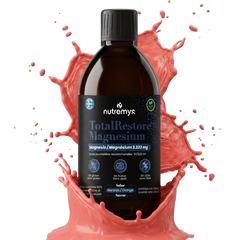
Le magnésium intervient dans plus de 300 réactions enzymatiques, dont la régulation du système nerveux et la relaxation musculaire utérine. Les vitamines du groupe B (B6, B9, B12) soutiennent le métabolisme hormonal, la production de sérotonine et la résistance au stress — souvent exacerbé par les perturbations du cycle.
L'intestin participe au métabolisme des œstrogènes via l'estrobolome (ensemble de bactéries intestinales capables de métaboliser les œstrogènes). Un microbiote déséquilibré peut contribuer à un excès d'œstrogènes circulants. Des souches probiotiques ciblées, comme celles des Probiotiques Encapsulés Premium Nutremys, peuvent soutenir cet équilibre. Découvrez notre guide complet sur les probiotiques et la flore intestinale.
L'estrobolome désigne l'ensemble des micro-organismes intestinaux capables de produire une enzyme clé, la bêta-glucuronidase, qui influence la réabsorption des œstrogènes conjugués dans le tube digestif. Une dysbiose intestinale — favorisée par le stress, les antibiotiques ou une alimentation pauvre en fibres — peut augmenter l'activité de cette enzyme, entraînant un excès relatif d'œstrogènes dans la circulation sanguine. Ce phénomène aggrave le déséquilibre hormonal caractéristique de la périménopause et peut intensifier les saignements (Plottel & Blaser, The Journal of Clinical Endocrinology & Metabolism, 2011).
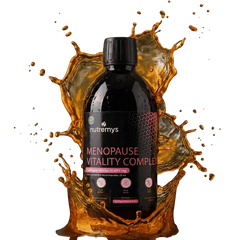
Si vous présentez plusieurs de ces signes, un soutien nutritionnel ciblé peut être particulièrement utile : fatigue persistante malgré un sommeil suffisant, chute de cheveux ou ongles cassants, irritabilité accrue, ballonnements chroniques, peau plus sèche et moins lumineuse, ou difficulté à récupérer après l'effort. Le Menopause Vitality Complex de Nutremys combine 31 actifs — dont du collagène marin, des phytoestrogènes (trèfle rouge, dong quai, maca), du magnésium, des vitamines D3, K2, C, E et un complexe B complet — dans une formule liquide à haute biodisponibilité.
Guide selon l'intensité des saignements

L'approche la plus adaptée dépend de la fréquence, de l'intensité et de l'impact des saignements sur votre vie quotidienne. Ce guide vous aide à situer votre situation et à identifier les prochaines étapes.
Irrégulière
Persistante
Invalidante
Les choix alimentaires de cette période conditionnent la manière dont tu vas traverser ta transition. Privilégie les aliments riches en fer (lentilles, épinards, viande rouge maigre), en oméga-3 (sardines, graines de lin) pour leur effet anti-inflammatoire, et en fibres pour soutenir l'élimination des œstrogènes excédentaires par le transit intestinal. Un exercice physique modéré — marche, yoga, natation — contribue à la régulation hormonale et à la gestion du poids, facteur direct d'équilibre œstrogénique. Pour des conseils nutritionnels plus complets adaptés à cette période, retrouvez notre guide des compléments essentiels après 50 ans.
FAQ — Questions fréquentes sur les saignements en périménopause
doi.org/10.5114/pm.2015.49991
inserm.fr/dossier/menopause
doi.org/10.1210/jc.2011-1508
doi.org/10.1002/ijgo.12666
has-sante.fr
doi.org/10.3390/nu16010001



Les informations partagées sur ce blog sont à titre éducatif et informatif. Elles ne remplacent en aucun cas une consultation médicale, un diagnostic ou un traitement prescrit par un professionnel de santé. Si vous présentez des symptômes, suivez un traitement ou êtes enceinte, consultez votre médecin avant de modifier votre alimentation ou de débuter une supplémentation. Les compléments alimentaires Nutremys LAB ne sauraient se substituer à un régime alimentaire varié et équilibré, ni à un mode de vie sain.

