

Menopause Skincare: A Comprehensive Guide and Tailored Routine
Sudden dryness, loss of elasticity, emerging dark spots, fine lines deepening faster — the skin in your forties and fifties undergoes accelerated changes. Understanding the biological mechanisms allows for building a routine that slows, or even reverses, many of these changes.
During the first five years after menopause, skin loses up to 30% of its collagen, then about 2% annually thereafter. The drop in estrogen affects skin thickness, elasticity, hydration, the protective barrier, and healing. A tailored routine — external (targeted care + strict sun protection) and internal (collagen, vitamin C, omega-3, protein) — can significantly slow aging and restore skin quality in 8 to 16 weeks. This guide details the most documented approaches and pitfalls to avoid.
What changes in your skin during menopause
Skin is one of the most sensitive organs to hormonal decline. Even before hot flashes appear, many women notice they no longer quite recognize themselves in the mirror: a duller complexion, a less defined jawline, more visible pores, fine lines that weren't there six months ago. These changes are not simply the effect of time — they are biologically documented structural modifications.
A dramatic loss of collagen
Collagen accounts for about 75% of the skin's dry weight. During hormonal transition, its synthesis drops drastically. Dermatological studies converge on a striking figure: skin loses up to 30% of its collagen in the first five years post-menopause, then about 2% per year. Collagen fibers (types I and III) provide firmness; their degradation results in skin that "sags," a less defined oval, and hollows forming under the eyes.
Weakened elastin
Elastin is what allows the skin to spring back into place after pressure or a smile. With declining estrogen, its quality degrades: fibers become more rigid, less able to return to their shape. This alteration creates permanent fine lines at the corners of the eyes and mouth.
Collapsing hydration
Cutaneous hyaluronic acid, which retains water in tissues, sees its concentration decrease by up to 50% between ages 40 and 60. The result: a feeling of tightness, skin that immediately "drinks up" products, a dull complexion. The barrier function (the hydrolipidic film on the surface) also weakens, making the skin more reactive to external aggressions.
Slowed cell renewal
Skin cells renew approximately every 28 days before age 40, then this cycle gradually extends to 40, 50, or even 60 days after menopause. The direct consequence: a duller complexion, stubborn dark spots, and slower healing. To understand the full timeline of hormonal changes, read our perimenopause vs. menopause guide.

Why estrogen is essential for skin
Estrogen receptors (ER-α and ER-β) are densely present in all skin tissues: epidermis, dermis, hair follicles, sebaceous glands. This omnipresence explains why the decrease in estradiol affects so many different parameters simultaneously.
Direct stimulation of collagen synthesis
Estrogens increase the activity of fibroblasts — the cells that produce collagen and elastin. When the hormonal signal decreases, these cells slow down their production. The imbalance then becomes clear: degradation continues normally, production slows. The balance is negative.
Hydration regulation
The expression of aquaporins (the channels that circulate water in skin cells) and the synthesis of hyaluronic acid are dependent on the estrogenic environment. A drop in estrogen immediately results in skin that retains less water, even with increased water consumption.
Maintenance of the skin barrier
The barrier function relies on the quality of ceramides and intercellular lipids. Estrogens support their synthesis. Without this support, the skin loses water more quickly (TEWL — transepidermal water loss), becomes sensitive, reddens more easily, and tolerates certain cosmetic active ingredients less well.
A review published in the Journal of the American Academy of Dermatology documents that hormone replacement therapy, when prescribed for other medical reasons, has a measurable effect on skin thickness, elasticity, and collagen content — confirming the direct role of estrogens on skin structure. Without resorting to hormones, several nutritional and topical approaches can partially compensate for this missing signal.
The external skincare routine adapted for menopausal skin
The goal of an external routine during menopause is not to stack products — it's to choose documented active ingredients, in effective concentrations, applied at the right time. Here is the structure that has shown the best clinical results.
Morning — protect
Gentle cleansing (a pH 5.5 cleanser without harsh surfactants), followed by a vitamin C serum (10 to 20% L-ascorbic acid or its stable derivatives) which neutralizes free radicals and supports collagen synthesis. Moisturizer rich in ceramides, glycerin, and hyaluronic acid. Mandatory SPF 50 sun protection, every day, all year round — this is the most impactful step in the entire routine, especially to prevent the dark spots that appear massively during menopause.
Evening — repair
Double cleansing if wearing makeup (oil cleanser then water-based cleanser). Alternate application of two major active ingredient families on different evenings: retinoids (retinol, retinal, prescription retinoids) — the only cosmetic active ingredients whose anti-aging effect is demonstrated in serious clinical trials; and peptides or growth factors on intermediate evenings. A rich night cream with ceramides and squalane seals everything in. Avoid retinoids and exfoliating acids on the same evening.
Once or twice a week — exfoliate intelligently
A gentle chemical exfoliation (glycolic AHA 5-10%, salicylic BHA 1-2%, or gluconolactone PHA for sensitive skin) is largely sufficient. Avoid harsh mechanical exfoliants that worsen rosacea and couperose, which are common during menopause.
Fewer products, better chosen, in the right sequence. An overloaded routine weakens the skin barrier already compromised by estrogen decline. Three to four products in the morning, three in the evening, is largely sufficient — provided each contains documented active ingredients in effective concentrations.
The internal routine — diet and supplementation
Topical treatments act on the surface. For deep fibroblasts to synthesize collagen again, they need materials and cofactors. This is the internal dimension of the routine, often neglected but crucial in the long term.
Diet as a foundation
Three priority nutritional pillars. First: sufficient protein (1.2 to 1.4 g/kg/day) to provide the amino acids for collagen (glycine, proline, lysine, hydroxyproline). Without this foundation, no supplementation will compensate. Second: omega-3s (fatty fish 2-3 times a week, or EPA/DHA supplementation 1-2 g/day) which maintain membrane fluidity and calm low-grade skin inflammation. Third: dietary antioxidants (colorful vegetables, red fruits, green tea, virgin olive oil) which protect skin structures from oxidative stress.
To understand why protein is so critical after 45, read our guide to the 5 silent signs of protein deficiency.
Micronutrients that improve skin quality
Beyond diet, certain micronutrients have solid scientific literature to specifically support menopausal skin:
- Vitamin C (200-500 mg/day) — an indispensable cofactor for collagen synthesis and a powerful antioxidant.
- Zinc (10-15 mg/day) — wound healing and skin structure.
- Vitamin D3 (1000-2000 IU/day depending on status) — skin immunity and renewal.
- Oral hyaluronic acid (120-240 mg/day) — moderate but converging clinical data on measured skin hydration.
- Hydrolyzed marine collagen — see dedicated section below.
Why marine collagen has become a standard
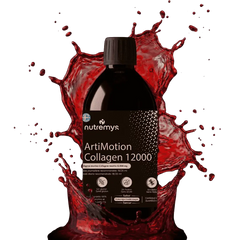
In a decade, hydrolyzed marine collagen has gone from a niche curiosity to an active ingredient validated by over fifty randomized controlled clinical trials. A meta-analysis published in Nutrients in 2023 (including over 1,700 participants) confirmed a statistically significant effect on instrumentally measured skin hydration and elasticity after 8 to 12 weeks of daily intake.
Why "marine" and why "hydrolyzed"
The marine form (extracted from fish skin and bones) has superior bioavailability to bovine and porcine collagens, with naturally smaller peptide sizes. The hydrolyzed form is pre-digested into low molecular weight peptides (1 to 5 kilodaltons), capable of crossing the intestinal barrier and circulating in the blood. These peptides are recognized by fibroblasts as repair signals and stimulate endogenous collagen production.
Criteria for good marine collagen
Not all products are equal. The parameters that make a difference: truly effective daily dosage (at least 5-10 g/day for skin, ideally 10-12 g), traceable origin (skins from wild-caught cold-water fish, sustainable fishing certification), absence of unnecessary additives (sugars, industrial sweeteners, preservatives), practical dosage form (liquid or soluble powder rather than capsules — it requires a volume of material difficult to compress). The presence of synergistic cofactors (vitamin C, hyaluronic acid) optimizes the effect without multiplying the cost.
How to take it
Daily intake, ideally on an empty stomach in the morning or late afternoon, as a course of at least 12 weeks to assess the effect. Regularity is more important than the precise timing. The first visible results (hydration, complexion) appear at 4-6 weeks, measurable effects on elasticity at 8-12 weeks. For a detailed understanding of the mechanism, read our complete article on the science of marine collagen.

6 mistakes to absolutely avoid
Certain habits that were innocuous for years become counterproductive during menopause. Identifying these pitfalls can save months of skin quality.
Skipping sun protection
UV radiation is responsible for 80% of visible skin aging. During menopause, skin is more vulnerable to hyperpigmentation. Without daily SPF, no other routine will compensate.
Overusing strong active ingredients
Layering retinol, vitamin C, glycolic acid, and niacinamide on the same night irritates an already compromised barrier. Alternate active ingredients and embrace simplicity.
Choosing a cream too rich in pure occlusives
Thick shea butter and mineral oils can suffocate menopausal skin. Opt for moisturizers with ceramides, squalane, and hyaluronic acid — which hydrate without overwhelming.
Neglecting the neck and décolletage
These areas receive as much sun as the face and often age faster. Apply the same routine (SPF, serum, hydration) from the face to the base of the sternum.
Believing a supplement alone transforms skin
Collagen works if it's added to a diet with sufficient protein, strict sun protection, and adequate sleep. Otherwise, the effect is marginal.
Giving up after 4 weeks
Skin cell turnover during menopause takes 50 to 60 days. No real change can be measured before 8 to 12 weeks of consistency, whether for external or internal care.
What results to expect and in what timeframe
Realistic expectations are key to not giving up. Here are the documented milestones of a well-constructed routine combining external and internal care for menopausal skin.
| Timeline | Typical observed changes | Documentation level |
|---|---|---|
| 2 to 4 weeks | Visible hydration, brighter complexion, reduced sensation of tightness | Fast effects |
| 4 to 8 weeks | Refined skin texture, less visible pores, first perceptible retinol effect | Confirmed effects |
| 8 to 12 weeks | Measurable elasticity, attenuated fine lines, improved firmness (collagen) | Meta-analyses |
| 3 to 6 months | Reduction of dark spots (vitamin C + SPF), improved skin density | Clinical data |
| 6 to 12 months | Maximum effect of the integrated routine, clear slowing of aging | Cumulative effects |
No routine can completely "reverse" skin aging — but a consistent strategy, followed for six to twelve months, can set back perceived age by five to ten years according to several clinical dermatological studies. It is one of the health investments with the best effort-to-result ratio during menopause.
Frequently Asked Questions
This article is for informational and educational purposes only. It does not replace personalized dermatological advice. In case of evolving skin conditions, consult a dermatologist.
Restore Firmness and Radiance to Menopausal Skin
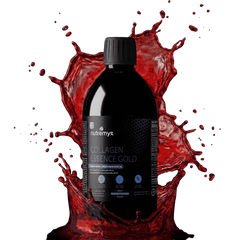
Collagen Essence Gold concentrates 12,500 mg of hydrolyzed marine collagen per dose, enriched with vitamin C and hyaluronic acid — the three synergistic cofactors that change measurable skin quality in 8 to 12 weeks. Liquid formula, maximum bioavailability, designed for skin undergoing hormonal transition.
Discover Collagen Essence Gold →Related articles

The information shared on this blog is for educational and informational purposes only. It does not replace medical consultation, diagnosis or treatment prescribed by a healthcare professional. If you have symptoms, are undergoing treatment or are pregnant, consult your doctor before modifying your diet or starting supplementation. Nutremys LAB food supplements should not replace a varied, balanced diet or a healthy lifestyle.
