

Comprehensive Guide · Women's Health
Menopause: Understanding to better navigate this transition
Hot flashes, fatigue, brain fog, weight gain… Menopause transforms the body. But understanding what's happening — hormonally, biologically — changes everything. This science-based guide gives you the keys to navigate this transition with clarity and vitality.
🔎 At a glance
- Menopause occurs at an average age of 51, after 12 consecutive months without periods
- It is preceded by a transition phase — perimenopause — which can last 4 to 10 years
- Symptoms are linked to the drop in estrogen and affect 85% of women
- Diet, micronutrition, and targeted supplements have a proven role in quality of life
- Medical consultation is recommended in case of menopause before age 40 or severe symptoms
Perimenopause, menopause, post-menopause: don't confuse them
The word "menopause" is often used to refer to the entire period of female hormonal transition — which causes a lot of confusion. In reality, these are three distinct phases, with very different mechanisms and challenges.
Perimenopause: the preceding transition
Perimenopause begins when the ovaries produce estrogen irregularly, generally between 40 and 47 years old. Periods become irregular — shorter, longer, heavier, or lighter — and the first symptoms appear: hot flashes, sleep disturbances, mood swings. This phase can last from 4 to 10 years, and the woman is still fertile, even if fertility decreases.
To learn more about the precise differences between these two phases, see our dedicated article: Perimenopause vs. menopause — the real differences.
Menopause: the official diagnosis
Menopause is diagnosed retrospectively: 12 consecutive months without periods. The average age in France is 51 years old, according to Inserm data. At this stage, the ovaries have stopped producing eggs and estrogen levels have stabilized at a low — but not zero — level. Symptoms may intensify during this period before gradually subsiding.
Post-menopause
It begins after the diagnosis of menopause and extends throughout the rest of life. While hot flashes often fade, other long-term issues arise: bone density, cardiovascular health, vaginal and vulvar mucosal integrity. This is the phase where micronutrition takes on its full preventive importance.
Menopause symptoms: a complete clinical picture
Menopause symptoms — known as "climacteric syndrome" — affect approximately 85% of women to varying degrees. They primarily result from the drop in estrogen and progesterone, which act on almost all body systems.
Vasomotor symptoms
These are the most well-known and often the first to appear. Hot flashes affect 70 to 80% of menopausal women: a sudden sensation of intense heat in the upper body, accompanied by redness and sweating, typically lasting 1 to 5 minutes. Night sweats disrupt sleep and trigger chronic daytime fatigue that becomes self-perpetuating.

Neuropsychological symptoms
The brain is one of the most sensitive organs to hormonal fluctuations. The drop in estrogen affects serotonin, dopamine, and norepinephrine — neurotransmitters involved in mood, memory, and concentration. Women frequently report:
Brain fog
Difficulty concentrating, memory lapses, feeling like thinking "in a fog." Linked to decreased estrogen, which supports synaptic plasticity. Learn more →
Sleep disturbances
Difficulty falling asleep or frequent nocturnal awakenings, often amplified by night sweats. Affects up to 60% of menopausal women.
Anxiety & mood swings
Irritability, anxiety, or even depressive episodes linked to hormonal fluctuations and circadian rhythm disruption.
Vaginal dryness
Atrophy of the vaginal lining due to lack of estrogen: discomfort, burning, pain during intercourse. Affects 50% of postmenopausal women.
Metabolic and physical symptoms
Menopause is often accompanied by abdominal weight gain (redistribution of fat linked to hormones), loss of muscle mass (sarcopenia), decreased bone density (osteopenia then osteoporosis), and joint pain. Skin loses elasticity — skin collagen decreases by 30% in the first 5 years following menopause according to EFSA data.
According to a meta-analysis published in Menopause (The Menopause Society, 2023), menopausal women have a 2 to 3 times increased cardiovascular risk compared to premenopausal women, regardless of age — an effect directly linked to the drop in estrogen and not age alone.
What happens in your body: hormonal biology explained
Understanding the biology of menopause helps us better understand why certain interventions — nutritional or medical — work. And why others don't.
The drop in estrogen: the central event
The ovaries primarily produce estradiol, the most active form of estrogen. During perimenopause, this production becomes erratic, then drops by 80 to 90% during menopause. However, estrogen receptors are present in practically all tissues: brain, bones, heart, skin, mucous membranes, muscles. This is why the symptoms are so numerous and varied.

Impact on gut microbiota
Estrogen directly influences the composition of the gut microbiota via the gut-hormone axis. Menopause leads to a reduction in microbial diversity, an increase in intestinal permeability, and a decrease in bacteria producing butyrate — a protective short-chain fatty acid. These changes contribute to low-grade inflammation, weight gain, and immune imbalances frequently reported.
Bones, skin, and connective tissue
Estrogen inhibits osteoclasts — cells that resorb bone. Their drop accelerates bone loss: up to 3% of bone mass per year in the first 5 years following menopause (WHO). At the same time, collagen synthesis — a structural protein of skin, joints, and bones — slows down significantly. Nutritional support with micronutrients (vitamin D3, vitamin K2, magnesium, hydrolyzed collagen) becomes critically important for prevention here.
Diet & micronutrition: the pillars of well-being during menopause
Diet does not cure menopause. But it can significantly modulate symptom intensity, protect bones, support the microbiota, and maintain a favorable body composition. Here are the most scientifically documented nutrients and approaches.

Essential nutrients
Vitamin D3
Essential for calcium absorption and bone health. 80% of French women are deficient in winter. Recommended dose: 1,500 to 2,000 IU/day (EFSA). Our Vitamin D3 guide →
Calcium & Vitamin K2
Calcium (1,000–1,200 mg/day) protects bones. Vitamin K2 directs calcium to the bones rather than the arteries — an essential synergy in post-menopause.
Omega-3
EPA and DHA reduce systemic inflammation, support mood and cardiovascular health. Sources: fatty fish (sardines, mackerel, salmon) or algae oil.
Magnesium
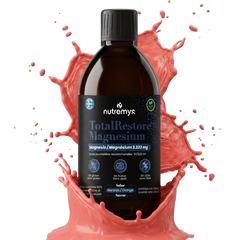
Involved in over 300 enzymatic reactions. Contributes to sleep quality, fatigue reduction, and mood regulation. Bisglycinate form recommended for bioavailability.
Dietary Phytoestrogens
Soy isoflavones (genistein, daidzein) can reduce the frequency of hot flashes by 20 to 25% according to several meta-analyses. Dietary sources: soy, tofu, edamame, flaxseeds. Their effectiveness depends on gut flora (metabolization into equol).
Dietary supplements & menopause: what science really says
The market for menopause supplements is vast — and uneven. Here is an objective overview of the best-documented active ingredients, with available levels of evidence.
| Active Ingredient | Main Benefit | Level of Evidence |
|---|---|---|
| Soy Isoflavones | Reduction of hot flashes (–20 to –25%) | High |
| Hydrolyzed Marine Collagen | Skin, joints, bone density | High |
| Probiotics (Lactobacillus) | Microbiota, inflammation, mood | Moderate |
| Vitamin D3 + K2 | Bone protection, immunity | High |
| Magnesium Bisglycinate | Sleep, fatigue, mood | Moderate |
| Black Cohosh (Cimicifuga) | Hot flashes | Moderate |
| Melatonin | Sleep quality | Low to Moderate |
Marine collagen: much more than a skin issue
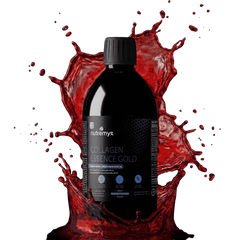
Menopause accelerates collagen degradation in the skin, bones, and joints. Supplementation with hydrolyzed marine collagen (10 g/day minimum) provides the amino acids—glycine, proline, hydroxyproline—necessary for endogenous collagen biosynthesis. A study published in Nutrients (2021) showed a significant improvement in bone density in postmenopausal women after 12 months of supplementation. Our complete guide to marine collagen →
Probiotics and the Gut-Hormone Axis
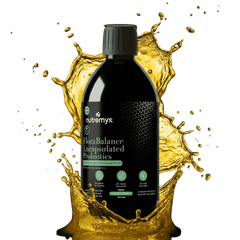
The gut microbiota plays an active role in estrogen metabolism via the β-glucuronidase enzyme, produced by certain bacteria. An imbalance in the microbiota (dysbiosis) can amplify hormonal fluctuations and inflammation. The strains Lactobacillus reuteri and Lactobacillus rhamnosus show the most well-documented effects on female intestinal health. Learn more about probiotics →

Nutremys LAB Formula
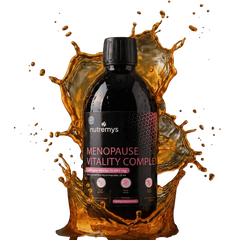
Menopause Vitality Complex
Marine Collagen 10,000 mg · Soy Isoflavones · Vitamin D3 + K2 · Magnesium Bisglycinate. A liquid formulation with optimized bioavailability, designed for women in perimenopause and menopause.
Discover the formulaWhen to consult a doctor? Signals not to ignore
Menopause is a natural process that does not always require medical attention. But certain situations warrant immediate consultation.
Early menopause (before age 40)
Premature Ovarian Insufficiency (POI) is when menopause occurs before age 40—it affects 1% of women. It is not only gynecological: it increases the long-term risk of cardiovascular and bone problems and requires specific hormonal management. A hormonal assessment (FSH, estradiol, AMH) can confirm the diagnosis.
Severe or unusual symptoms
· Very frequent hot flashes (>10/day) or very intense, with a major impact on quality of life
· Bleeding after menstruation has stopped (always to be investigated)
· Severe depression or debilitating anxiety
· Significant joint pain or loss of mobility
· Recurrent urinary symptoms (infections, incontinence)
· Rapid and unexplained weight gain
Hormone Replacement Therapy (HRT) can be discussed with your doctor—current recommendations from the French National Authority for Health (HAS) have evolved favorably for women without contraindications, especially at the onset of menopause.
Frequently Asked Questions
The average age of menopause in France is 51 years (Inserm). But this transition varies greatly from woman to woman: some enter perimenopause as early as 40–42, others at 50–52. Genetics play an important role—your mother's age at menopause is often a reliable indicator. Smoking advances menopause by 1 to 2 years on average.
Before age 40, it is called premature ovarian insufficiency (POI)—a situation that requires specific medical management.
The duration of symptoms varies widely. Hot flashes last an average of 7 to 10 years, according to a longitudinal study by the SWAN Study (Study of Women's Health Across the Nation). For about 10% of women, they persist more than 10 years after menopause.
Symptoms tend to be more intense and longer-lasting in women who started perimenopause early, in Black American women (SWAN data), and in those with high stress levels or disrupted sleep.
Yes—several non-hormonal approaches have a satisfactory level of evidence:
Soy isoflavones (40–80 mg/day): 20 to 25% reduction in frequency according to meta-analyses. Black cohosh (Cimicifuga racemosa): positive results in several randomized trials. Stress management (heart coherence, yoga): reduces autonomic nervous system reactivity. Avoiding triggers: alcohol, caffeine, spices, sudden heat.
These approaches can be combined. If there is no improvement after 2–3 months, a medical consultation is recommended to discuss other options.
Early menopause (before age 40) can manifest as: persistent menstrual irregularities, hot flashes, vaginal dryness, decreased libido, and difficulty conceiving. Diagnosis relies on a hormonal assessment: elevated FSH (> 40 IU/L) on two measurements 4 weeks apart, associated with low estradiol.
If you experience these symptoms before age 40, consult a gynecologist without delay—early hormonal treatment is generally recommended to protect bones and the heart.
Certain active ingredients have a solid level of evidence: soy isoflavones for hot flashes, hydrolyzed marine collagen for skin and joints, vitamin D3 combined with vitamin K2 for bone protection.
Supplements do not replace medical treatment when necessary. They are part of a holistic approach: adapted diet, regular physical activity, stress management, and medical follow-up. Their effectiveness is maximized when taken continuously and targeted.
📚 Scientific Sources
- Inserm. La ménopause. French National Institute of Health and Medical Research, 2023. inserm.fr
- The Menopause Society. Cardiovascular Disease and Menopause: A Meta-Analysis. Menopause, 2023.
- SWAN Study. Duration of Menopausal Vasomotor Symptoms over the Menopause Transition. JAMA Internal Medicine, 2015.
- EFSA Panel on Nutrition. Scientific Opinion on Dietary Reference Values for Vitamin D. EFSA Journal, 2016.
- Baber R.J. et al. 2016 IMS Recommendations on women's midlife health and menopause hormone therapy. Climacteric, 2016.
- Argyrou C. et al. Effect of marine collagen peptides on bone and skin collagen synthesis. Nutrients, 2020.
- Haute Autorité de Santé. Ménopause et traitement hormonal. HAS, 2022. has-sante.fr

Gynecologist practicing in Paris for 18 years, specialized in women's hormonal health, perimenopause and menopause. At Nutremys LAB, she brings her medical perspective to every product we offer.
Learn more →The information shared on this blog is for educational and informational purposes only. It does not replace medical consultation, diagnosis or treatment prescribed by a healthcare professional. If you have symptoms, are undergoing treatment or are pregnant, consult your doctor before modifying your diet or starting supplementation. Nutremys LAB food supplements should not replace a varied, balanced diet or a healthy lifestyle.
