





En un coup d'œil
- La chute des œstrogènes réduit directement la capacité du corps à construire et maintenir du muscle.
- La perte musculaire peut survenir dès la périménopause, souvent à poids stable — invisible sur la balance.
- Le renforcement musculaire régulier est le levier n°1 pour préserver la tonicité à la ménopause.
- Protéines suffisantes, sommeil de qualité et gestion du stress complètent ce socle de façon décisive.
- Une supplémentation ciblée peut soutenir ce terrain lorsque l'alimentation et le mode de vie ne suffisent plus.
Ce qui se passe vraiment dans ton corps à la ménopause
La perte musculaire à la ménopause ne survient pas du jour au lendemain. Elle s'installe progressivement, souvent en silence, et commence parfois plusieurs années avant l'arrêt des règles — dès la périménopause. Avant d'agir, il est essentiel de comprendre ce qui se joue réellement sur le plan physiologique.

Le rôle central des œstrogènes sur le muscle
Les œstrogènes ne régulent pas uniquement le cycle menstruel. Ils jouent un rôle actif dans la préservation de la masse musculaire, la qualité des fibres, la vitesse de récupération après l'effort et la capacité du tissu musculaire à se regénérer. Lorsque leur niveau chute à la ménopause, plusieurs mécanismes se déclenchent simultanément :
Pourquoi la balance ne dit pas tout
C'est l'un des phénomènes les plus déroutants de la ménopause : la balance n'a pas bougé, et pourtant le corps semble différent. Les vêtements tombent autrement, certaines zones paraîssent moins fermes, la silhouette se transforme.
Ce qui se passe en réalité est une recomposition corporelle silencieuse : le muscle — tissu dense, actif, qui structure les formes — cède progressivement la place à la masse grasse, sans que le poids global ne varie. Ce phénomène passe inaperçu sur la balance mais a un impact bien réel sur la tonicité, l'énergie et le métabolisme.
Les conséquences au quotidien : bien plus qu'une question de silhouette
La perte musculaire à la ménopause ne se résume pas à ce que l'on voit dans le miroir. Elle se fait sentir de façon concrète, dans les gestes ordinaires, le niveau d'énergie et même l'humeur. Beaucoup de femmes attribuent ces ressentis au stress ou à l'âge, sans réaliser qu'ils sont directement liés à la diminution de la masse musculaire.

Fatigue, tonicité et silhouette modifiée
Quand le muscle diminue, les gestes les plus simples réclament davantage d'efforts. Porter des courses, monter des escaliers, tenir une posture prolongée : ces activités qui semblaient anodines deviennent progressivement plus exigeantes. La perte de tonicité visible au niveau des bras, des cuisses ou de l'abdomen peut générer un décalage difficile à vivre entre son ressenti intérieur et l'image renvoyée par le miroir.
Fatigue accélérée
Moins de muscle, c'est moins d'efficacité énergétique. La fatigue arrive plus tôt, même pour des efforts familiers.
Force en baisse
Porter, soulever, stabiliser : les capacités fonctionnelles du quotidien diminuent progressivement.
Métabolisme ralenti
Le muscle consomme de l'énergie au repos. Moins de muscle = métabolisme plus lent et stockage facilité.
Métabolisme ralenti : manger « comme avant » ne fonctionne plus
Le muscle est un tissu métaboliquement très actif. Sa diminution ralentit mécaniquement le métabolisme de base : les besoins énergétiques baissent, le corps stocke plus facilement — notamment au niveau abdominal — et les écarts alimentaires « se voient » plus vite.
Pourquoi le cardio seul ne suffit plus à la ménopause
Pendant des années, on a dit aux femmes que bouger, transpirer et brûler des calories était la clé pour rester en forme. À la ménopause, cette logique montre rapidement ses limites — non pas parce que le sport devient inutile, mais parce que les priorités du corps changent profondément.
| Type d'exercice | Impact sur le muscle | Adapté à la ménopause ? |
|---|---|---|
| Cardio intensif fréquent | Faible stimulation musculaire, stress physiologique élevé | En complément seulement |
| Renforcement musculaire adapté | Signal direct de préservation du muscle | ✅ Priorité absolue |
| Marche active / mobilité | Maintien fonctionnel, gestion du stress | ✅ Excellent complément |
| Yoga / Pilates | Tonicité profonde, posture, récupération | ✅ Idéal en synergie |
Le renforcement musculaire envoie un message clair à l'organisme : le muscle est utile, il doit être conservé. Une pratique régulière — 2 à 3 séances par semaine, à intensité suffisante mais sans épuisement — permet de préserver la masse musculaire, de soutenir le métabolisme de base et d'améliorer la posture, la stabilité et la confiance dans ses capacités physiques.
Ce qui soutient vraiment le muscle à la ménopause (au-delà du sport)
Le renforcement musculaire est indispensable, mais il ne peut pas tout porter seul. Le corps a besoin d'un terrain favorable pour préserver et reconstruire du tissu musculaire. Sans ce soutien, même une pratique bien pensée peut devenir moins efficace, voire fatigante.

Protéines, sommeil et stress : le trio qui fait la différence
À la ménopause, les besoins du corps évoluent, en particulier pour la réparation et la récupération musculaire. Trois piliers se révèlent déterminants :
Les protéines
Un apport insuffisant — ou concentré sur un seul repas — limite directement la synthèse musculaire. L'EFSA recommande une répartition régulière sur la journée. Découvre les 5 signes d'une carence en protéines pour vérifier si ton alimentation couvre tes besoins.
Le sommeil
C'est durant le repos que le corps répare et consolide le tissu musculaire. Un sommeil fragmenté réduit directement la capacité de récupération et accentue la fatigue.
Le stress chronique
Un taux de cortisol élevé freine la récupération et perturbe l'équilibre hormonal déjà fragilité. À la ménopause, ce cercle peut s'auto-entretenir si l'on n'y prête pas attention.
Une approche cohérente plutôt que des stratégies isolées
Travailler uniquement sur le sport, ou uniquement sur l'alimentation, donne souvent des résultats partiels. C'est la cohérence d'ensemble — mouvement, nutrition, repos, gestion du stress — qui permet de soutenir durablement la masse musculaire à la ménopause. Découvrir les compléments essentiels après 50 ans peut compléter utilement cette approche globale.
Les signes que tu pourrais bénéficier d'une supplémentation
Même avec une alimentation soignée et une pratique sportive régulière, le contexte hormonal de la ménopause peut créer des besoins que l'assiette seule ne couvre pas toujours. Certains signaux méritent d'être pris en compte :
Fatigue persistante malgré le repos
Quand le sommeil ne suffit plus à restaurer l'énergie, le corps manque peut-être de micronutriments essentiels à la production d'énergie cellulaire.
Tonicité qui diminue malgré l'exercice
Si le renforcement musculaire ne produit plus les résultats attendus, le terrain hormonal et nutritionnel peut freiner la réponse du muscle.
Récupération longue et inconfortable
Une récupération anormalement lente après l'effort peut indiquer un besoin accru en collagène, en magnésium ou en acides aminés essentiels.
Cycles de stress et de fatigue qui s'enchaînent
Lorsque le corps peine à sortir du mode « survie », une formulation adaptée à la transition ménopausique peut offrir un vrai soutien de fond.
Cet article est à titre informatif et ne remplace pas un avis médical. En cas de doute sur tes symptômes, consulte un professionnel de santé.
Soutiens ton capital musculaire à la ménopause
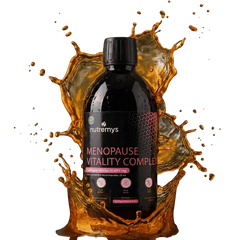
Le Menopause Vitality Complex est formulé spécifiquement pour les femmes en transition ménopausique. Collagène marin hydrolysaté, vitamines et actifs botaniques synergiques — pour un soutien de fond qui respecte ta physiologie.
Découvrir le Menopause Vitality ComplexQuestions fréquentes
Sources scientifiques
- Hansen M. et al. (2014). Role of estrogens in the regulation of muscle mass and function. Journal of Clinical Endocrinology & Metabolism. PubMed
- Maltais M.L. et al. (2009). Changes in muscle mass and strength after menopause. Journal of Musculoskeletal and Neuronal Interactions, 9(4):186-97.
- EFSA Panel on Dietetic Products (2010). Scientific Opinion on protein and maintenance of normal muscle mass. EFSA Journal. EFSA
- Bhasin S. et al. (2006). Sex hormone–binding globulin, but not testosterone, is associated with lean body mass, fat mass and bone mineral density in older women. Journal of Clinical Endocrinology & Metabolism.
- Stachenfeld N.S. (2008). Sex Hormone Effects on Body Fluid Regulation. Exercise and Sport Sciences Reviews, 36(3):152–159.



Les informations partagées sur ce blog sont à titre éducatif et informatif. Elles ne remplacent en aucun cas une consultation médicale, un diagnostic ou un traitement prescrit par un professionnel de santé. Si vous présentez des symptômes, suivez un traitement ou êtes enceinte, consultez votre médecin avant de modifier votre alimentation ou de débuter une supplémentation. Les compléments alimentaires Nutremys LAB ne sauraient se substituer à un régime alimentaire varié et équilibré, ni à un mode de vie sain.

