

Pendant les cinq premières années qui suivent la ménopause, la peau perd jusqu'à 30 % de son collagène, puis environ 2 % par an ensuite. La chute des œstrogènes affecte l'épaisseur cutanée, l'élasticité, l'hydratation, la barrière protectrice et la cicatrisation. Une routine adaptée — externe (soins ciblés + protection solaire stricte) et interne (collagène, vitamine C, oméga-3, protéines) — peut considérablement ralentir le vieillissement et restaurer la qualité de la peau en 8 à 16 semaines. Ce guide détaille les leviers les plus documentés et les pièges à éviter.
Ce qui change dans votre peau à la ménopause
La peau est l'un des organes les plus sensibles à la chute hormonale. Avant même que les bouffées de chaleur n'apparaissent, plusieurs femmes constatent qu'elles ne se reconnaissent plus tout à fait dans le miroir : un teint moins lumineux, une mâchoire moins définie, des pores plus visibles, des ridules qui n'étaient pas là six mois plus tôt. Ces changements ne sont pas le simple effet du temps — ce sont des modifications structurelles biologiquement documentées.
Une perte de collagène spectaculaire
Le collagène représente environ 75 % du poids sec de la peau. Pendant la transition hormonale, sa synthèse chute drastiquement. Les études dermatologiques convergent sur un chiffre frappant : la peau perd jusqu'à 30 % de son collagène dans les cinq premières années post-ménopause, puis environ 2 % par an. Ce sont les fibres de collagène (types I et III) qui assurent la fermeté ; leur dégradation se traduit par une peau qui « tombe », un ovale moins défini, des creux qui se forment sous les yeux.
Une élastine fragilisée
L'élastine est ce qui permet à la peau de revenir en place après une pression ou un sourire. Avec la baisse œstrogénique, sa qualité se dégrade : les fibres deviennent plus rigides, moins capables de reprendre leur forme. C'est cette altération qui crée les fines lignes permanentes au coin des yeux et de la bouche.
Une hydratation effondrée
L'acide hyaluronique cutané, qui retient l'eau dans les tissus, voit sa concentration baisser jusqu'à 50 % entre 40 et 60 ans. Résultat : sensation de tiraillement, peau qui « boit » immédiatement les soins, teint terne. La fonction barrière (le film hydrolipidique de surface) s'affaiblit aussi, rendant la peau plus réactive aux agressions extérieures.
Un renouvellement cellulaire ralenti
Les cellules cutanées se renouvellent toutes les 28 jours environ avant 40 ans, puis ce cycle s'allonge progressivement à 40, 50, voire 60 jours après la ménopause. Conséquence directe : un teint moins lumineux, des taches pigmentaires qui s'installent durablement, une cicatrisation plus lente. Pour comprendre la chronologie complète des changements hormonaux, lisez notre guide périménopause vs ménopause.

Pourquoi les œstrogènes sont essentiels à la peau
Les récepteurs aux œstrogènes (RE-α et RE-β) sont densément présents dans tous les tissus cutanés : épiderme, derme, follicules pileux, glandes sébacées. Cette omniprésence explique pourquoi la baisse de l'œstradiol affecte autant de paramètres différents en même temps.
Stimulation directe de la synthèse de collagène
Les œstrogènes augmentent l'activité des fibroblastes — les cellules qui fabriquent le collagène et l'élastine. Quand le signal hormonal baisse, ces cellules ralentissent leur production. Le déséquilibre devient alors net : la dégradation continue normalement, la fabrication ralentit. Le solde est négatif.
Régulation de l'hydratation
L'expression des aquaporines (les canaux qui font circuler l'eau dans les cellules cutanées) et la synthèse d'acide hyaluronique sont dépendantes du climat œstrogénique. Une chute d'œstrogènes se traduit immédiatement par une peau qui retient moins d'eau, même en augmentant la consommation hydrique.
Maintien de la barrière cutanée
La fonction barrière repose sur la qualité des céramides et des lipides intercornéocytaires. Les œstrogènes soutiennent leur synthèse. Sans ce soutien, la peau perd de l'eau plus rapidement (PIE — perte insensible en eau), devient sensible, rougit plus facilement, supporte moins certains actifs cosmétiques.
Une revue publiée dans le Journal of the American Academy of Dermatology documente que la supplémentation hormonale, quand elle est prescrite pour d'autres raisons médicales, a un effet mesurable sur l'épaisseur cutanée, l'élasticité et le contenu en collagène — confirmant le rôle direct des œstrogènes sur la structure de la peau. Sans recourir aux hormones, plusieurs leviers nutritionnels et topiques peuvent compenser partiellement ce signal manquant.
La routine de soins externes adaptée à la peau ménopausique
L'objectif d'une routine externe pendant la ménopause n'est pas d'empiler les produits — c'est de choisir des actifs documentés, dans des concentrations efficaces, appliqués au bon moment. Voici la structure qui a montré les meilleurs résultats cliniques.
Matin — protéger
Nettoyage doux (un nettoyant à pH 5,5 sans tensioactifs agressifs), suivi d'un sérum à la vitamine C (10 à 20 % d'acide L-ascorbique ou ses dérivés stables) qui neutralise les radicaux libres et soutient la synthèse de collagène. Crème hydratante riche en céramides, glycérine et acide hyaluronique. Protection solaire SPF 50 obligatoire, tous les jours, toute l'année — c'est le geste le plus impactant de toute la routine, en particulier pour prévenir les taches pigmentaires qui apparaissent massivement à la ménopause.
Soir — réparer
Nettoyage double si maquillage (huile démaquillante puis nettoyant aqueux). Application alternée selon les soirs de deux familles d'actifs majeurs : les rétinoïdes (rétinol, rétinal, rétinoïdes prescriptifs) — les seuls actifs cosmétiques dont l'effet anti-âge est démontré dans des essais cliniques sérieux ; et les peptides ou facteurs de croissance les soirs intermédiaires. Une crème de nuit riche en céramides et en squalane scelle le tout. Évitez les rétinoïdes et les acides exfoliants la même soirée.
Une à deux fois par semaine — exfolier intelligemment
Une exfoliation chimique douce (AHA glycolique 5-10 %, BHA salicylique 1-2 % ou PHA gluconolactone pour les peaux sensibles) suffit largement. Évitez les gommages mécaniques agressifs qui aggravent la rosacée et la couperose fréquentes à la ménopause.
Moins de produits, mieux choisis, dans la bonne séquence. Une routine surchargée fragilise la barrière cutanée déjà affaiblie par la baisse œstrogénique. Trois à quatre produits matin, trois soir, c'est largement suffisant — à condition que chacun contienne des actifs documentés à concentration efficace.
La routine interne — alimentation et supplémentation
Les soins topiques agissent en surface. Pour que les fibroblastes profonds synthétisent à nouveau du collagène, ils ont besoin de matériaux et de cofacteurs. C'est la dimension interne de la routine, souvent négligée mais déterminante sur le long terme.
L'alimentation comme socle
Trois piliers nutritionnels prioritaires. Premier : les protéines en quantité suffisante (1,2 à 1,4 g/kg/jour) pour fournir les acides aminés du collagène (glycine, proline, lysine, hydroxyproline). Sans ce socle, aucune supplémentation ne compense. Deuxième : les oméga-3 (poissons gras 2-3 fois par semaine, ou supplémentation EPA/DHA 1-2 g/jour) qui maintiennent la fluidité membranaire et calment l'inflammation cutanée de bas grade. Troisième : les antioxydants alimentaires (légumes colorés, fruits rouges, thé vert, huile d'olive vierge) qui protègent les structures cutanées du stress oxydatif.
Pour comprendre pourquoi les protéines sont si critiques après 45 ans, lisez notre guide des 5 signes silencieux d'une carence en protéines.
Les micronutriments qui changent la qualité de peau
Au-delà de l'alimentation, certains micronutriments ont une littérature scientifique solide pour soutenir spécifiquement la peau ménopausique :
- Vitamine C (200-500 mg/jour) — cofacteur indispensable de la synthèse de collagène et puissant antioxydant.
- Zinc (10-15 mg/jour) — cicatrisation et structure cutanée.
- Vitamine D3 (1000-2000 UI/jour selon statut) — immunité cutanée et renouvellement.
- Acide hyaluronique oral (120-240 mg/jour) — données cliniques modérées mais convergentes sur l'hydratation cutanée mesurée.
- Collagène marin hydrolysé — voir section dédiée ci-dessous.
Pourquoi le collagène marin est devenu un standard
Le collagène marin hydrolysé est passé en une décennie d'une curiosité de niche à un actif validé par plus de cinquante essais cliniques randomisés contrôlés. La méta-analyse publiée dans Nutrients en 2023 (incluant plus de 1 700 participants) a confirmé un effet statistiquement significatif sur l'hydratation et l'élasticité cutanées mesurées par instruments, après 8 à 12 semaines de prise quotidienne.
Pourquoi « marin » et pourquoi « hydrolysé »
La forme marine (extraite de peaux et arêtes de poisson) présente une biodisponibilité supérieure aux collagènes bovin et porcin, avec une taille de peptides plus petite naturellement. La forme hydrolysée est pré-cliquée en peptides de faible poids moléculaire (1 à 5 kilodaltons), capables de traverser la barrière intestinale et de circuler dans le sang. Ces peptides sont reconnus par les fibroblastes comme des signaux de réparation et stimulent la production endogène de collagène.
Les critères d'un bon collagène marin
Tous les produits ne se valent pas. Les paramètres qui font la différence : dosage quotidien réellement efficace (au moins 5-10 g/jour pour la peau, idéalement 10-12 g), origine traçable (peaux de poissons sauvages d'eaux froides, certification de pêche durable), absence d'ajouts inutiles (sucres, édulcorants industriels, conservateurs), forme galénique pratique (liquide ou poudre soluble plutôt que gélules — il faut un volume de matière difficile à comprimer). La présence de cofacteurs synergiques (vitamine C, acide hyaluronique) optimise l'effet sans en multiplier le coût.
Comment le prendre
Une prise quotidienne, idéalement le matin à jeun ou en fin d'après-midi, en cure d'au moins 12 semaines pour évaluer l'effet. La régularité prime sur le moment précis. Les premiers résultats visibles (hydratation, teint) apparaissent à 4-6 semaines, les effets mesurables sur l'élasticité à 8-12 semaines. Pour une compréhension détaillée du mécanisme, lisez notre article complet sur la science du collagène marin.

Les 6 erreurs à éviter absolument
Certaines habitudes anodines pendant des années deviennent contre-productives à la ménopause. Identifier ces pièges fait gagner des mois de qualité cutanée.
Sauter la protection solaire
Le rayonnement UV est responsable de 80 % du vieillissement cutané visible. À la ménopause, la peau est plus vulnérable aux taches pigmentaires. Sans SPF quotidien, aucune autre routine ne compense.
Multiplier les actifs forts
Empiler rétinol, vitamine C, acide glycolique et niacinamide le même soir agresse une barrière déjà fragilisée. Alternez les actifs et tolérez la simplicité.
Choisir une crème trop riche en occlusifs purs
Beurre de karaté épais et huiles minérales peuvent étouffer la peau ménopausique. Privilégiez les hydratants à base de céramides, squalane et acide hyaluronique — qui hydratent sans saturer.
Négliger le cou et le décolleté
Ces zones reçoivent autant de soleil que le visage et vieillissent souvent plus vite. Appliquez la même routine (SPF, sérum, hydratation) du visage à la base du sternum.
Croire qu'un complément seul transforme la peau
Le collagène fonctionne s'il s'ajoute à une alimentation suffisante en protéines, à une protection solaire stricte, à un sommeil correct. Sinon, l'effet est marginal.
Abandonner après 4 semaines
Le renouvellement cutané à la ménopause prend 50 à 60 jours. Aucun changement réel ne se mesure avant 8 à 12 semaines de constance, qu'il s'agisse de soin externe ou interne.
Quels résultats attendre et en combien de temps
Une attente réaliste est la clé pour ne pas abandonner. Voici les jalons documentés d'une routine bien construite associant soin externe et interne, sur une peau ménopausique.
| Délai | Changements typiques observés | Niveau de documentation |
|---|---|---|
| 2 à 4 semaines | Hydratation visible, teint plus lumineux, sensation de tiraillement réduite | Effets rapides |
| 4 à 8 semaines | Texture cutanée affinée, pores moins visibles, premier effet rétinol perceptible | Effets confirmés |
| 8 à 12 semaines | Élasticité mesurable, ridules atténuées, fermeté améliorée (collagène) | Méta-analyses |
| 3 à 6 mois | Atténuation des taches pigmentaires (vitamine C + SPF), densité cutanée | Données cliniques |
| 6 à 12 mois | Effet maximal de la routine intégrée, ralentissement net du vieillissement | Effets cumulés |
Aucune routine ne peut « inverser » totalement le vieillissement cutané — mais une stratégie cohérente, suivie pendant six à douze mois, peut faire reculer l'âge perçu de cinq à dix ans selon plusieurs études dermatologiques cliniques. C'est l'un des investissements de santé au meilleur rapport effort/résultat à la ménopause.
Questions fréquentes
Cet article est rédigé à titre informatif et éducatif. Il ne remplace pas un avis dermatologique personnalisé. En cas de pathologie cutanée évolutive, consultez un dermatologue.
Restaurer la fermeté et l'éclat de la peau ménopausique
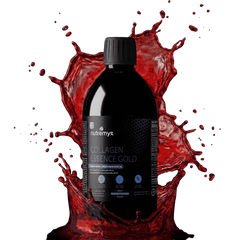
Collagen Essence Gold concentre 12 500 mg de collagène marin hydrolysé par dose, enrichi de vitamine C et d'acide hyaluronique — les trois cofacteurs synergiques qui changent la qualité cutanée mesurable en 8 à 12 semaines. Formule liquide, biodisponibilité maximale, conçue pour les peaux qui traversent la transition hormonale.
Découvrir Collagen Essence Gold →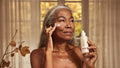


Les informations partagées sur ce blog sont à titre éducatif et informatif. Elles ne remplacent en aucun cas une consultation médicale, un diagnostic ou un traitement prescrit par un professionnel de santé. Si vous présentez des symptômes, suivez un traitement ou êtes enceinte, consultez votre médecin avant de modifier votre alimentation ou de débuter une supplémentation. Les compléments alimentaires Nutremys LAB ne sauraient se substituer à un régime alimentaire varié et équilibré, ni à un mode de vie sain.

