
Blue Monday: 15 rituals to recharge body, skin, and mind in January
The third Monday of January concentrates a documented physiological reality: lack of light, elevated cortisol, reduced serotonin, skin dried out by heating. This guide offers 15 actions based on precise biological mechanisms — to navigate this period with method rather than resignation.
Why Blue Monday impacts us — and how to respond
Blue Monday is not a marketing invention. Seasonal Affective Disorder (SAD) affects approximately 5% of the European population; its milder form, "winter blues," affects up to 20% of people. Reduced sunlight decreases serotonin production, disrupts the circadian rhythm, and lowers vitamin D levels. Added to this is the return to post-holiday routine, the cold slowing microcirculation, and dulling the complexion.
These 15 rituals, divided into four categories — internal supplementation, facial care, hair gestures, and sensory soothing — are each justified by a precise biological mechanism. The goal is not performance: it's a regenerating break based on what the body truly needs in January.
Why Blue Monday impacts us physiologically
The date of the third Monday in January owes its origin to a 2005 marketing calculation, but the underlying biological mechanisms are very real. In France, UVB rays are insufficient to trigger cutaneous vitamin D synthesis from October to March. Daylight hours reach their relative minimum in January. The contrast between holiday hyperactivity and the return to ordinary routine creates a physiologically documented emotional void.
Lack of light reduces serotonin production (the feel-good neurotransmitter) and disrupts melatonin synthesis (the sleep hormone), creating a cycle of fatigue that is difficult to break. Cold slows microcirculation and dulls the complexion. Indoor heating dries out the air and weakens the skin barrier. These converging effects simultaneously affect skin, mood, and energy.
Rather than resisting winter physiology, the most effective approach is to embrace it. The 15 rituals proposed here are not intended to cancel out the season — they aim to give the body what it needs precisely during this period: light, targeted nutrients, intense hydration, warmth, and recovery time.
Internal beauty supplements
When the body is deficient in certain micronutrients, the skin and mind are directly affected. These four supplements act on precise biological mechanisms particularly stressed in January.
For a minimum of 8 to 12 weeks, hydrolyzed marine collagen (10,000 mg/day) deeply supports skin firmness and hydration. In winter, this is particularly relevant: cold reduces microcirculation to the dermis and heating accelerates trans-epidermal dehydration. Clinical studies show measurable improvement in skin texture after 6 to 8 weeks at an effective dose.
An essential cofactor for endogenous collagen synthesis and fatigue reduction — two claims approved by EFSA (EU Regulation No 432/2012). In winter, its effect on immunity is particularly relevant. Opt for a liposomal form or fractional intake to maximize absorption beyond 200 mg/day.
This adaptogenic plant (Withania somnifera) significantly reduces perceived cortisol in published clinical studies. Its action on the hypothalamic-pituitary-adrenal axis makes it a relevant support during periods of winter stress or post-holiday fatigue. Effects are generally observed after 3 to 4 weeks of regular intake.
Magnesium contributes to the normal functioning of the nervous system and the reduction of fatigue — EFSA approved claims. The bisglycinate form offers the best digestive tolerance and highest absorption. To be taken in the evening: the glycine in bisglycinate itself has a slightly sedative effect that improves sleep quality.
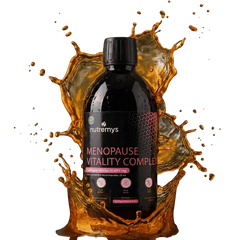
The Nutremys Menopause Vitality Complex dose concentrates hydrolyzed marine collagen (10,000 mg), hyaluronic acid, vitamin C, and phytoestrogens in 25 ml of liquid formula — to be taken in the morning on an empty stomach or 30 minutes before breakfast. In winter, combine this intake with exposure to natural light in the morning: even 10 to 15 minutes in front of a window stimulates serotonin production and enhances the effects on mood.
Facial care — restoring winter glow
In winter, skin experiences simultaneous aggressions: cold slows microcirculation, heating dries out the skin barrier, and the indoor/outdoor alternation creates repeated thermal variations that weaken intercellular lipids. The goal of a winter routine is not to aggressively stimulate — it is to restore, hydrate, and protect.
Papain and bromelain enzymes gently dissolve dead cells without friction or irritation — preferable to abrasive scrubs in winter when skin is more reactive. Immediate result: refined texture, brighter complexion, better penetration of subsequent treatments.
Topical vitamin C neutralizes free radicals generated by pollution and oxidative stress, evens out skin tone, and prepares the skin to better resist aggressions. In winter, it is the treatment that best compensates for the dullness caused by lack of light. Apply to clean skin before moisturizer.
Hyaluronic acid binds up to 1,000 times its weight in water in the dermis. In winter, a rich formula applied to slightly damp skin before sealing with a barrier cream provides an immediate plumping effect and protects against trans-epidermal dehydration exacerbated by heating.
Applying products with upward, draining movements, or with a quartz or jade gua sha, activates microcirculation, facilitates lymphatic drainage, and enhances active ingredient absorption. Five minutes in the morning are enough for an immediate healthy glow effect — particularly visible on skin that was suffering from winter dullness. It's also a moment of self-presence that contributes to the overall well-being of the day.
Restorative hair rituals
Hair also suffers the effects of the season: cold weakens the cuticle, heating dries out the hair fiber, and winter vitamin and mineral deficiencies slow growth and reduce shine. Three targeted actions are enough to restore vitality and radiance.
A blend of castor oil (for thickness and volume), jojoba oil (for lightness and hydration) and black seed oil (for the scalp) applied to roots and lengths, left for 30 to 60 minutes under a hot towel, deeply nourishes the hair fiber. Heat opens the cuticles and maximizes the penetration of active ingredients. Visible effect from the first application on damaged ends.
A few drops of panthenol (provitamin B5) added to your conditioner offer an immediate repairing effect: the fiber is smoothed, plumped from within, and the ends gain suppleness. Noticeable results from the first use on lengths weakened by the alternation of indoor/outdoor environments.
A final rinse with rosemary hydrosol stimulates scalp microcirculation and promotes growth. Use cold water to seal cuticles and maximize shine. A simple and economical gesture whose effect on volume and radiance is immediately visible.
Unwind and Soothe
Winter well-being also involves the senses. These actions bring soothing through precise biological pathways — they are not about positive thinking but documented physiological mechanisms.
True lavender (Lavandula angustifolia) is the essential oil whose anxiolytic and sedative effects are best documented. Its active compounds (linalool, linalyl acetate) activate the parasympathetic nervous system via olfactory receptors. A mist on the pillow and temples 15 minutes before bedtime promotes sleep without creating dependence.
Lemon balm and passionflower increase cerebral GABA availability and promote relaxation without sedation. Chamomile and hawthorn soothe the nervous system. Valerian, for the evening, improves sleep quality. A cup chosen according to the time of day is a simple and effective gesture that respects circadian physiology.
Blue Monday often coincides with overexposure to social media and anxiety-inducing information. Studies published in the Journal of Social and Clinical Psychology show that a 30-minute daily limit on social media significantly reduces symptoms of depression and loneliness within 3 weeks. Allowing yourself 1 to 2 hours of intentional disconnection — reading, walking, a warm bath — measurably reduces cortisol. This is not an escape: it is mental hygiene that acts on the same biological mechanisms as the other actions on this list.
Before all rituals, the most effective measure against winter's effects on mood is exposure to natural light in the morning. Even 10 to 15 minutes in front of a window, with eyes open and oriented towards daylight, are enough to trigger serotonin production and synchronize the circadian clock. In case of confirmed Blue Monday or diagnosed seasonal depression, light therapy lamps (10,000 lux, 20 to 30 minutes each morning) are a clinically validated option.
Blue Monday Daily Ritual
To make these actions concrete, here's a proposed daily schedule — to be adapted according to your constraints. The goal is not to do everything: it's to choose 3 or 4 actions that truly rejuvenate you and practice them with intention.
One ritual consistently applied is better than ten practiced only once. This time of year can be challenging, and it's a physiological reality — not a lack of willpower. Choose what truly rejuvenates you, and repeat it.
Start your inner beauty treatment
this winter.
10,000 mg hydrolyzed marine collagen + hyaluronic acid + vitamin C + phytoestrogens. Nutremys liquid formula to nourish body and skin from within.
View Menopause Vitality Complex →


